
Livraison le jour même ou le lendemain

Qualité garantie

Débloquez vos offres de bienvenue: Livraison GRATUITE | Jusqu'à -80 % | 30 jours d'essai gratuits à JoyPlus
Téléchargez l'application
A good mattress is a significant investment in your sleep. Protecting it from everyday accidents, perspiration, and allergens is therefore essential to preserve its lifespan and hygiene. The problem? The bedding protection market is a jungle of promises that aren't always kept.
As a product expert at Joybuy, my mission is to help you navigate this landscape. Here are the pitfalls to avoid and the real criteria to check before choosing your waterproof mattress protector.
Choosing the wrong protector can not only be ineffective but also ruin your comfort. Watch out for these two issues:
To ensure you make the right choice, focus on these three characteristics. They are the guarantee of your bedding protection's performance and durability.
A truly effective protector relies on this balance. The benchmark technology is the polyurethane (PU) membrane. Unlike PVC, PU is a microporous film bonded to a fabric (cotton, polyester, bamboo).
A breathable mattress protector with a PU membrane preserves your mattress while ensuring excellent air circulation for healthy, moisture-free nights.
The way the protector attaches to the mattress is crucial.
The material in contact with your body directly influences comfort. Cotton offers a natural and absorbent feel, while microfibre (polyester) is known for its softness, durability, and quick-drying properties.
Also, check the care instructions. A machine-washable protector that can be cleaned at 60°C is a real bonus for effectively eliminating bacteria and dust mites, making it an excellent choice for an anti-dust mite mattress protector.
To help you find the perfect model, we've matched them with user profiles.
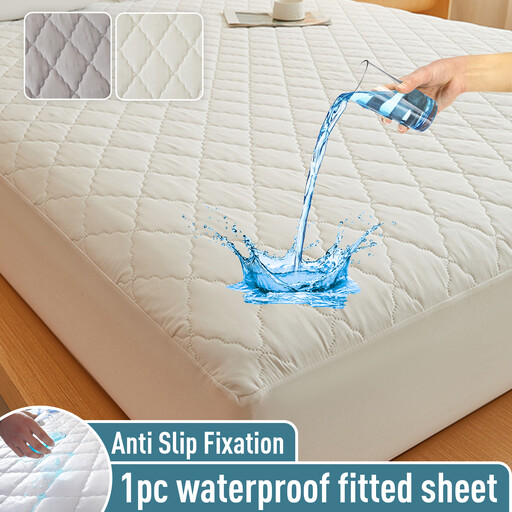
Why it's a great choice: Ideal for the master bed as well as kids' beds, this model combines a 100% waterproof barrier with a comfortable quilted surface. Its fitted sheet design ensures it stays perfectly in place, even with restless sleepers or pets who love comfort.
Its breathable microfibre design and quilted surface prevent the "plastic bag" effect and crinkling noises, ensuring a truly peaceful sleep.
Fitted sheet style with a deep 30 cm pocket for a flawless fit. Machine washable for simple, impeccable hygiene.
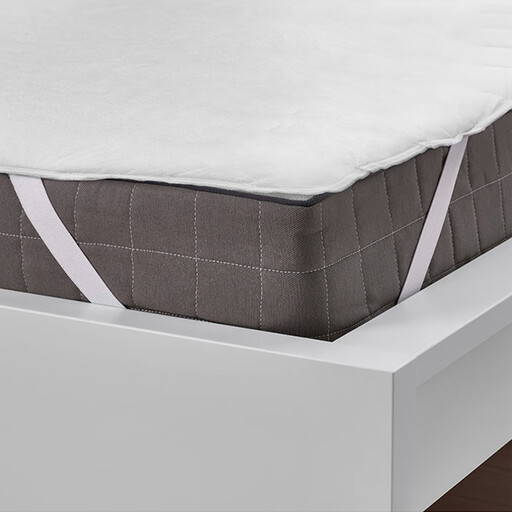
Why it's a great choice: A simple and budget-friendly solution for guest beds, a dorm room, or a first apartment. This anchor-band model focuses on the essential: effectively protecting the mattress surface.
By focusing on the essentials, it provides reliable waterproof protection without the extra cost of a full fitted sheet. Its straps are designed to fit mattresses up to 30 cm thick.
Waterproof protection at an excellent price. The 4 elastic corner straps ensure quick and easy installation.
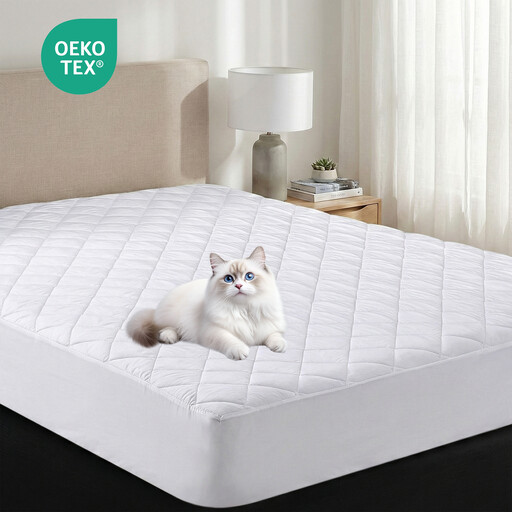
Why it's a great choice: For those who primarily want to add a layer of softness to a mattress that's a bit too firm. This model protects against wear and tear and boosts comfort. Please note: this product is not waterproof.
Here, the focus is 100% on comfort. It's designed to be soft and plush, without the constraint of a waterproof membrane. Use it in addition to a protector if liquid protection is also needed.
Visibly boosts sleeping comfort thanks to its generous padding. Its fitted sheet style with a 30 cm pocket ensures a perfect fit.
Explore our full selection of products that meet our quality criteria and user expectations.
How often should you wash a waterproof mattress protector? For normal use, washing every one to two months is a good average. For children's beds, in case of allergies, or after a minor accident, more frequent washing is necessary. In all cases, follow the instructions on the label to preserve the waterproof membrane.
Is a breathable mattress protector truly silent? Yes, quality models with a polyurethane (PU) membrane are designed to be discreet. The membrane is flexible and bonded to a fabric that absorbs noise. It's the older or low-end PVC models that tend to "crinkle" loudly.
Can I put my mattress protector in the dryer? Most modern models are dryer-safe, but checking the label is essential. Always choose a low-temperature setting. Excessive heat can damage the PU membrane and cause it to lose its waterproof properties. Air-drying remains the safest option to maximise its lifespan.