
Livraison le jour même ou le lendemain

Qualité garantie

Débloquez vos offres de bienvenue: Livraison GRATUITE | Jusqu'à -80 % | 30 jours d'essai gratuits à JoyPlus
Téléchargez l'application
A leak in a motorhome roof, a gutter or a window can quickly damage the surrounding materials. Waterproof butyl tape allows you to seal an infiltration quickly, provided you choose a product suited to the surface, the width of the area to be repaired and the outdoor conditions.
The various options on offer can, however, be confusing. A strip described as "high strength" is not necessarily designed to withstand immersion, high heat or a dusty surface. Here are the criteria to check before buying, along with a selection of products suitable for several uses.
A standard cloth repair tape may be fine for bundling cables, holding a tarpaulin or making a temporary fix. It does not automatically replace a roofing sealing strip: its structure and adhesive are not designed to withstand the same stresses.
Butyl is a flexible material that conforms better to surface irregularities. Models with an aluminium foil layer add protection against UV rays and the elements. For a persistent leak, it is therefore better to choose a genuine self-adhesive butyl strip rather than a simple leak-sealing tape.
A width of 50 mm is suitable for a narrow crack or a localised joint. For a roof junction, a window edge or a larger area, a 100 mm or 150 mm strip reduces the number of joins needed.
Also remember to check the total length of the roll. A pack containing several rolls can be handy for regular maintenance, while a single long roll is better suited to a one-off job. The price per metre allows you to compare offers on an objective basis.
Even a waterproof adhesive tape cannot compensate for poor preparation. Water, grease, dust and silicone residue reduce adhesion and can allow water to seep under the strip.
Product sheets generally recommend application on a clean, dry surface, with protection from rain for 24 hours. This requirement is particularly important for a roof or motorhome repair, especially when the vehicle remains parked outdoors.
To ensure a watertight seal on a window or gutter, look for a structure combining butyl rubber, aluminium foil and, depending on the model, a layer of polyester, non-woven fabric or a film designed to slow down ageing.
Aluminium can also reflect some solar radiation. However, it does not turn the strip into a full thermal insulator. For ventilation ducts or heating installations, choose an HVAC aluminium tape according to its operating temperature and the nature of the surface.
The differences between winter frost and high heat can cause peeling if the adhesive is not designed for these conditions. Some TAPEBEAR references claim a usage range of -40 °C to 80 °C, while the HVAC aluminium tape shown offers a resistance between 80 °C and 100 °C.
These values correspond to the information provided for the products in question. They should not be extrapolated to other tapes or to higher temperatures. If the tape will be near a flame, a boiler or a very hot surface, you must consult the instructions and the manufacturer's recommendations.
Before ordering, identify the material to be repaired: PVC, EPDM, glass, wood, metal, fibreglass, concrete or bituminous membrane. The butyl tapes shown are claimed to be compatible with several of these surfaces, but their adhesion can vary depending on the condition and finish of the surface.
For a repair on a boat or a pipe, pay particular attention to the curvature, the pressure exerted and the exposure to water. A sealing strip for a terrace or a deck beam protector will not necessarily meet the same requirements as a pipe seal.
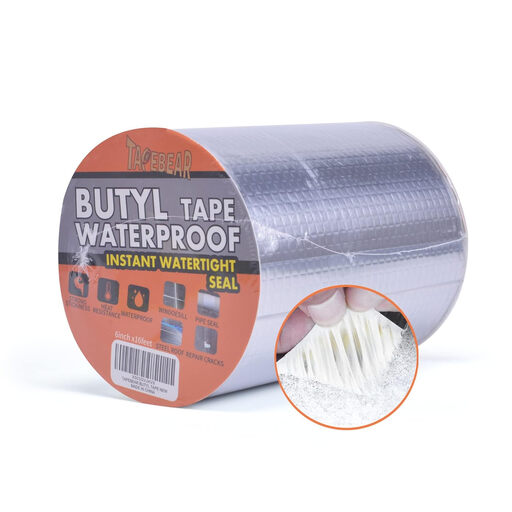
Why this choice suits this profile: With its 150 mm width, this strip covers a large area in a single application, simplifying small jobs on a roof, gutter or window.
The stated width and length are clearly indicated, allowing you to assess the quantity needed accurately and avoid improvised joins.
Roll of 150 mm by approximately 5 m, claimed to be compatible with PVC, EPDM, glass, wood and metal.
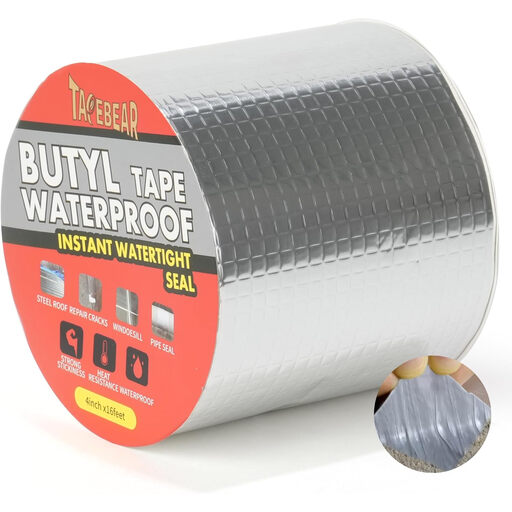
Why this choice suits this profile: This format combines an intermediate width with a reinforced backing that pairs an aluminium PET foil, a non-woven fabric and an anti-ageing film, according to the product sheet.
The detailed construction makes it easy to distinguish a reinforced butyl strip from a more general-purpose repair tape.
Width of 100 mm, length of 5 m and a claimed operating range of -40 °C to 80 °C, with UV resistance stated by the manufacturer.
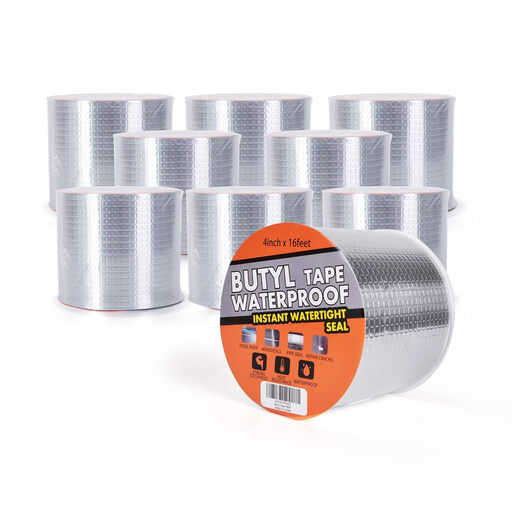
Why this choice suits this profile: Its 100 mm width is suitable for repairs on a motorhome, awning, boat, roof or pipe when substantial coverage is needed.
The product sheet specifies a claimed thickness of 39.37 mil and recommends applying repeated pressure, then leaving the strip to dry away from rain for 24 hours.
Aluminium PET backing, claimed resistance from -40 °C to 80 °C and stated compatibility with metal, tiles, wood, fibreglass and concrete.
We have compiled a comprehensive, real-time updated list of products that fully meet these strict selection criteria and European safety regulations.
For a very uneven joint, gently heat the material only if the instructions allow it. A repair applied to a structurally weakened surface does not replace the need to replace the element or call in a professional.
It can be used on certain joints, awnings, windows and areas covered with an EPDM membrane, provided the surface is clean, dry and compatible. Measure the width of the leak and choose a model offering sufficient coverage. In the case of a significant infiltration or one located near a load-bearing element, professional intervention may still be necessary.
It is not recommended to apply these products to a damp surface. The adhesive must bond directly to the surface, without a film of water, oil or dust. After application, protect the area from rain for the time specified by the manufacturer.
Butyl tape is primarily intended for flexible sealing and waterproofing on various surfaces. HVAC aluminium tape has a metallic backing and a specific temperature range, making it more suitable for certain ducts, insulation and ventilation systems. Always compare the operating temperature, width and compatibility with the material in question.