
Same-day & Next-day Delivery

Quality Guaranteed

Unlock Your Welcome Offers: FREE Delivery | Up to 80% OFF | Free 30-day JoyPlus trial
Download the APP
Choosing a new washing machine can quickly become a headache. Faced with hundreds of models and endless spec sheets, it's easy to feel lost. Marketing claims promise the world, but how can you tell a true innovation from a superfluous gimmick?
As a product expert at Joybuy, my mission is to help you see things more clearly. Let's break down the key points to check to ensure you won't regret your purchase. Here are the two most common pitfalls to avoid:
To make an informed decision, focus on these key technical specifications. They will have a direct impact on your daily life and your wallet.
The drum capacity, expressed in kilograms, should primarily match the size of your household:
But capacity isn't everything: carefully measure the space where you plan to install it. If you live in an apartment, a slim-depth washing machine (less than 55 cm) is often the ideal solution to avoid cluttering the room, while still offering a comfortable 8?kg capacity.
Since 2021, the energy label has been revamped for greater clarity. The old A+, A++, and A+++ classes have been replaced by a scale from A to G. A class A washing machine now represents the pinnacle of efficiency.
The key indicator to watch is the energy consumption in kWh per 100 cycles (on the Eco 40-60 programme). This value gives you a clear idea of the appliance's annual consumption. A B or C-rated model can still be an excellent trade-off if its purchase price is significantly lower and its other features meet your needs.
The spin speed (in revolutions per minute, or rpm) determines how damp your laundry is at the end of the cycle. The higher it is, the drier the clothes will be. A 1400 rpm spin speed is an excellent compromise: it extracts enough water to significantly reduce drying time (whether air-drying or using a tumble dryer) without creasing the most delicate fabrics.
Among the other features to consider:
Instead of an endless list, here are a few models that cater to specific user profiles, all while avoiding the pitfalls we've just discussed.
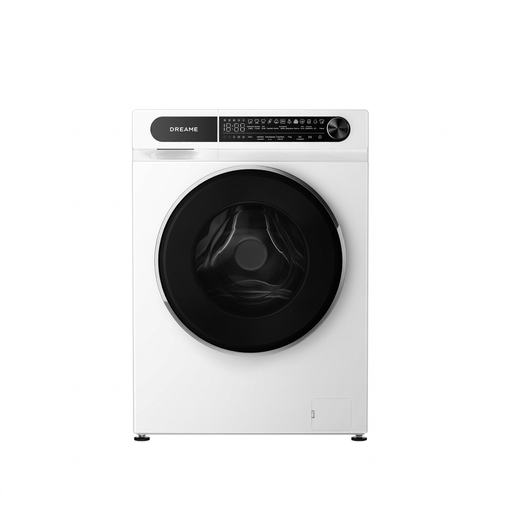
Editor's Pick: Perfect for apartments or kitchens where every square inch counts. It fits a generous 8 kg capacity, ideal for a couple or small family, into an ultra-compact frame of just 45 cm deep. As a bonus, its BLDC motor ensures quiet operation.
This model solves the "capacity vs. footprint" dilemma. It proves that a slim-depth washing machine can easily handle a family's laundry without eating into your living space.
Its ultra-compact 45 cm depth. Yet it doesn't skimp on useful features like steam and an efficient 1400 rpm spin cycle.
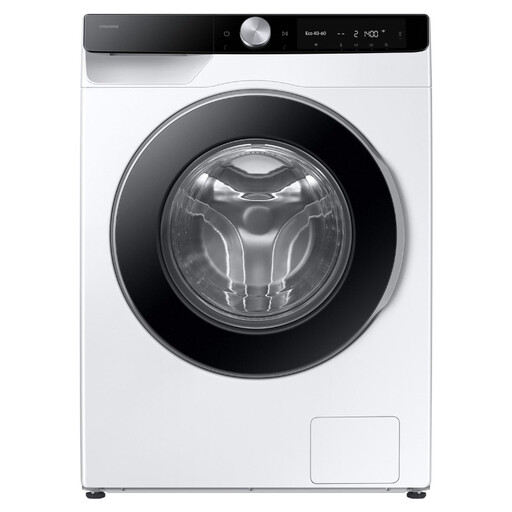
Editor's Pick: For those who want to reduce their environmental footprint and their electricity bill. This smart washing machine is rated A-10%, meaning it's 10% more efficient than the threshold for the demanding A-class rating. It's packed with technologies designed for effective washing, even at low temperatures.
It shows that "smart" features make sense when they offer real added value. The AI Energy mode in the SmartThings app analyses your habits to optimise consumption.
Its "Less Microfiber" cycle, which, according to Samsung, reduces microplastic emissions into the water by up to 54%. Not to mention the EcoBubble technology, which ensures a powerful wash even in cold water.
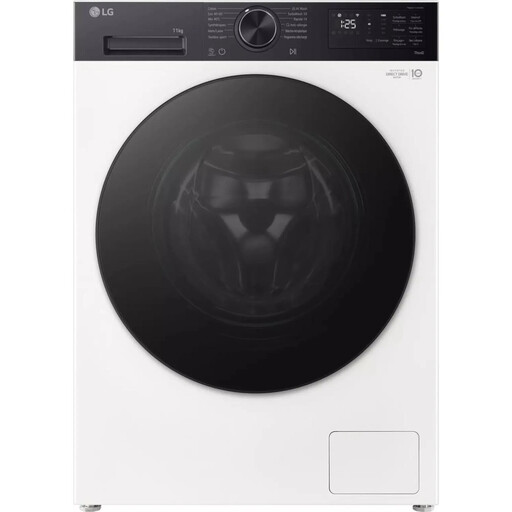
Editor's Pick: With its XXL 11 kg capacity, it's built to tackle mountains of laundry. The TurboWash 360° technology washes a full load in record time—a precious time-saver for busy families. The steam function is a real bonus for sanitising children's clothes.
Instead of piling on gimmicky programmes, this model gets straight to the point: a very large capacity combined with features that genuinely make life easier (fast cycles, hygiene). Efficiency above all.
The winning combination: a giant 11 kg capacity and TurboWash 360° technology for express laundry loads. Its Inverter Direct Drive motor is also a guarantee of quiet operation and longevity.
We have selected a full range of washing machines that meet our strict standards for quality and safety.
The lifespan of a washing machine is typically 7 to 10 years. This longevity depends on the build quality (especially the motor), frequency of use, and regular maintenance (cleaning the filter, detergent drawer, descaling, etc.). The reparability index, mandatory in France, is also a good indicator of spare part availability and ease of repair.
No, as long as you use it wisely. A 1400 rpm spin is perfect for durable fabrics like cotton or synthetics. For delicate items (wool, silk, lingerie), simply reduce the speed manually (to between 400 and 800 rpm) or use the dedicated programmes that adjust it automatically.
The cost depends on the price per kWh from your electricity provider. Let's take a class A washing machine that consumes 45 kWh per 100 cycles. With an average kWh price of €0.25, the cost for 100 washes would be €11.25 (45 x 0.25). For about 200 cycles per year (nearly 4 loads a week), the annual electricity cost would be around €22.50, excluding water consumption.