Who is this type of washing machine for?
How often you wash large loads matters just as much as their size: an occasional need calls for a different choice from a drum filled several times a week.
Households that regularly wash large loads
There’s a steady stream of bedding, towels and household linen to wash. The aim is to avoid extra cycles without buying a drum that’s larger than you need for your regular laundry. UFC-Que Choisir also highlights this balancing act.
Households with loads that vary considerably
Large loads alternate with small, urgent washes. Check the model’s consumption figures and confirm which load-adjustment features are available on that specific model, rather than relying on its maximum capacity alone.
Households short on space
The capacity you want won’t help if the appliance is difficult to get through the doorways or gets in the way when its door is open. Dimensions published by Bosch, LG and Electrolux apply to specific models, so measure the space before choosing.
Which features should you compare?
Start with the dry laundry loads you actually wash, then compare models based on your smaller loads, available space and how much time you can spare for a cycle.
| Feature |
What to check |
Who should consider it? |
| Usable capacity |
Compare your usual large loads with the rated capacity, given in kg of dry laundry. For bulky items, also check the care label and the recommended programme. |
If bedding and towels regularly fill the drum, avoiding extra loads becomes a priority; around 33% of consumers prioritise this need. |
| Varying load sizes |
Compare the kWh per 100 cycles and litres per cycle on the energy label. If load adjustment is advertised, check that it applies to the model you’re considering. |
If small washes follow large ones, you’ll want to avoid frequently running a large appliance when it’s only partly full; nearly 27% of consumers put this adaptability first. |
| Space required |
Measure the access route and the space where the machine will go, then check its full dimensions, including with the door open, and the model’s installation instructions. |
When space is limited, you need to be able to get the machine in and open its door before you can benefit from its capacity; for around 20% of consumers, this comes before other considerations. |
| Cycle times |
Check the duration of the Eco 40-60 programme, the spin speed and the programmes suited to your fabrics. Check the maximum load for quick cycles. |
If you need to get through several loads without disrupting your day, programme times and spin speed come first; around 20% of consumers prioritise this aspect of using their machine. |
According to the European Commission, the energy label shows, among other things, energy consumption per 100 cycles and water consumption per cycle for the Eco 40-60 programme. These figures let you compare models on a like-for-like basis, but they don’t tell you everything about the other programmes you’ll use.
Brands to consider
These ranges give you a starting point for comparison. Check the capacity, dimensions and features of the specific model you’re considering.
Bosch
Bosch Électroménager France offers front-loading washing machines with a 10 kg capacity, including models for households that regularly wash large loads.
- The specifications for the WGH254A0FR and WGB256A2FR list maximum spin speeds of 1 400 and 1 600 rpm respectively.
- Check the dimensions, features and terms of any motor warranty for the exact model: these aren’t automatically the same across the whole range.
LG
LG France offers 11 kg front-loading models that are worth considering if you regularly wash large loads of dry laundry.
- LG lists load detection and a duvet programme for the F14R50WHS. Check that these features suit your fabrics and their care instructions.
- The dimensions and features listed for this model don’t necessarily apply to other 11 kg LG washing machines.
Electrolux
Electrolux’s SensiCare 600 series includes 10 kg front-loading models that combine a large capacity with advertised load adjustment.
- Electrolux says that SensiCare adjusts the programme duration to the weight of the laundry on applicable models.
- Check that this feature is available on the specific version and review its consumption figures. This claim doesn’t prove that an underfilled drum will use as much as a model with a more suitable capacity.
Miele
Miele France offers washing machines with capacities from 6 to 9 kg, worth considering if you wash frequently but don’t always need a very large drum.
- According to Miele, some 9 kg models combine their capacity with automatic detergent dosing or quick-wash features.
- These features depend on the model. Also check the maximum loads for the programmes you plan to use.
Washing machines to consider on Joybuy
These models are suited to frequent washing, with capacities of 9 or 10 kg. Some also cater for varying load sizes. The washer-dryer is for a different type of use, and its drying capacity should be considered separately.
 Image unavailable
Haier X Series 11 HW100-BD14397PGU1, 10 kg
Worth considering if you regularly wash large loads and want to look into how the cycle adjusts for smaller loads.
The model name indicates a 10 kg capacity, a maximum spin speed of 1 400 rpm, an A energy rating, AutoDose, steam and Wi-Fi. Check the manual for details of the load detection advertised for this model, and make sure there’s enough room to open the door.
View on Joybuy
 Image unavailable
Electrolux EW7FI259160V, 9 kg
Compare it with your usual loads if 9 kg is enough and the size of your loads varies from wash to wash.
The model name indicates front loading, a 1 600 rpm spin speed, SteamCare, SmartSelect and a connected feature. Check how SensiCare works on this model, the duration of the Eco 40-60 programme and the clearance needed for the door.
View on Joybuy
 Image unavailable
Electrolux EWF1410N2, 10 kg
A capacity worth considering if you regularly wash large loads, rather than only needing the extra space for the occasional bulky item.
The model name indicates front loading, a 10 kg capacity, TimeSave and an Inverter motor. If you often wash small loads, check whether this model adjusts the cycle to their weight. Also check the dimensions required for installation.
View on Joybuy
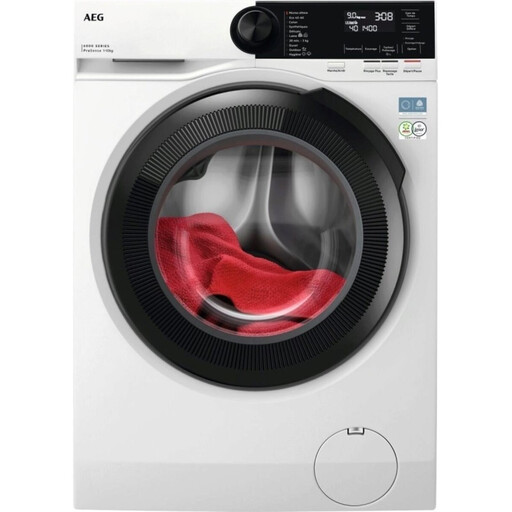 Image unavailable
AEG LFR62E114S, 10 kg
Worth considering for frequent, large loads, as long as its dimensions suit the space available.
The model name indicates front loading, freestanding installation, a 10 kg capacity, a 1 400 rpm spin speed and an A energy rating. Compare the consumption figures on this model’s energy label and check its full dimensions before ordering.
View on Joybuy
 Image unavailable
Samsung WD10HG6U34BEU3, 10 kg wash and 6 kg dry capacity
Worth considering if you want to wash and dry with the same appliance, as long as you bear in mind that the maximum wash load differs from the drying capacity.
The model name indicates a 10 kg wash capacity, a 6 kg drying capacity and a D energy rating. If you plan to run a combined wash-and-dry cycle, check its maximum load and the energy label for the intended use.
View on Joybuy
Frequently asked questions
What does a 10 kg washing machine capacity mean?
It refers to the maximum weight of dry laundry, according to the manufacturer’s instructions, not the weight of wet laundry. A bulky duvet won’t necessarily fit: check its care label and the limits of the programme you want to use.
How do you compare the consumption of two large washing machines?
Compare their energy labels using the same Eco 40-60 programme figures: kWh per 100 cycles, litres per cycle and programme duration. The European Commission explains that these figures relate to the reference programme; they don’t predict the consumption of every other cycle you use.
Is load detection enough if I often wash small loads?
No. It doesn’t guarantee that a large-capacity washing machine will suit every small load. Electrolux, for example, advertises cycle adjustment on some SensiCare models, while UFC-Que Choisir points out the limits of electronic adjustment. Check the feature on the model you’re considering and base your choice on the loads you wash most often.
What should you check before installing a washing machine?
Measure the appliance, the access route and the space needed to open the door, then check the manual for water, drainage and electrical connections. If your existing installation looks old or you’re unsure about it, ask a professional to inspect it rather than assuming it’s compatible based on the washing machine’s product information alone.


