
Livraison le jour même ou le lendemain

Qualité garantie

Débloquez vos offres de bienvenue: Livraison GRATUITE | Jusqu'à -80 % | 30 jours d'essai gratuits à JoyPlus
Téléchargez l'application
A washing machine can serve you well for many years, provided you choose a model that suits your home, your washing routine and your habits. With artificial intelligence, steam programmes and energy ratings all vying for your attention, some criteria matter far more than marketing claims.
A 10 or 11 kg washing machine isn't necessarily right for every household. A large capacity can be handy for a family, duvets or sports kit. However, it often means a deeper appliance and can lead a couple to run half-empty cycles.
On the other hand, a 6 to 8 kg drum will often suit daily use better. Also remember to check the drum volume, the external dimensions and the space needed to open the door fully.
Class A is a good starting point, but it isn't enough to tell two machines apart. Look at the stated consumption in kWh per 100 cycles, the water used per cycle and the duration of the Eco 40-60 programme. A particularly efficient model may have a longer cycle – that's normal for many economy programmes.
Actual consumption also varies depending on the temperature you select, the amount of laundry and how often you use the machine.
A connected washing machine can send notifications, offer extra programmes or track energy use. These features are useful if you actually use the app, but they won't make up for poor installation or neglected maintenance.
Steam can freshen certain fabrics and help reduce creases. As for a so-called anti-allergy programme, this is a wash function offered by the manufacturer, not a medical guarantee. Check the manual for compatible fabrics and usage instructions.
Do not exceed the maximum load stated by the manufacturer. To maintain good washing performance and reduce vibrations, distribute the laundry evenly in the drum without packing it down.
A front-loading washing machine, also called a washer with a porthole door, often lets you use the top as storage space or slide the appliance under a worktop. However, you need enough clearance in front to open the door.
Top-loading can be more practical in a narrow room, as it doesn't require space in front of the machine. Some models are also narrower, around 40 to 41 cm wide. Before delivery, carefully measure the doorways, corridors and available depth.
A spin speed of 1,200 to 1,400 rpm will generally extract more water before air-drying. Spin efficiency is listed separately from the energy rating, so be sure to check both.
In a flat, the noise level during the spin cycle is particularly important. Models rated around 68 to 72 dB(A) usually fit more easily into a home near a bedroom or living area than those exceeding 77 dB(A).
An inverter motor, BLDC or direct-drive motor can help deliver quieter operation and better-controlled energy use. These labels don't replace checking the official noise level or warranty terms.
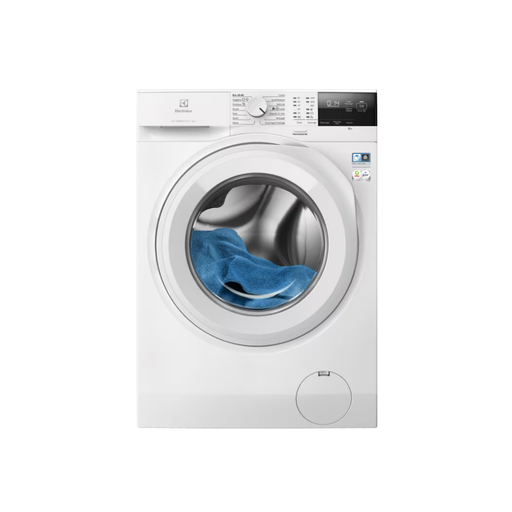
Why this choice suits this profile: This front-loading washer offers a versatile capacity, a 14-minute quick programme and simple controls that are easy to get to grips with day to day.
Its spec sheet highlights class A, 47 kWh per 100 cycles and 43 L of water per cycle, rather than an oversized capacity.
8 kg, 1,400 rpm, inverter motor, wool and delicates programmes, plus a hygiene steam cycle.
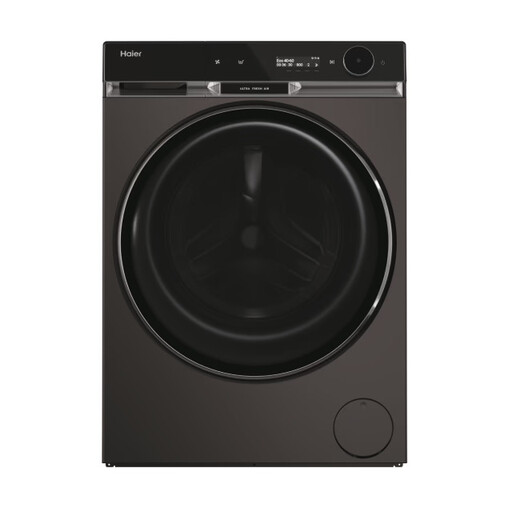
Why this choice suits this profile: It's aimed at households that want to combine a large capacity, automatic detergent dosing and remote control.
The spec sheet clearly states 41 kWh per 100 cycles, 48 L per cycle and 68 dB(A) during spin, relying on measurable data.
10 kg, class A, Direct Motion motor, AutoDose function, steam, Wi-Fi and hOn app.
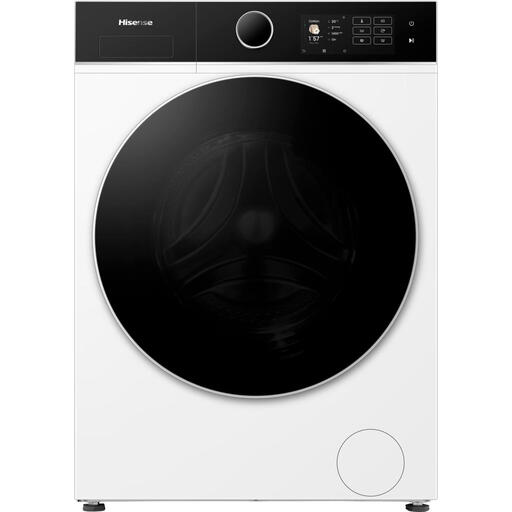
Why this choice suits this profile: At just 47 cm deep, it fits into small utility rooms. Its dedicated programmes also suit households with pets or varied washing needs.
Its shallow design comes with precise figures: class A, 33 kWh per 100 cycles, 38 L of water and 72 dB(A).
Anti-allergy and pet hair programmes, steam, 15-minute quick cycle, Wi-Fi and inverter motor.
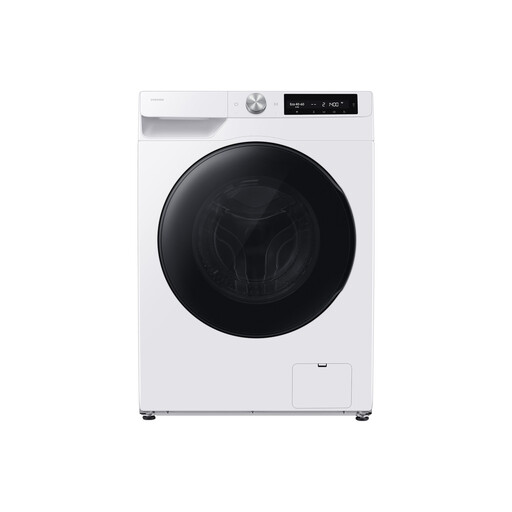
Why this choice suits this profile: This washer-dryer combines 10 kg washing capacity with 6 kg drying capacity – a great solution when two separate appliances won't fit in your home.
The drying capacity is listed separately at 6 kg, so you won't confuse the wash load with the drying load.
Steam functions, quick programme, SmartThings Wi-Fi, Digital Inverter motor and integrated drying.
We've put together a comprehensive, real-time updated selection of products that meet these exacting criteria as well as European safety standards.
A washing machine must be installed on a stable, perfectly level floor. Adjust the feet, remove the transit bolts supplied by the manufacturer and check the water inlet and drainage connections. Plug it into an earthed socket and avoid using extension leads or multi-way adaptors.
To extend the life of your appliance:
A washing machine of 9 to 11 kg is generally suitable for a family or a household that washes large amounts of laundry. For two people, 7 to 8 kg is often enough, unless you regularly wash duvets or other bulky items.
Class A indicates high energy efficiency under the European energy label. To estimate running costs, compare the kWh per 100 cycles, water consumption and how often you wash. The temperature, how full the drum is and the programmes you select also have a direct impact on your bill.
It all depends on how often you use it, the installation, maintenance and whether you stick to the maximum load. A machine that is properly levelled, regularly cleaned and used according to the manual will generally maintain stable performance for longer. Before buying, also check the warranty terms and the availability of spare parts.