Households with baskets that are often full
If bedding, towels and clothes regularly fill the drum, a capacity of 10 to 12 kg is worth considering. UFC-Que Choisir considers it more suitable when you wash successive loads.


Choose a capacity to suit your usual loads, rather than a duvet you wash only occasionally. According to UFC-Que Choisir, 8 to 9 kg is generally enough for a household of 3 to 4 people, while 10 to 12 kg is more suitable when you regularly wash successive full loads. For duvets, also check the programme, the load limit in the manual and the care label: the capacity figure alone is not enough.
If bedding, towels and clothes regularly fill the drum, a capacity of 10 to 12 kg is worth considering. UFC-Que Choisir considers it more suitable when you wash successive loads.
If you wash sheets and duvets at home, check the load allowed by the relevant programme on the model you’re considering, as well as the care instructions for each item. A capacity stated in kilograms does not, by itself, confirm that a duvet is suitable for the machine.
If you mostly wash small and medium-sized loads, and very large items are rare, choose a machine that suits your everyday laundry. You could arrange a separate solution for an exceptionally bulky item.
Start by thinking about how often you wash full loads, then check which programmes are suitable for your fabrics and whether the machine will fit in your space.
Worth considering if: you regularly wash large loads back to back. This is the type of use for which UFC-Que Choisir sees an advantage in this capacity.
Bear in mind: check that your everyday loads also make this capacity worthwhile and that the machine will fit in its intended space.
Worth considering if: you mostly wash everyday loads and only occasionally wash bulky duvets. UFC-Que Choisir considers this capacity generally sufficient for a household of 3 to 4 people.
Limitation: a load-sensing function does not mean every bulky item will fit in the drum.
Worth considering if: a thick duvet is the only reason you’re thinking of buying a larger machine, while most of your other laundry loads are relatively small.
Consideration: you’ll need to arrange to wash the item elsewhere if your machine’s manual and the item’s care label do not allow you to wash it at home.
| Criterion | What to check | Think about your needs |
|---|---|---|
| Capacity | Estimate the weight and frequency of your usual loads. The stated capacity refers to dry laundry under the conditions of the specified programme; it does not mean the same load applies to every cycle. | Are my baskets often full enough to consider 10 to 12 kg, or do smaller loads still make up most of my laundry? |
| Duvets and bulky bedding | Check the manual for the exact model: suitable programmes, permitted load and loading instructions. Also check the fabric’s care label. | If I often wash a duvet at home, I need to check that this specific item is suitable for the machine, not just consider its weight. |
| Variable loads | Look for load-sensing functions and compare energy labels on a like-for-like basis. The European Commission states that the consumption shown per 100 cycles refers to the Eco 40-60 programme. | I don’t always fill the drum, so I want to compare machines suited to this kind of use without assuming that a function guarantees savings on every cycle. |
| Installation and spin cycle | Check the depth, door clearance and whether the packaged machine will fit through the access route. Compare the stated maximum spin speed with the programmes intended for your fabrics. | A machine with the capacity I need must also fit through the access points in my home and have enough space once installed. |
Most of your cycles may then be too small to make the most of the capacity that prompted your purchase. UFC-Que Choisir sees 10 to 12 kg as more useful in households that regularly wash successive full loads.
Choose a machine to suit the loads you wash most often and, if necessary, arrange a separate wash for an exceptional item.
The nominal capacity refers to a weight of dry laundry processed in line with the manufacturer’s instructions. You still need to check the limits for the programme you choose.
Before washing a duvet or delicate fabric, compare the load table in the manual with the item’s care label.
The depth, door clearance and packaging dimensions can all affect whether the machine will fit through the access route and work in its intended space.
Measure the delivery route, the available space and the clearance needed to open the door, then compare these with the dimensions of your chosen model.
A function that adapts the cycle does not, by itself, tell you how much energy all your smaller loads will use. Energy label figures are based on defined programme conditions.
Compare energy label figures on the same Eco 40-60 basis and choose a capacity that suits your actual loads.
These specifications apply to the models listed, not to every washing machine from each brand.
The WGH254A0FR offers a useful comparison for a 10 kg front-loading machine.
The EW6F1437AS is an example of a 10 kg machine with an advertised load-sensing function.
The F14R31WHSA is an example of an 11 kg front-loading machine to consider if depth is a factor.
The WW11BB504DAE offers another point of comparison for a stated capacity of 11 kg.
This selection includes 10 and 11 kg models for frequent large loads, as well as a 9 kg option to consider if you mostly wash everyday loads. For any duvet, the model’s manual and the item’s care label are still the deciding factors.
 Image unavailable
A 10 kg capacity to consider if you regularly wash successive large loads. The product name lists 1 400 rpm, Class A, Direct Motion, AutoDose, Steam and Wi-Fi. Check the manual for permitted loads before washing a duvet.
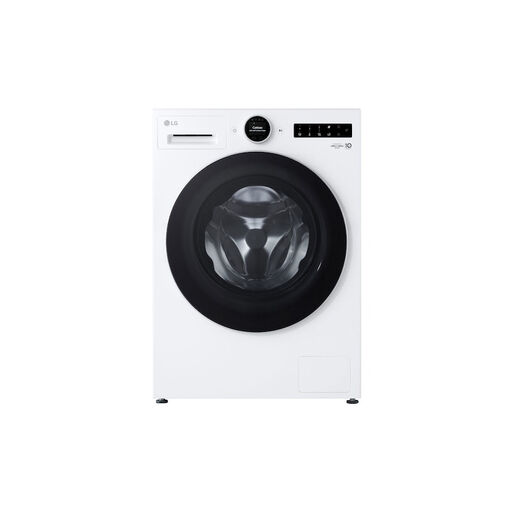 Image unavailable
Its stated capacity of 11 kg could suit you if you regularly wash large loads. The product is listed as Class A. Before buying, check its dimensions and, for a specific duvet, the programme limits in the manual.
 Image unavailable
This 9 kg capacity is worth considering if you mostly wash everyday loads and only occasionally wash very bulky items. The model name lists 1 600 rpm, SteamCare and SmartSelect. Check the limits for each programme before washing a duvet.
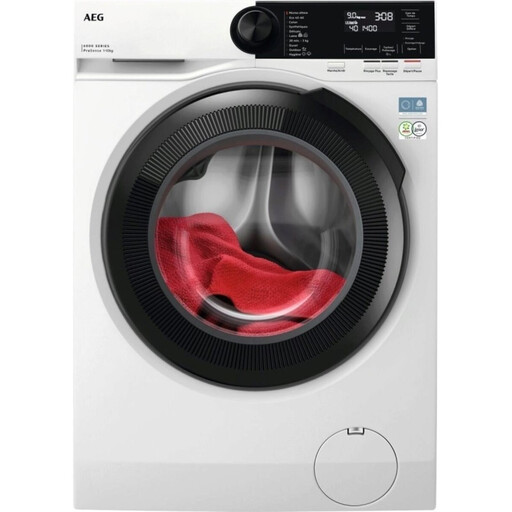 Image unavailable
A 10 kg option for households that often fill their washing machine. The product name lists a freestanding design, 1 400 rpm and Class A. Check the dimensions and programme load limits before deciding whether it suits your bedding.
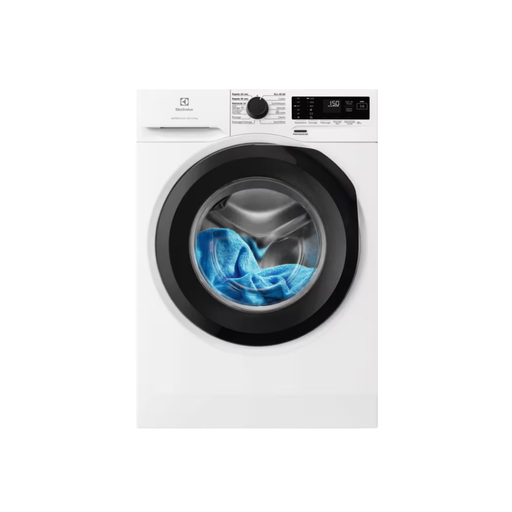 Image unavailable
Its stated capacity of 10 kg is worth comparing with the loads you wash most often. The product name mentions Steam Anti-Allergy, TimeSave and an Inverter motor, but these claims do not establish any health benefits. Check the manual for permitted loads for each programme.
No. The capacity in kilograms does not guarantee that a particular duvet is suitable for the programme or can be loaded in accordance with the manufacturer’s instructions. Check the model’s manual and the care label. Even an available ‘Duvet’ programme, such as the one LG lists for the F14R31WHSA, does not remove the need to check.
Consider 10 to 12 kg if you frequently wash successive full loads. UFC-Que Choisir says that 8 to 9 kg is generally enough for a household of 3 to 4 people. If small and medium-sized loads make up most of your laundry, choose a machine for that use first, rather than for an occasional bulky item.
Compare their energy labels on a like-for-like basis, including the consumption figure per 100 Eco 40-60 cycles, as shown in the information provided by the European Commission. This figure alone does not predict the energy use of every other programme or every partial load.
Measure the space where the machine will go, the route to get it there and the clearance needed to open the door. Then compare these measurements with the dimensions of the model and its packaging. Samsung specifically highlights doors, corridors and lifts when transporting its WW11BB504DAE.