
Livraison le jour même ou le lendemain

Qualité garantie

Débloquez vos offres de bienvenue: Livraison GRATUITE | Jusqu'à -80 % | 30 jours d'essai gratuits à JoyPlus
Téléchargez l'application
Lack of space is a headache many of us know all too well. Between seasonal clothing, XXL duvets, and household linens, our wardrobes are bursting at the seams. Vacuum storage bags seem like the miracle solution for optimising every square inch. However, the wrong choice can quickly turn this great idea into a real disappointment. To avoid buyer's remorse, here are the pitfalls to watch out for.
User reviews often highlight three recurring problems:
Keeping these weaknesses in mind is the first step toward a successful purchase and genuine space-saving.
To ensure your bags live up to their promises over the long term, focus on a few objective technical features.
Airtightness is the name of the game for a vacuum bag. A good bag must combine two elements:
The robustness of a bag depends directly on its composition. Entry-level models often use simple plastic (PE), which is very vulnerable to punctures. For much better resistance, opt for bags made from a composite PA+PE (Polyamide + Polyethylene). The polyamide provides strength and puncture resistance, while the polyethylene ensures flexibility and airtightness. A greater thickness (expressed in microns) is also a good indicator of durability.
The effectiveness of the compression also depends on the tool you use. If you don't have a vacuum cleaner or plan to use your bags while travelling, opting for a vacuum storage bag with a pump is a smart move.
Here are a few options that meet different needs, taking into account durability and practicality criteria.
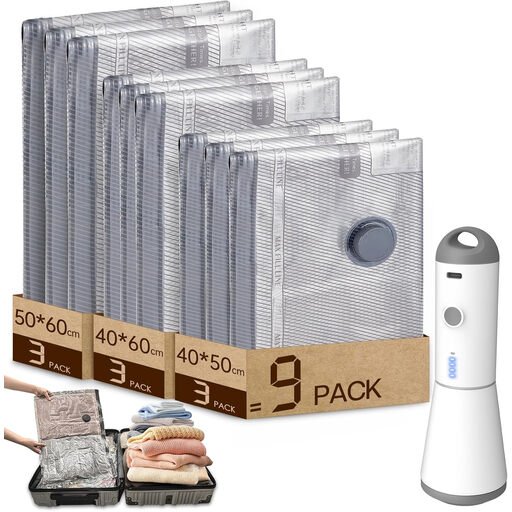
Why we love it: Perfect for nomads or those in small apartments. Its cordless, USB-rechargeable electric pump is the real game-changer: it lets you compress bags anywhere, without needing a vacuum cleaner. The mix of sizes is just as suitable for a cabin suitcase as it is for a small wardrobe.
The dedicated electric pump immediately solves the problem of inefficient suction or incompatible nozzles. The combination of a double-zip seal and a specific valve is designed for maximum airtightness.
Ultra-fast portable pump: Compresses a bag in just 30 seconds. Durable material: PA+PE composite for better longevity and good puncture resistance.
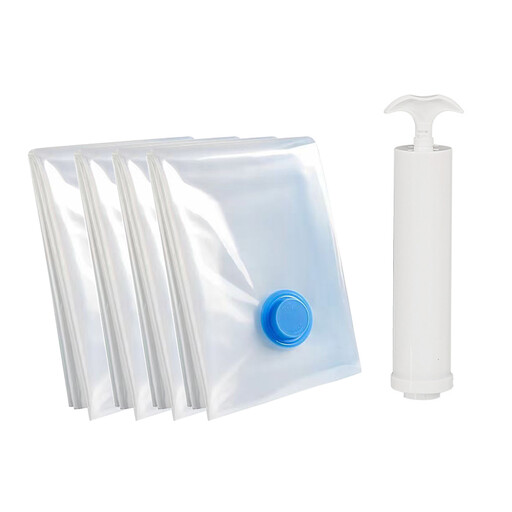
Why we love it: This ultra-comprehensive pack is tailored for family needs. With 12 bags in various sizes, you can store everything from the kids' ski gear to duvets for house guests. It's the perfect solution for a major seasonal storage session.
The variety of sizes prevents over- or under-filling the bags—two mistakes that can weaken the plastic or the seal. The included manual pump ensures you always have a solution on hand, even if it's slower than a vacuum cleaner.
Family pack: 12 bags in multiple sizes for maximum versatility. Universal valve: Compatible with most standard vacuum cleaner nozzles.
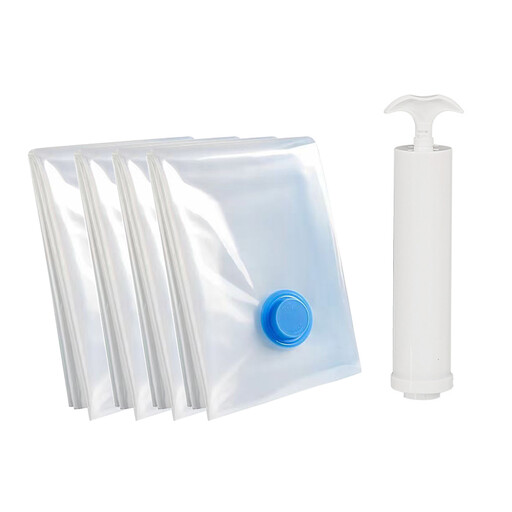
Why we love it: This set is specifically designed for those looking for a **vacuum bag for duvets** or for storing bulky winter coats. It focuses on XXL sizes, perfect for the most voluminous items that eat up space in wardrobes.
By offering large-format bags, this set prevents you from having to "stuff" a duvet into a bag that's too small. This is what creates stress on the seams and the seal, a leading cause of long-term leaks.
Optimised XXL size: Perfect for duvets, pillows, and puffer jackets. Total protection: Effectively seals out moisture, dust, and moths during storage.
Discover our full selection of products that meet our criteria for quality and durability.
For most textiles (cotton, synthetics, wool...), they are safe to use. However, be careful with items filled with feathers or down (some puffer jackets, high-quality duvets): excessive compression could break the fibres and cause them to lose their precious loft. For these delicate items, aim for a 50% compression of their volume, without completely flattening them. Also avoid storing leather or fur in them.
It all depends on the quality of the bag, its valve, and its sealing system. A well-made model with a double zip and an effective non-return valve can hold its vacuum for several months, or even over a year. Conversely, low-end models can re-inflate in just a few weeks. A quick check every six months is a good habit to get into.
Yes, the vast majority of quality bags are designed to be reused many times. The secret to their longevity lies in the quality of the material (a PA+PE composite will always be more durable) and the care you take with them. Handle them gently, avoid overfilling them, and store them flat when empty to preserve the seals.