
Livraison le jour même ou le lendemain

Qualité garantie

Débloquez vos offres de bienvenue: Livraison GRATUITE | Jusqu'à -80 % | 30 jours d'essai gratuits à JoyPlus
Téléchargez l'application
Vacuum storage bags can free up valuable space in a wardrobe, under the bed or in a cellar. But choosing the wrong model can quickly become a source of frustration: a fastening that is difficult to use, a valve that gradually lets air back in or a bag that develops holes after only a few uses.
Before comparing the options, it is therefore worth looking beyond the simple promise of “saving space”. The size, fastening system and quality of the plastic film all play a decisive role in the bag’s lifespan and in how easily you can store clothes, duvets and blankets.
A large vacuum bag may look very spacious on a product page. In practice, its capacity depends mainly on the thickness of the textiles placed inside. A fully lofted duvet does not pack in the same way as a neatly folded pile of T-shirts. Leave a few centimetres of space around the fastening to avoid putting strain on the zip.
Some listings promise a volume reduction of “up to 80%” or “four times more space”. These figures vary depending on the type of textile, how full the bag is and the power of the vacuum cleaner used. They therefore do not guarantee the same result every time. A good vacuum compression bag should above all remain closed and stable once the air has been removed.
A poorly closed zip or a valve whose cap has not been properly secured can allow air back in. For vacuum bags intended for clothes, check for a visual indicator, compatibility between the nozzle and your vacuum cleaner, and clear instructions. Textiles with metal fastenings or sharp components should be protected to reduce the risk of punctures.
In a student bedroom or small flat, an assortment of sizes is often more practical than a pack containing identical bags. This allows you to distribute the contents and avoid overloading a single fastening.
Vacuum bags are generally made from polyethylene, polyamide or a combination of plastic films. A flexible material folds easily, while a thicker construction is better able to withstand repeated handling. When the thickness is specified, it provides a useful basis for comparing different models.
Reusable vacuum storage bags should be cleaned with a cloth or slightly damp sponge, then dried thoroughly before being put away. None of these textile storage models should be used to store food.
A double zip, sealing slider or supplied clip can make vacuum packing easier. Also check compatibility with a vacuum cleaner fitted with a hose. Most of the models featured here work with a standard domestic vacuum cleaner, but the shape of the nozzle may vary.
Transparency is also very useful for identifying the contents quickly without having to open every bag. This is particularly helpful when moving house or when several bags are stacked under a bed.
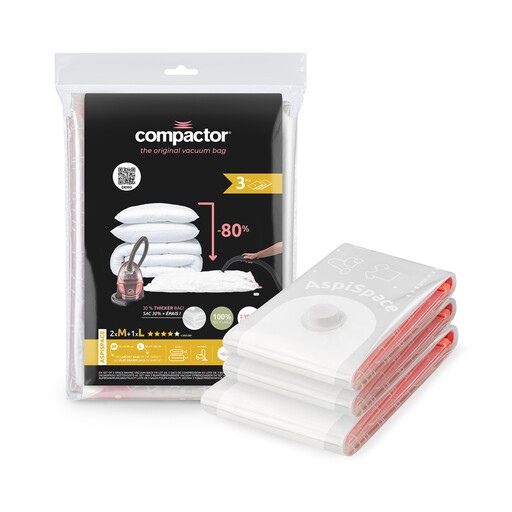
Why this choice suits this profile : This pack contains two M bags and one L bag: a versatile combination for getting started with storing clothes, pillows and seasonal laundry without having to buy multiple packs.
The range of sizes reduces the risk of filling a single bag right to the brim. The zip fastening and valve are designed to work with a standard vacuum cleaner fitted with a hose.
A pack of three nylon and polyethylene bags, transparent and reusable according to the manufacturer’s instructions.
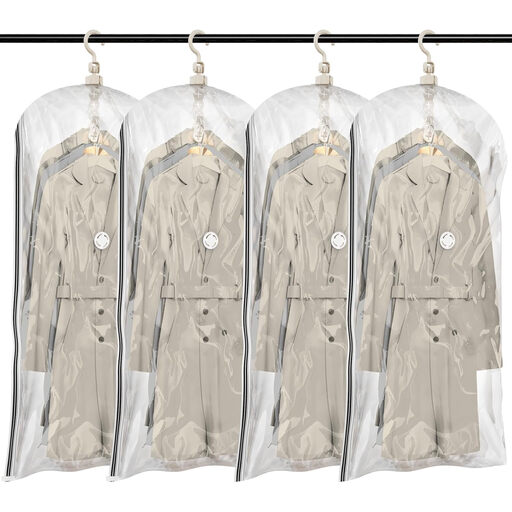
Why this choice suits this profile : Hanging vacuum bags are ideal for anyone who wants to organise their wardrobe with suits, jackets, dresses or coats, without piling them up.
The colour-changing zip provides a visual indicator to confirm that the bag is closed. Once the air has been removed, the valve locks by turning, with no separate cap.
Four 135 × 70 cm bags, with fastening clips included and PA/PE film described as airtight and watertight.
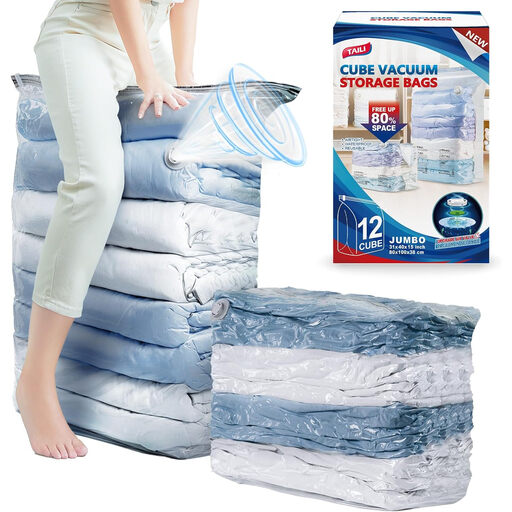
Why this choice suits this profile : The volume and cube shape are suitable for households that regularly store several duvets, blankets or sets of linen, particularly when moving house.
The self-supporting base makes filling easier and means you do not have to handle a heavily loaded bag. The supplied clip helps you close the zip before vacuuming.
A pack of twelve cube-shaped bags, measuring 79 × 102 × 38 cm, suitable for use with a domestic vacuum cleaner.
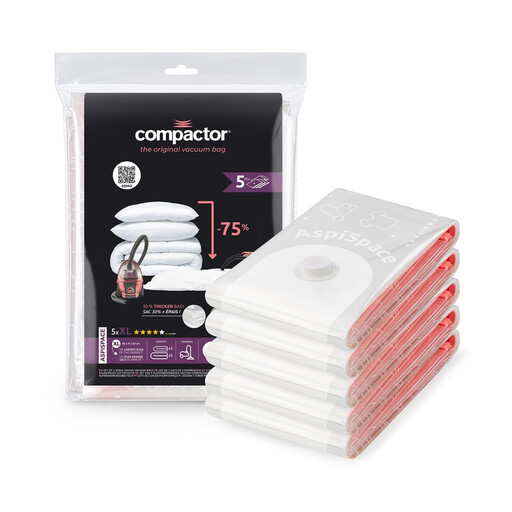
Why this choice suits this profile : This pack of five large bags is designed for storing duvets, pillows and thick clothing between seasons.
The 80 × 130 cm dimensions are clearly stated, making it easier to compare the bags with your duvets. However, avoid overfilling the bag or putting sharp objects inside it.
According to the product description, recyclable 0.085 mm PE/PET film, a valve with cap and a design intended for repeated use.
We have put together a complete, real-time updated selection of products that meet these demanding criteria and European safety regulations.
For duvets and blankets, distribute the textile evenly to prevent excessively thick areas. Choose a cool, dry place for storage. A space-saving bag is not a substitute for proper protection against flooding or persistent damp.
Yes. The models featured are designed to work with a domestic vacuum cleaner fitted with a hose. Position the nozzle correctly over the valve and check that the zip is closed along its entire length. If the nozzle does not fit, consult the bag’s instructions before making any changes.
It depends entirely on the condition of the zip, valve and plastic film, as well as whether the bag has been punctured. Inspect the bags whenever you change over your seasonal storage. If air gets back in, start by checking the fastening, then look for a tear or a fold around the valve.
Clothes, blankets, duvets and pillows are generally suitable for this type of storage. For very delicate textiles, leather items, rigid objects or pieces with sharp components, check the care recommendations and provide additional protection.