
Livraison le jour même ou le lendemain

Qualité garantie

Débloquez vos offres de bienvenue: Livraison GRATUITE | Jusqu'à -80 % | 30 jours d'essai gratuits à JoyPlus
Téléchargez l'application
Setting off on holiday in a motorhome, caravan or with a trailer usually starts with a quick tyre check. However, tyre pressure can vary depending on the load, outside temperature and distance travelled. A TPMS tyre pressure monitoring system for motorhomes lets you monitor pressure and temperature from inside the vehicle, without having to make repeated stops to check the tyres with a pressure gauge.
Not all models are created equal, and their uses vary. Some are designed for a car or SUV, while others include a repeater and more sensors to cover a long vehicle and trailer combination. Here are the key points to check before placing your order.
A monitor that can display up to 87 or 116 PSI may be suitable for many passenger vehicles, but could prove inadequate for certain motorhomes, heavy goods vehicles or trailers fitted with high-pressure tyres. The recommended value can be found in the vehicle documentation or on the manufacturer's label.
So don't rely solely on the number of sensors. First check that the measurement range covers the prescribed pressure for each axle.
A wireless TPMS transmits data by radio. On a compact car, the stated range is often sufficient. With a long motorhome, caravan or trailer, however, the distance between the rear wheels and the screen can result in signal loss.
A repeater can improve transmission, but its presence alone does not guarantee compatibility with every vehicle combination. Compare the maximum length stated by the manufacturer with your vehicle's actual configuration.
Some product listings highlight a “6-sensor” version, while the detailed package contents may sometimes mention four sensors and a repeater. Before ordering, check exactly what the kit contains, how many valves need to be fitted and whether it is compatible with metal or rubber valves.
External screw-on sensors are easy to install, but add a little bulk around the valve. Tighten them using the tool provided, without forcing them, then check they are still secure after a few miles.
A genuinely useful device should display the data for each wheel separately. The models featured here show tyre pressure and temperature in real time, with ranges that vary depending on the product reference.
The alerts to look for generally include:
Some devices automatically set a reference pressure at start-up, then trigger an alert when a predefined deviation is detected. This feature does not remove the need to set the pressure manually when the tyres are cold, in line with the manufacturer's recommendations.
For a car, four sensors may be enough. For a motorhome with twin wheels, a caravan or a trailer, six or more sensors may be required. Also consider the spare wheels if you want to monitor them.
The 433.92 MHz frequency, advertised on several models, enables effective wireless transmission. However, the actual range depends on the vehicle's structure, the materials used and the position of the screen. For long vehicle combinations, adding a repeater is worth considering.
A colour LCD screen powered by a rechargeable battery is easy to install on the dashboard. Several products state that they offer USB-C charging in around three hours. Standby mode, activated after the vehicle has been stationary for a period, reduces power consumption and allows the device to wake automatically as soon as the vehicle sets off again.
The sensors use button batteries, including CR1632 or CR2032. Battery life varies according to the model and usage conditions. Before a long journey, check that these batteries are easy to find and keep a spare pair in the vehicle.
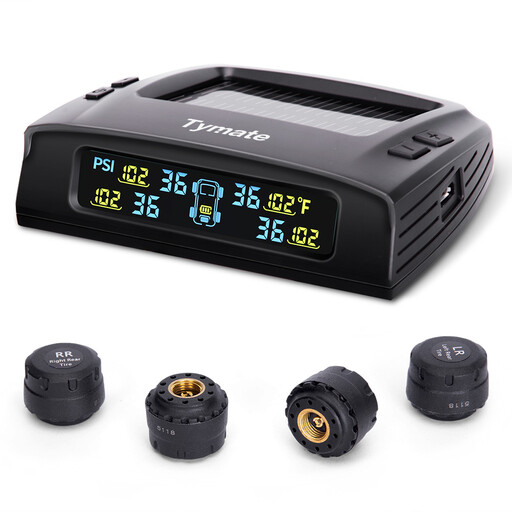
Why this choice suits this profile : With four sensors, a colour LCD screen and screw-on installation, this kit is suitable for a car, SUV or compact vehicle that wants continuous monitoring.
Its stated range of 0 to 116 PSI and rapid-leak alerts make it possible to check that it covers the prescribed pressure before buying.
Pressure and temperature display for four wheels, CR1632 sensors and a rechargeable battery with USB-C cable.
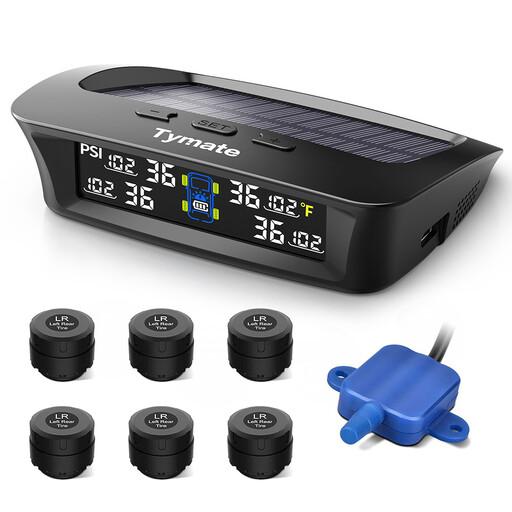
Why this choice suits this profile : Its repeater and stated configuration for vehicles up to 50 feet long may suit owners of particularly long vehicle combinations.
The repeater reduces the risk of signal loss. However, the listing gives conflicting information about the contents and range : check these details before ordering.
Colour LCD screen, adjustable pressure thresholds based around a reference value, and external sensors fitted with replaceable CR1632 batteries.
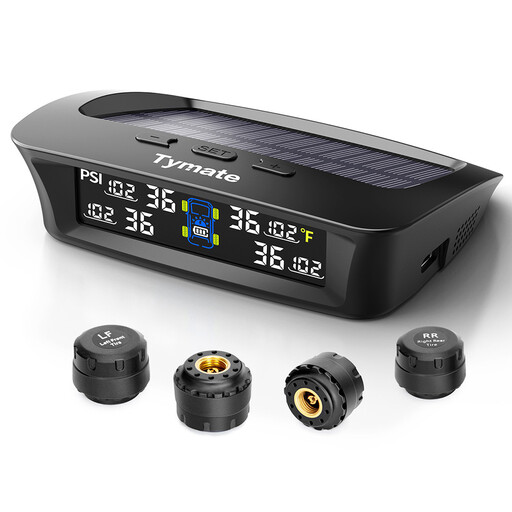
Why this choice suits this profile : This four-sensor version is intended for shorter vehicles, particularly saloons and SUVs, rather than large motorhomes.
Its stated compatibility up to 20 feet means it is not used beyond its range on a vehicle or trailer combination that is too long.
0 to 116 PSI range, colour screen with automatic backlighting, and alerts for leaks, excessive temperature or incorrect pressure.
We've put together a complete, real-time updated list of products that meet these demanding selection criteria and European safety requirements.
Once the sensors have been screwed on, check that each valve is airtight and correctly match the positions shown on the display to those on the vehicle. Inflate the tyres when cold, then calibrate the reference pressure if instructed to do so in the manual.
Before setting off, also check:
A TPMS can quickly detect a change, but it does not replace either a visual inspection or a pressure-gauge check.
Yes, if you want to monitor the entire vehicle combination. In that case, choose a kit with enough sensors and a suitable range. With a long caravan, a repeater may be essential.
It depends on the model, temperature and frequency of use. Technical specifications state around two years for some CR1632 batteries and up to four years for a CR2032 on a GUTA model. A low-battery alert indicates when the battery needs replacing.
“Solar” means that the panel contributes to powering the device, but battery life depends on exposure to light and the position of the screen inside the vehicle. For a long journey, it is therefore best to fully charge it via USB-C before setting off.