
Livraison le jour même ou le lendemain

Qualité garantie

Débloquez vos offres de bienvenue: Livraison GRATUITE | Jusqu'à -80 % | 30 jours d'essai gratuits à JoyPlus
Téléchargez l'application
For a motorhome, caravan, trailer or lorry, a drop in pressure can easily go unnoticed between stops. The driver may not immediately notice a slow puncture or an unusual rise in temperature. A TPMS tyre pressure monitoring system displays this information in real time and can trigger a low-pressure alert, an excessive-temperature alert or a rapid-leak warning.
However, not all kits are suitable for the same uses. A model designed for four wheels may be too limited for a twin-axle caravan, while a system designed for a long vehicle will often be excessive for a family car. Here are the key points to check before placing your order.
A kit equipped with four sensors will generally monitor four tyres. It does not automatically support the wheels of a trailer or an additional axle. Some models advertise compatibility with 6, 8, 10 or even 24 tyres. However, you need to check the number of sensors included, not just the system’s maximum capacity.
For a car-and-caravan combination, add together the tyres on the towing vehicle and those on the trailer. A trailer TPMS or caravan TPMS system should also make it easy to identify the position of each wheel.
A reliable wireless connection in a small car can become less stable between the cab and the rear axle of a semi-trailer. The presence of a TPMS signal repeater therefore deserves close attention for a motorhome, caravan or lorry.
The advertised radio frequency alone does not guarantee good reception in every configuration. Vehicle length, metal components and the position of the repeater also affect transmission quality.
A displayed pressure is only useful if the measurement range matches the tyres fitted to the vehicle. Also compare the stated tolerance, the unit used and the pressure recommended by the manufacturer. A TPMS complements checks carried out with a suitable pressure gauge; it does not replace checking pressures when the tyres are cold or inspecting the valves and tyres.
For a passenger car, a range of 0 to 8 bar may be sufficient, depending on the tyres being used. For a motorhome TPMS, a lorry TPMS or a heavy trailer, a wider range — up to 14 bar, for example — provides more scope.
Tyre temperature monitoring is a useful source of additional information. However, these readings must be interpreted in relation to the load, speed, outside temperature and the manufacturer’s recommendations. An alert is not a mechanical diagnosis.
External pressure sensors screw directly onto the valves. They are generally easy to remove when replacing the battery and can be fitted without removing the tyre. On the other hand, they remain exposed to spray, washing and impacts. Manufacturers often recommend metal valves, particularly for heavy vehicles.
Before choosing, check the valve type, the mounting system, whether anti-theft protection is included and the availability of replacement batteries. A CR2032 or CR1632 battery alone is not enough to assess the actual battery life of the complete system.
A colour LCD screen makes it easier to read wheel positions and alerts. Look for a separate display for each tyre, adjustable backlighting and a visual alarm that is easy to read.
Useful functions generally include rapid-leak detection, high- or low-pressure alerts, excessive-temperature warnings, low sensor battery alerts and the monitor’s battery level. Relative thresholds, such as an alert at -15% or +25% compared with a reference pressure, should be configured after checking the pressure when the tyres are cold.
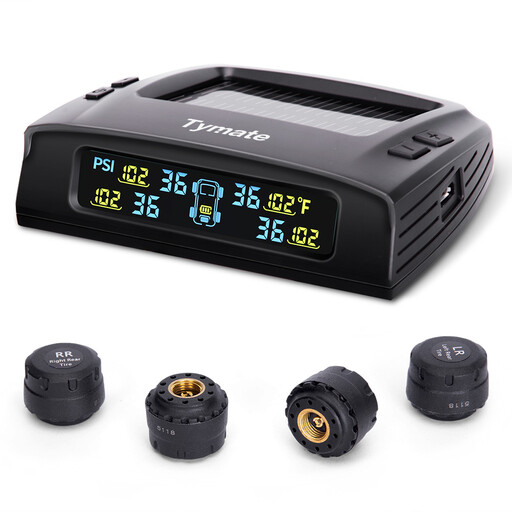
Why this suits this profile: This wireless kit is suitable for a short vehicle or simple use with four tyres to monitor. It features a colour screen, USB-C charging and a measurement range of 0 to 8 bar.
The kit includes four sensors, with no unnecessary extra capacity to pay for, provided you do not need to monitor a trailer or a second axle.
0 to 8 bar range, temperature from -20 to 85 °C, external sensors with CR1632 batteries and standby mode after ten minutes of inactivity.
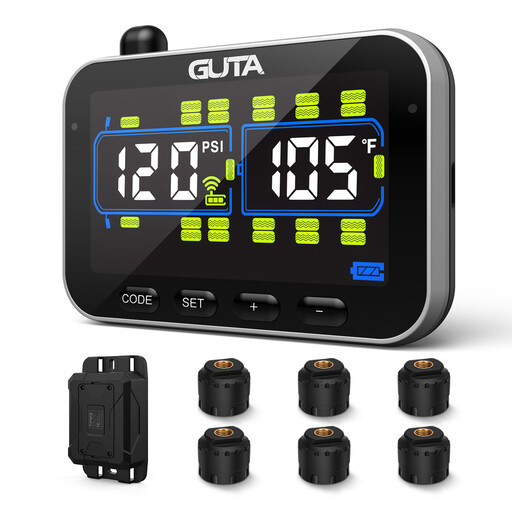
Why this suits this profile: Its advertised range of up to 14 bar, 78 × 44.5 mm colour LCD screen and repeater meet the needs of a motorhome or long caravan.
The six included sensors and repeater connection reduce the risk of under-equipping a combination with multiple wheels.
Six advertised alert types, pre-paired sensors, temperature from -40 to 105 °C and CR2032 batteries advertised to last approximately four years.
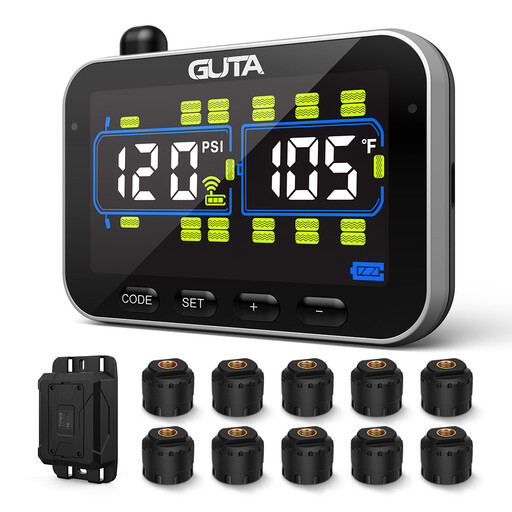
Why this suits this profile: This version is designed for large combinations, semi-trailers and drivers who need to monitor numerous tyres on frequent journeys.
The ten included sensors eliminate the need to buy several separate kits. Even so, the advertised compatibility should be checked according to the vehicle’s length and configuration.
0 to 14 bar range, 433.92 MHz repeater, adjustable screen and advertised support for vehicles under 15 m.
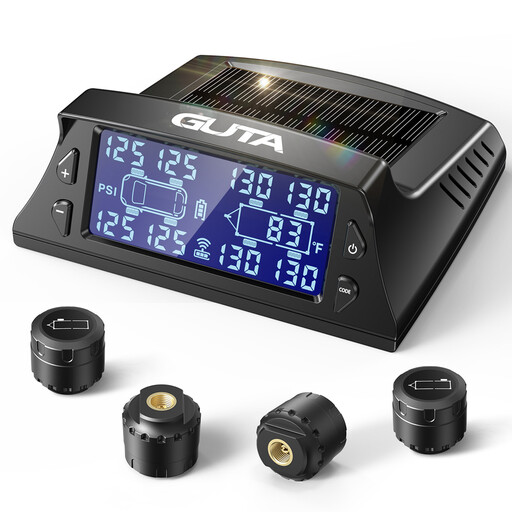
Why this suits this profile: This model combines an extended pressure range with four sensors to monitor a small motorhome or trailer without adding unnecessary accessories.
It avoids choosing a model limited to the pressures normally used by a car when leisure vehicle tyres require a wider range.
Advertised measurement up to 14 bar, 75 × 32 mm screen, USB-C charging and sensor batteries advertised to last approximately four years.
We have selected a complete, real-time-updated list of products that meet these demanding selection criteria and European safety requirements.
Before your first journey, check the pressure with a pressure gauge, then fit each sensor in the corresponding position. Avoid overtightening screw-on models. After travelling a few kilometres, check that the data for each wheel is still displayed correctly.
Also remember to:
The products featured state that they comply with CE and RoHS requirements. These markings do not remove the need to read the instructions or check compatibility with the vehicle and intended conditions of use.
Yes, particularly when the caravan’s wheels are far from the driver or difficult to observe during the journey. Choose a wireless TPMS system with enough sensors and, for a long combination, a signal repeater.
You need at least one sensor for every tyre you want to monitor. A standard motorhome may only need four sensors, while a model with twin wheels or one towing a trailer may require six, eight or ten.
Routine costs mainly involve the sensor batteries and recharging the monitor. Battery life varies according to use, temperature and model. Check the reference listed in the instructions and keep a few spare batteries with you before a long journey.