
Livraison le jour même ou le lendemain

Qualité garantie

Débloquez vos offres de bienvenue: Livraison GRATUITE | Jusqu'à -80 % | 30 jours d'essai gratuits à JoyPlus
Téléchargez l'application
A cluttered countertop, rust spots appearing after just a few weeks, stagnant water creating limescale buildup... Choosing a simple dish rack can quickly turn into a headache. Far from being a mere accessory, it's a cornerstone of kitchen organisation. A poor choice becomes a source of daily frustration.
As a product expert at Joybuy, my role is to help you navigate the options. Let's cut through the marketing jargon and focus on what really matters. Here are the pitfalls to avoid and the essential criteria for finding a stainless steel dish rack that is durable, hygienic, and perfectly suited to your kitchen.
Before looking at specific models, it's crucial to understand the design flaws that can turn a good purchase into a daily hassle.
To make an informed choice, focus on these three fundamental aspects. They are the key to your future rack's durability and practicality.
The term "stainless steel" isn't enough. Corrosion resistance depends on the grade of the steel. For a humid environment like a kitchen, opt for materials like food-grade stainless steel (Type 304). This type of steel contains chromium and nickel, giving it excellent protection against rust and food acids. It's not only more durable but also more hygienic, as its non-porous surface limits bacterial growth.
A good dish rack must manage water effectively. Two systems stand out:
Your choice should match your habits and the space you have available.
Here are a few options that meet specific needs, taking our criteria for durability and functionality into account.
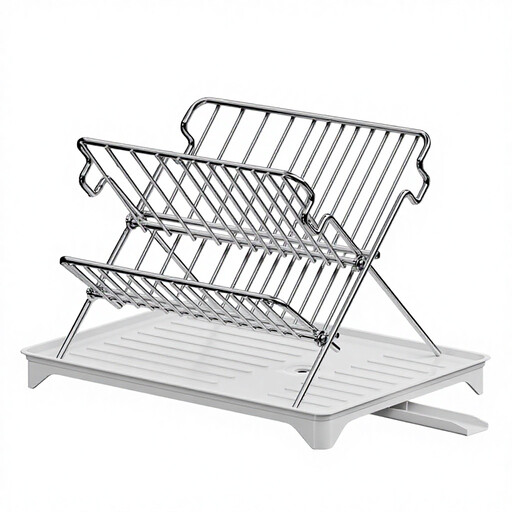
Why it's a great choice: Ideal for studios or kitchens where countertop space is at a premium. Its two-tier structure maximises vertical drying capacity, while its foldable design allows you to store it in a cupboard, completely freeing up the countertop when not in use.
Its stainless steel and PP construction resists moisture, avoiding the premature rust trap. Its removable drainboard with an integrated drainage channel prevents water from pooling on the counter.
Foldable design for maximum space-saving. 2-tier structure offers high capacity on a small footprint.
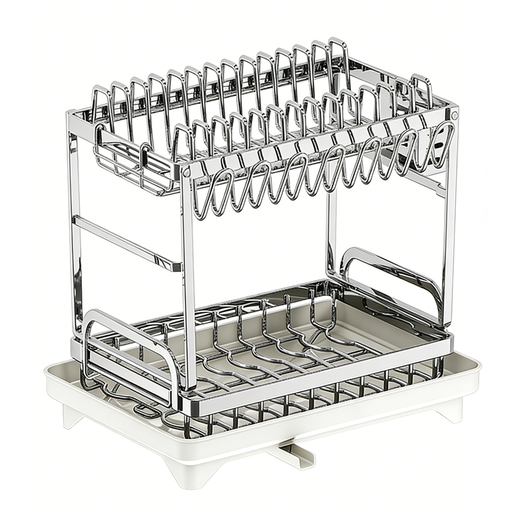
Why it's a great choice: Designed for families and large households, this model handles a high volume of dishes. Its two-tier structure and dedicated compartments allow you to organise plates, bowls, and cutlery neatly, simplifying both drying and storage.
Its reinforced frame ensures excellent stability that won't buckle under weight, avoiding the instability trap. The integrated drainage pipe directs water straight into the sink, preventing any stagnation.
Extra-large storage capacity thanks to its two tiers. Compartmentalised storage for clear organisation and easy access.
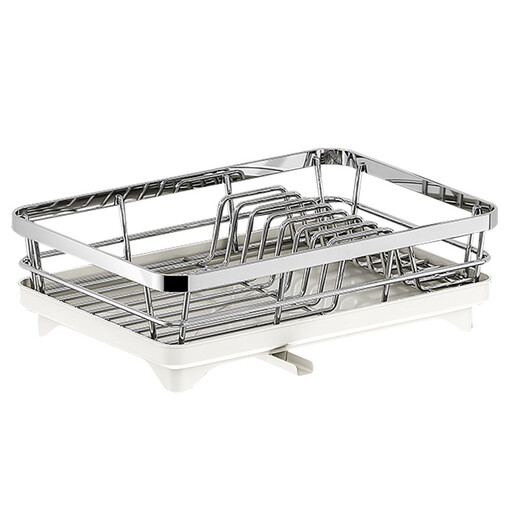
Why it's a great choice: Perfect for those who appreciate straightforward functionality. Its one-piece structure is ready to use right out of the box, with no assembly required. The single-tier design is easy to clean and offers generous capacity for daily use, with no frills.
Its one-piece design eliminates weak points and the risk of instability. The separate and removable PP drainboard simplifies cleaning and prevents water and limescale buildup.
Ready to use right out of the box. Easy-to-remove drainboard for effortless cleaning and impeccable hygiene.
We've compiled a complete selection of products that meet our demanding specifications and quality standards.
1. How do I clean a stainless steel dish rack to prevent limescale marks? For regular maintenance, simply wipe it down with a soft sponge and dish soap. To remove stubborn limescale marks, use a cloth soaked in diluted white vinegar. Let it sit for a few minutes, rinse thoroughly with clean water, and dry with a soft cloth to restore its shine.
2. Is a 2-tier dish rack really stable? The stability of a 2-tier dish rack depends on its design quality. Opt for models with a wide base, non-slip rubber feet, and a frame made of thick steel tubes. A well-made model, correctly assembled and placed on a flat surface, is perfectly stable, even when fully loaded.
3. What's the difference between stainless steel and chrome-plated steel? Stainless steel is an alloy of iron, carbon, and chromium (sometimes with nickel) that is inherently rust-resistant. The protection is present throughout the entire material. Chrome-plated steel, in contrast, is standard steel coated with a very thin layer of chrome. If this layer gets scratched or wears down, the steel underneath is exposed to moisture and will begin to rust. For kitchen use, stainless steel is a far more durable choice.