
Livraison le jour même ou le lendemain

Qualité garantie

Débloquez vos offres de bienvenue: Livraison GRATUITE | Jusqu'à -80 % | 30 jours d'essai gratuits à JoyPlus
Téléchargez l'application
A dish drying rack isn't just for holding a few plates after washing. It needs to fit without encroaching on your worktop, drain water properly and stay stable day after day. Whether you're in a compact city kitchen or a family home, the wrong choice can quickly clutter your sink or leave a puddle beneath your dishes.
Before comparing different models, here are the most common mistakes to avoid.
A drying rack might look compact in a photo, then overhang by several centimetres on the sides or block a cupboard from opening. Measure the length, width and height available around your sink. For a countertop model, also check the distance between your worktop and any wall units.
A 2-tier dish drying rack offers more vertical storage, but can become awkward in a kitchen with low-hanging cabinets.
A dish drying rack with a drip tray protects your worktop, provided you remember to empty the tray regularly. Other models have a swivel spout that channels water directly into the sink. This solution reduces handling, but requires precise positioning and a sink that's close enough.
A tray that's difficult to remove traps water and makes cleaning harder. So check the removal system before you order.
The words 'stainless steel' aren't enough to tell two models apart. Also look at the thickness of the metal, the overall stability, the presence of non-slip feet and how easy it is to clean. 304 stainless steel is often preferred for accessories exposed to moisture, but it still needs regular care and drying after use.
For a plastic drying rack, check the maximum load capacity and the rigidity of the dividers. A lightweight structure can work perfectly for someone living alone, but may struggle when loaded with the family's entire wash-up.
A plate holder should keep plates separated to allow air to circulate and prevent chipping. For a single person or a couple, a capacity of 9 to 12 plates may be enough, depending on your washing habits. Families would do better to choose a larger format or a 2-tier dish drying rack.
A separate cutlery drainer lets you store forks, knives and spoons without mixing them with the rest of the dishes. Some models also include side slots for mugs and glasses.
Compare the stated dimensions with your worktop, not forgetting the handles and the drainage area. A narrow model will easily fit next to a wall or window, while a wider basket is better suited to larger quantities of dishes.
The base must sit flat. Rubber feet can protect your worktop from scratches and reduce slipping, but they won't compensate for overloading or an uneven surface.
Water should drain away quickly, without getting trapped under the plates. A removable tray, a slatted grid or a swivel spout all make this easier. Clean the areas that come into contact with water regularly and dry the metal parts after washing to minimise marks and limescale.
An expandable sink drying rack works differently: it drains water directly into the sink, but must be adjusted to a width that fits your sink. Measure the inside of your sink before buying.
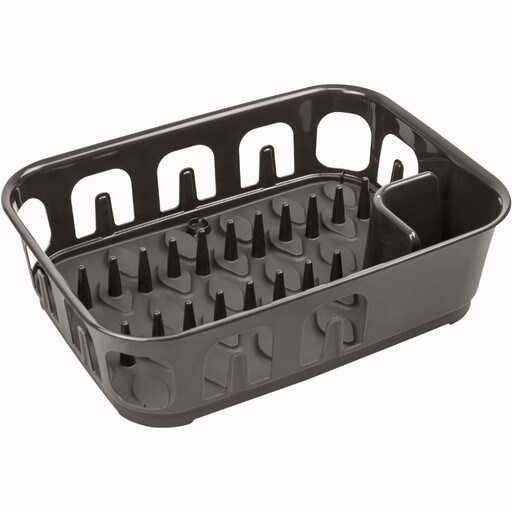
Why this suits this profile: Its square shape works well in small to medium kitchens. Its stated capacity of 9 plates covers the everyday needs of a single person or a couple.
The dimensions are clearly stated and the integrated cutlery holder saves you buying an extra accessory. The manufacturer also states a maximum load of 6 kg, which should be respected.
Polypropylene, space for mugs, drip tray and dishwasher-safe according to the manufacturer's instructions.
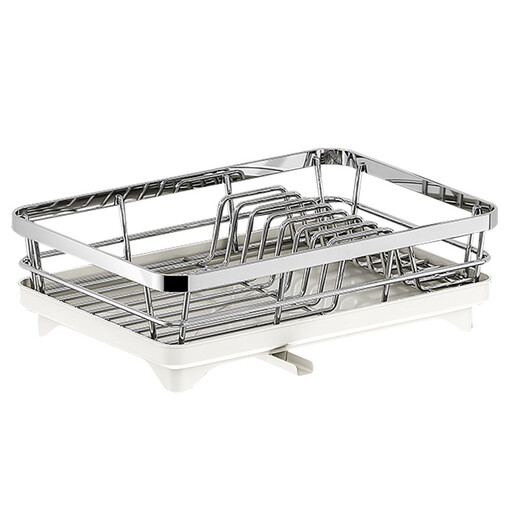
Why this suits this profile: Its stainless steel construction and separate storage compartments are aimed at those looking for a durable accessory designed to stay on the worktop every day.
The PP tray removes easily for emptying water and cleaning the whole unit. The model is presented as an integrated structure, with no assembly required.
Compartments for plates, bowls, mugs and cutlery, water drainage system and stated dimensions of 42 × 29 × 12.7 cm.
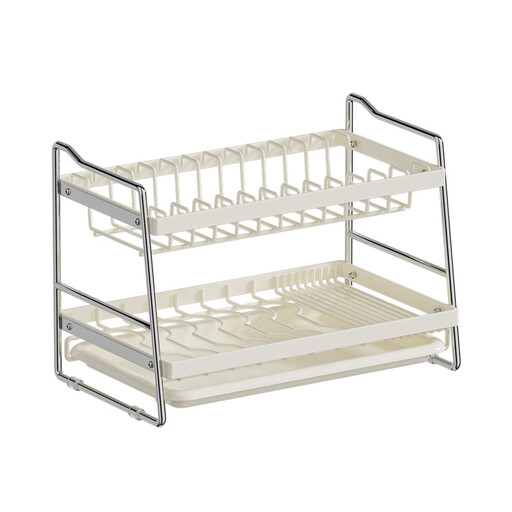
Why this suits this profile: Its two tiers let you separate everyday dishes, bowls, glasses and utensils, while making use of the available height.
The drainage system is integrated into both tiers and the whole unit sits on the worktop. You will need to assemble the different parts and check stability before loading it.
Approximate dimensions of 40 × 23.6 × 28.7 cm, vertical storage and capacity suited to several categories of dishes.
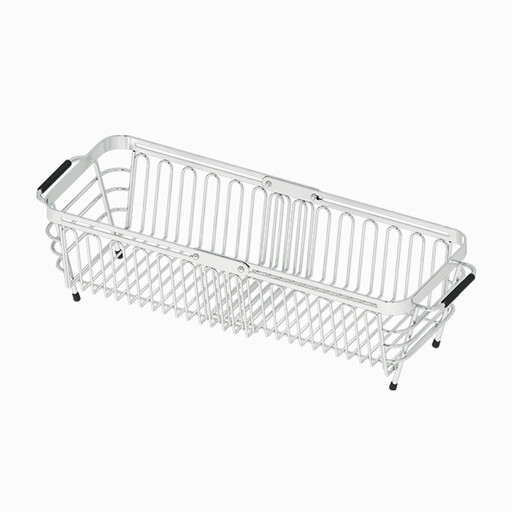
Why this suits this profile: This model sits over the sink and expands from 29 to 44 cm. It frees up your worktop – a real advantage in kitchens where every centimetre counts.
Water drains directly into the sink instead of sitting in a tray. Still, measure the inside width of your sink and check the stability of the support points.
304 stainless steel, adjustable length, slatted grid and versatile use, including as a basket for rinsing fruit and vegetables.
We've compiled a full, real-time updated selection of products that meet these exacting criteria as well as European safety standards.
Position it near the sink, on a flat surface and far enough from the edge of the worktop. The tray must remain easy to access for emptying and cleaning. If space is tight, a model that sits over the sink can reduce clutter.
304 stainless steel is a common choice for damp environments. However, look at the overall design: quality of the welds, stability of the feet and effectiveness of the drainage system. Cleaning with a soft sponge and a non-abrasive detergent will help preserve the surface.
Empty the tray regularly, rinse away any deposits and dry the metal parts. Avoid exceeding the maximum load stated by the manufacturer. For a multi-function drainer basket or a sink organiser, also remove any food debris to maintain good water drainage.