
Livraison le jour même ou le lendemain

Qualité garantie

Débloquez vos offres de bienvenue: Livraison GRATUITE | Jusqu'à -80 % | 30 jours d'essai gratuits à JoyPlus
Téléchargez l'application
Keeping a kitchen sink immaculate, without a single scratch, is one of life's simple pleasures. Yet, a moment of inattention, a slipping pot, or a dropped glass is all it takes for unsightly marks or chips to appear. The sink mat then emerges as the obvious solution to protect both your sink and your dishes. But be warned: not all models are created equal. Some, poorly designed, quickly become breeding grounds for bacteria or prove to be completely useless.
As a product expert at Joybuy, I'm here to guide you through the jungle of sink mats. Let's break down the pitfalls to avoid and the criteria that truly matter when choosing an effective sink protector, beyond the glossy marketing promises.
An impulse buy is a recipe for regret. Here are the two deal-breakers that can render a sink mat unusable (or worse, smelly) in just a few weeks.
To find the perfect sink liner, focus on objective criteria. Here are two that are absolutely fundamental.
The material of your mat directly determines its effectiveness, hygiene, and lifespan.
A good sink protector must be hygienic. To ensure this, check for these features:
There's no need to search for a one-size-fits-all miracle product. The best mat is the one that fits your kitchen and your habits. Here is our 2026 selection.
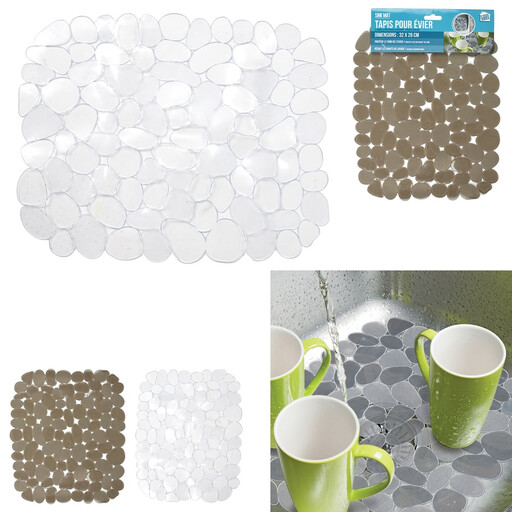
Why we chose it: Perfect for renters or as a first-time purchase. This mat gets straight to the point: protecting a standard-sized sink from everyday bumps and scratches, all without breaking the bank. Simple, direct, effective.
Its open-grid design is engineered for immediate water drainage, which eliminates the risk of stagnation and residue build-up.
Its durable plastic forms an effective barrier against impacts from heavy utensils. Its understated look integrates seamlessly into most kitchens.
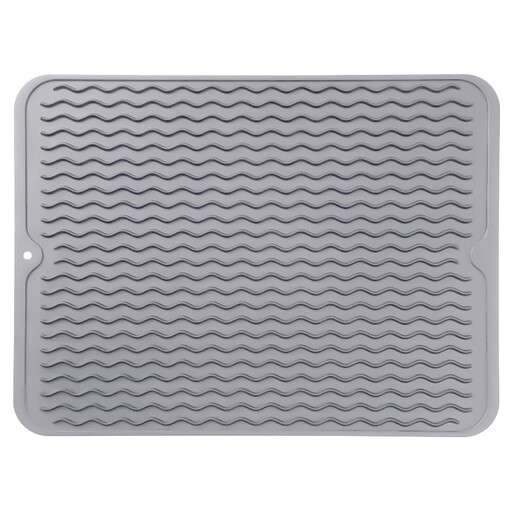
Why we chose it: The perfect ally for those who want a do-it-all product. This flexible mat can be used both in the sink to cushion impacts (ideal for fragile dishes) and on the countertop as a clean and practical drying surface.
Thanks to its flexibility, it bypasses the flaw of rigid mats: it also protects delicate dishware by cushioning shocks, instead of just protecting the sink.
Its large size and draining design make it ultra-versatile: a protective sink liner, an auxiliary drying rack for glasses, and even a trivet to protect the countertop.
Why we chose it: Have a granite, resin, double-basin, or XXL sink? You need a custom solution. A standard mat would leave areas exposed and be anything but practical.
The trick is not to persist with an ill-fitting mat. Instead, turn to modular models (which assemble like a puzzle) or mats specifically designed to be cut to the right size.
A perfect fit. A cut-to-fit or modular mat covers 100% of the sink bottom. The result: maximum protection against scratches and impacts, with no blind spots.
We have curated a complete and up-to-date selection of products that meet our demanding selection criteria and safety standards.
The secret is consistency. After each wash, make it a habit to lift the mat and rinse it with hot water (along with the bottom of the sink) to remove food and soap residue. Once a week, give it a deep clean with a brush and dish soap, or a little white vinegar. Let it air dry completely before putting it back.
It all depends on the material. Most good-quality silicone mats are dishwasher-safe, preferably in the top rack. For plastic models, it's essential to check the manufacturer's instructions: excessive heat could warp them. When in doubt, hand washing is always the safe bet.
For a stainless steel sink, which is very sensitive to scratches but quite tough against impacts, a semi-rigid plastic or silicone mat is a good compromise. For a ceramic or resin sink, which is less prone to fine scratches but more vulnerable to chipping from impact, silicone is king. Its cushioning power is far superior and will save your sink (and your dishes) in case of a drop.