
Livraison le jour même ou le lendemain

Qualité garantie

Débloquez vos offres de bienvenue: Livraison GRATUITE | Jusqu'à -80 % | 30 jours d'essai gratuits à JoyPlus
Téléchargez l'application
A slow drain, unpleasant odours, or a stubborn clog in your kitchen or bathroom?? The cause?? Most often, it's a problem with the drain system of your sink or basin. Faced with a multitude of products – drain plugs, basin traps, sink strainers – it can be hard to know where to start.
This guide is here to help you make sense of it all, understand the mechanics of an effective drainage system, and choose the right products for your needs. Whether you're installing a new system, renovating an existing one, or simply looking to prevent clogs, follow our guide?!
Before you get started, there are a few technical points to check to ensure a compatible and effective installation.
The overflow is the small hole located on the upper part of your basin or sink bowl that prevents it from overflowing. Your choice of drain plug depends directly on it:
This is the first detail to check to avoid making a mistake. Rest assured, this compatibility is usually clearly indicated on product pages.
The drain plug is the visible part in the sink that controls the opening and closing of the drain. The main types are:
pop-up drain: Very popular for its sleek design and ease of use. A simple press of a finger is all it takes to open or close it.Prevention is better than cure. A well-designed basin trap or the addition of a strainer can save you a lot of trouble. Hair, soap residue, and food scraps are the main culprits behind clogs. A hair catcher or a sink strainer is a small investment that provides long-term protection for your pipes. Some drain plug models come with a built-in removable filter, a highly practical two-in-one solution.
To help you see more clearly, here is our selection of products that meet different needs, from a complete installation to simple prevention.
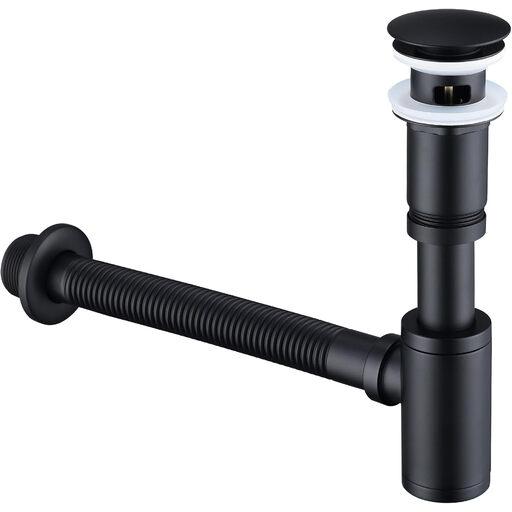
Why It Stands Out
This HOMELODY set is a complete solution for installing or renovating a basin. It combines a pop-up drain and a basin trap in a very trendy matte black finish. Its high-purity brass construction ensures excellent durability, while the flexible stainless steel bellows greatly simplifies installation by adapting to different wall configurations.
The Pros
Who Is It For? Ideal for those renovating their bathroom and looking for a universal drain set (standard 1? inch connection) that combines functionality, durability, and aesthetics. It is suitable for basins with a thickness of 18 to 54 mm equipped with an overflow.
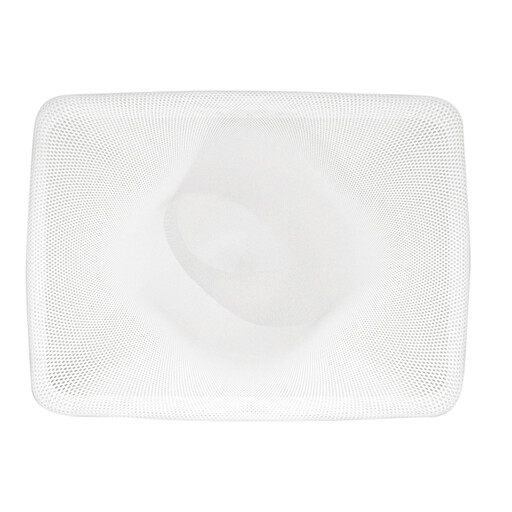
Why It Stands Out
This product offers a different and highly effective approach for the kitchen. It is a pack of 100 disposable nets to be placed over the sink drain. They act as an ultra-fine sink strainer, capturing the smallest food particles that usually pass through conventional strainers. Once full, simply throw the net away and replace it with a new one.
The Pros
Who Is It For? Perfect for families and anyone who cooks frequently. It's a simple and hygienic solution for keeping kitchen pipes clean and preventing clogs caused by the accumulation of organic waste.
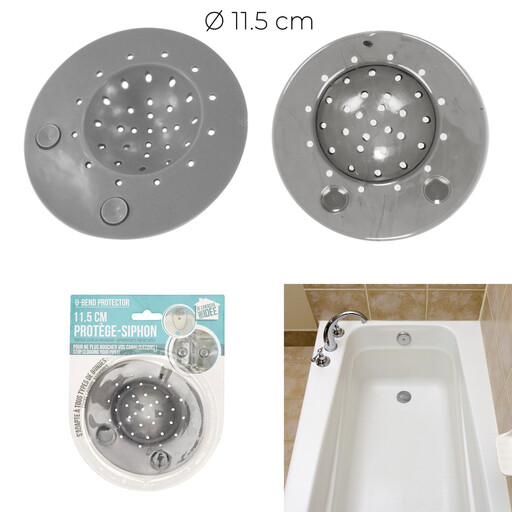
Why It Stands Out
This drain protector is the simplest and most versatile plumbing accessory. Made of flexible polypropylene, it simply sits over the drain opening of your shower, bathtub, or sink. Its fine perforations let water pass through but effectively trap hair and other debris. Its 11.5 cm diameter makes it compatible with most standard drains.
The Pros
Who Is It For? Essential for households where hair clogs in the bathroom are a recurring problem. It is also a practical and economical solution for renters who do not want to modify the existing installation.
Our selection covers common needs, but the world of plumbing accessories is vast. If you are looking for a specific size, finish, or feature, be aware that there are a multitude of other solutions available.
? Explore our complete collection of drainage systems to find the perfect part for your needs.
1. How do I know if my basin needs a drain with or without an overflow? Simply look inside your basin bowl. If you see one or more small holes near the top edge, it has an overflow. You will therefore need a drain "with overflow". If the wall of the bowl is smooth and has no holes, you need a drain "without overflow".
2. What is the difference between a drain plug and a trap? The drain plug is the part that attaches to the opening of the sink or basin. It is the visible component that allows you to hold or drain water. The trap, on the other hand, is the pipe (often S-shaped or P-shaped) located under the basin. Its role is twofold: it drains water to the main pipes, and its shape retains a small amount of water that acts as an anti-odour barrier, preventing sewer gases from rising up.
3. How often should a basin trap be cleaned? It is recommended to clean the trap every 6 to 12 months as a preventative measure, even if there are no clogs. If you use a sink strainer or a hair catcher, you can clean it less frequently. For a standard cleaning, simply unscrew the bottom part of the trap (the cleanout plug) to remove accumulated debris. Don't forget to place a bucket underneath before you start.