
Livraison le jour même ou le lendemain

Qualité garantie

Débloquez vos offres de bienvenue: Livraison GRATUITE | Jusqu'à -80 % | 30 jours d'essai gratuits à JoyPlus
Téléchargez l'application
A colour treatment, highlights or balayage can quickly lose its vibrancy if your hair-washing routine is not suitable. However, choosing a shampoo for coloured hair is not simply a matter of looking for the words “colour protection”. Formulas, pigments and cleansing methods can vary considerably from one product to another.
Here are the main pitfalls to avoid, the details to check on the label and a selection of shampoos suitable for different needs.
A purple shampoo for blonde hair contains pigments designed to visibly tone down yellow or orange hues. It therefore does not serve exactly the same purpose as a colour-protecting shampoo, which cleanses coloured hair while helping to limit loss of intensity over time.
Using a purple product on brown, copper or red hair does not address the same need. The first question to ask yourself is simple : do you want to preserve your colour or correct certain tones ?
A sulphate-free shampoo for coloured hair may be suitable if you are looking for a gentler cleanse or if certain surfactants tend to dry out your hair. However, the absence of sulphates alone does not guarantee that a formula will suit every scalp and every length.
Take the time to check the INCI list. Some products use gentle surfactants such as sodium cocoamphoacetate or decyl glucoside, while others rely on different cleansing agents. The amount of lather, how often you wash your hair and individual sensitivity also play a part.
Claims such as “up to 40 washes”, “three times shinier” or “twice as nourished” refer to results claimed by the brand under specific testing conditions. They do not guarantee the same result for everyone.
Colour longevity depends in particular on the porosity of the hair fibre, how often you shampoo, exposure to sunlight, use of heated styling tools and the type of colour treatment. It is better to compare concrete details : size, highlighted ingredients, presence of pigments, type of surfactants and directions for use.
In the European Union, ingredients are listed in descending order of concentration, in accordance with the regulations applicable to cosmetics. Also check for any fragrance allergens if your skin is sensitive to them, as well as the rinsing and storage instructions.
The word “professional” often refers to a particular size or premium positioning, but it is not enough to prove that a product is superior. A professional shampoo for coloured hair may be appealing because of its larger size or targeted formula. Conversely, a smaller bottle may be more practical for trying a product.
Purple shampoos are not necessarily intended for every wash. The recommended leave-on time, generally between one and five minutes depending on the formula, affects the intensity of the result. Wearing gloves may be advisable when the product contains a high concentration of pigments.
To help preserve your colour, apply the shampoo mainly to the scalp and let the lather run through the lengths. A conditioner or mask can then help reduce any feeling of dryness and make detangling easier.
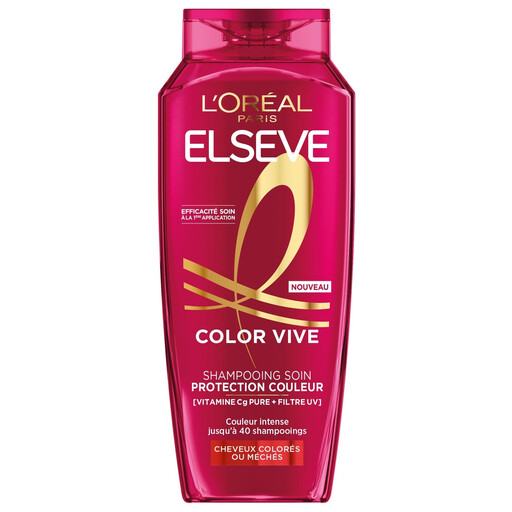
Why this choice suits this profile : Its 300 ml size is ideal for starting a routine designed for coloured or highlighted hair, with simple at-home use.
The product details clearly state that it is intended for coloured or highlighted hair and provide information about its composition, rather than relying solely on a marketing claim.
UV filters and a vitamin C derivative listed in the formula ; made in France.
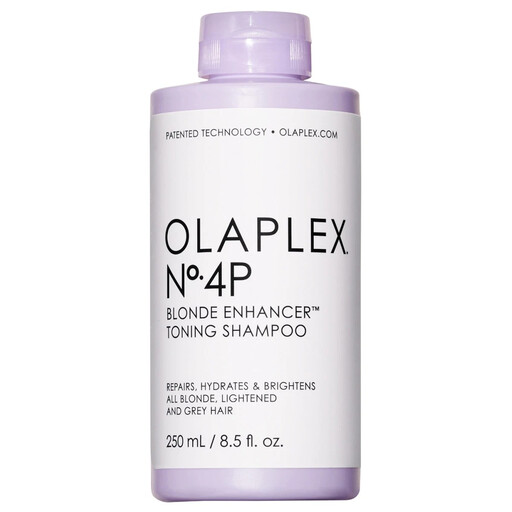
Why this choice suits this profile : It targets natural and coloured blonde or grey hair with a concentrated formula and an adjustable leave-on time.
It is not presented as a simple colour-protecting shampoo : the presence of purple pigments and the recommended leave-on time clearly indicate that it is designed to neutralise certain tones.
Acid Violet 43 pigment ; formula stated to be sulphate-free and a 250 ml bottle.
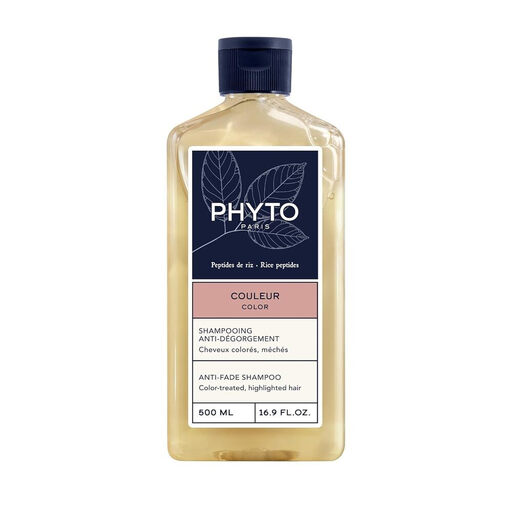
Why this choice suits this profile : Its large 500 ml size and anti-fade action are ideal for anyone who regularly maintains a salon colour.
Its anti-fade cleansing-care function for coloured hair is clearly stated. It is therefore not misleadingly presented as a purple shampoo for blonde hair.
Formula stated to be free from sulphates and silicones ; rice peptides and plant extracts listed in the composition.
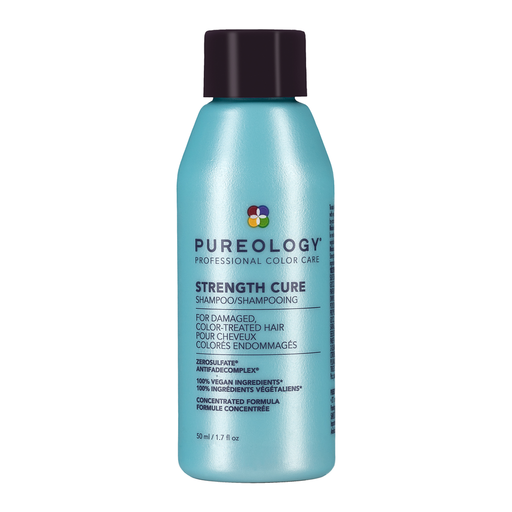
Why this choice suits this profile : Its 50 ml size lets you try a routine designed for coloured and damaged hair, or take it with you when travelling.
The trial size means you do not have to buy a large bottle before checking how well you tolerate the formula and how it feels on your hair.
Formula stated to be free from sulphates, parabens, mineral oil and animal-derived ingredients ; contains conditioning agents.
We have put together a complete, real-time updated list of products that meet these demanding selection criteria and European safety regulations.
Yes, provided the formula suits your scalp and the manufacturer recommends this use. Purple shampoos are generally used occasionally, however : their role is to correct certain tones, not to replace a treatment shampoo every time you wash your hair.
It depends entirely on the information shown on the packaging, particularly the symbol indicating the period after opening or the minimum durability date. Keep the bottle tightly closed and away from heat and direct sunlight. If the smell or texture changes, or if a skin reaction occurs, stop using it immediately.
No. It is a choice based on your preferences and routine, not a general requirement. Check the INCI list, take your scalp’s sensitivity into account and, above all, choose a formula suited to your colour, how often you wash your hair and the condition of your lengths.