
当日/次日达

品质保障

开启新人专享福利: 全场免邮 | 低至 2 折 | 免费试用 30 天 JoyPlus 会员
下载 Joybuy
Yellow, golden or brassy tones can appear in natural, highlighted, balayage or bleached blonde hair. Grey, white and silver hair can also be affected, particularly after repeated washing, sun exposure or frequent contact with mineral-rich water. A purple shampoo for blonde hair can help to visually neutralise these warm tones, provided you choose a suitable formula and follow the recommended processing time.
Before you buy, three common mistakes are worth avoiding.
Purple is generally used to correct yellow tones. If the unwanted tones are more orange or brassy, its effect may be less noticeable and will depend, among other things, on how light the hair is. On very light blonde hair, a de-yellowing shampoo or a silver shampoo for blonde hair may be particularly suitable. Grey and white hair can also benefit from a purple formula to maintain a cooler appearance.
Look at your hair in natural light before making your choice. Dark blonde hair with orange undertones will not react in the same way as icy blonde or silver-white hair.
The terms ‘purple’, ‘toning’ and ‘re-pigmenting’ do not all indicate the same intensity. Check the brand’s instructions carefully: some formulas should be rinsed out immediately, while others need to be left on for 1 to 5 minutes.
For your first use, test the product on a small, discreet section of hair. Once a week is often enough for light maintenance. If you increase the frequency, adjust it according to your hair colour, porosity and sensitivity.
Wear gloves when recommended by the brand: the pigments may temporarily stain your hands or certain surfaces.
A shampoo for bleached hair should cleanse without leaving the lengths feeling rough. Sensitised hair may sometimes benefit from a sulphate-free formula, such as a sulphate-free blonde shampoo, or from alternating a toning shampoo with a gentle cleansing treatment.
It is better to check the INCI list than to rely solely on marketing claims. The presence of purple pigments, particularly those listed as CI 60730 / Acid Violet 43, indicates a correcting function. By contrast, an illuminating chamomile shampoo may add softness and shine without neutralising yellow tones in the same way.
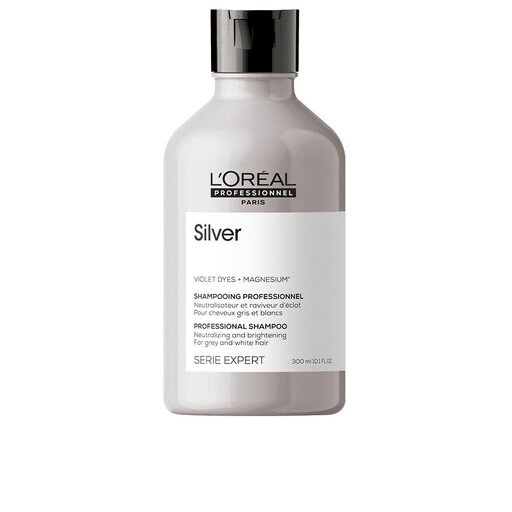
Why this choice suits this profile : At 300 ml, this bottle is a good introduction for blonde, grey or white hair prone to yellow or brassy tones.
The product details recommend leaving it on for 3 to 5 minutes and suggest asking your hairdresser for advice. This helps reduce the risk of overloading the hair with pigment.
The formula contains a purple pigment, while the product details mention impurity removal and the presence of amino acids.
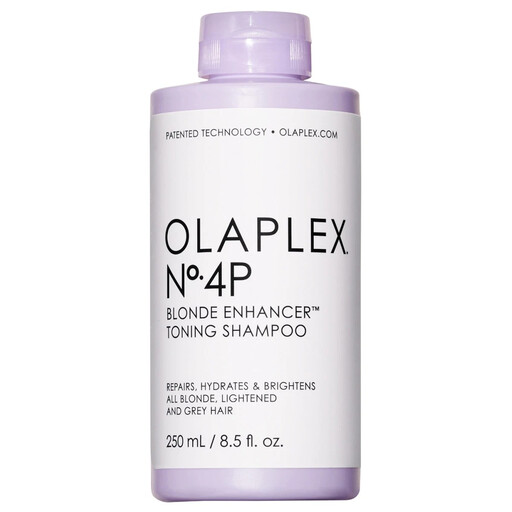
Why this choice suits this profile : Its concentrated formula and adjustable intensity are ideal for anyone who wants to regularly fine-tune the tone of blonde or grey hair.
The recommended processing time is 1 to 3 minutes, and can be extended to 5 minutes for a more intense correction. This means you can adjust the result without applying strong neutralisation every time.
A sulphate-free formula, the purple pigment Acid Violet 43 and a 250 ml format.
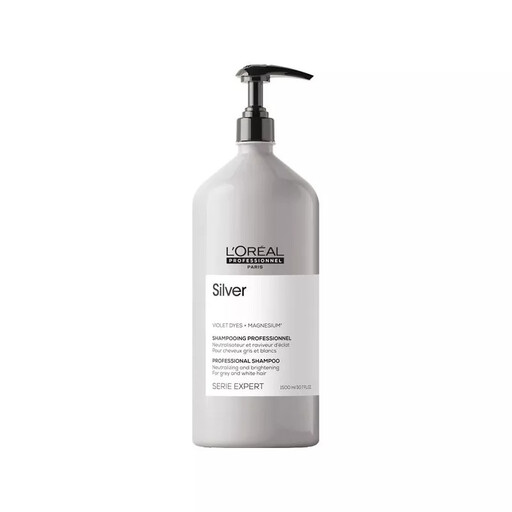
Why this choice suits this profile : At 1 500 ml, this bottle could suit a hair salon or a household where several people maintain their blonde, white, grey or silver hair.
The large format means you do not need to repurchase the product as often. The product details recommend using it once or twice a week, depending on your needs.
A professional-size format, purple pigments and recommended use on natural, coloured, bleached, white, grey and silver hair.
To avoid drying out the lengths or making certain strands look darker, it is best to introduce it gradually:
Anyone with a reactive scalp should check the ingredients and stop using the product at the first sign of irritation. Avoid contact with the eyes and follow the precautions provided on the packaging.
We have brought together a complete selection, updated in real time, of products that meet these demanding selection criteria and European safety requirements.
You should generally start by using it once a week, then adjust the frequency as the unwanted tones develop. Very porous hair tends to retain more pigment. Always follow the brand’s recommendations regarding frequency and processing time.
Yes. Some formulas are designed for blonde, grey, white or silver hair and can visually reduce yellow tones. However, the result depends on the base colour, the porosity of the hair fibre and how regularly the product is applied.
This is a maintenance effect that gradually fades with washing. How long it lasts varies according to how often you shampoo, the porosity of the hair fibre, sun exposure and water quality. This type of product does not replace either hair colour or a salon toner.