
Livraison le jour même ou le lendemain

Qualité garantie

Débloquez vos offres de bienvenue: Livraison GRATUITE | Jusqu'à -80 % | 30 jours d'essai gratuits à JoyPlus
Téléchargez l'application
A good scouring sponge is an essential ally in your kitchen. Yet, choosing one can feel like an uphill battle. Between durability promises that vanish after a few washes and "non-scratch" claims that leave permanent marks on your brand-new non-stick pan, disappointment is all too common.
As the Head of Product Recommendations at Joybuy, my mission is to help you cut through the noise. Let's forget the marketing jargon and focus on the facts. Here are the two most common traps to avoid and the objective criteria for making the right choice.
Trap #1?: The False "Scratch-Free" Promise The most common risk comes from sponges that claim to be gentle, but whose abrasive side is actually far too aggressive for modern surfaces (non-stick, ceramic glass, etc.). The result? Micro-scratches that, over time, permanently degrade your cookware.
Trap #2?: Premature Disintegration It's a classic scenario: a new sponge whose scouring pad peels away from the foam after just one week. This manufacturing defect, often due to poor-quality adhesive, renders the sponge useless and forces you to constantly buy replacements.
To stop throwing your money away, check these three points before you buy.
Not all scouring pads are created equal. It's crucial to distinguish between:
The soft part has two functions: to absorb and to wipe.
A sponge is a breeding ground for bacteria. For better hygiene:
Rather than an endless list, we've matched specific products to real-world needs based on their technical specifications.
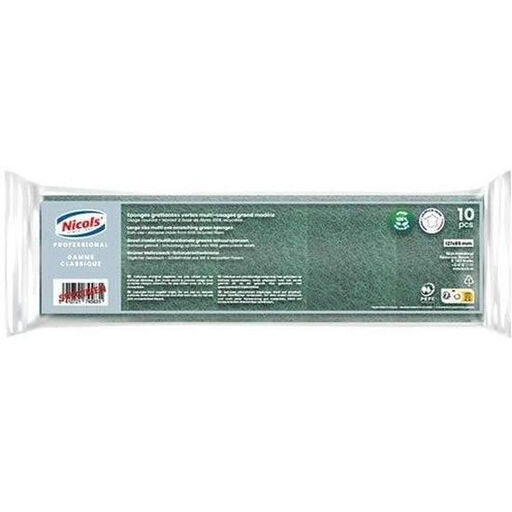
Why we chose it ? For those who want a reliable and economical stock for daily cleaning. This sponge pack is a simple, effective, no-frills solution for common tasks.
This classic model doesn't oversell. Its green side is clearly abrasive, perfect for heavy-duty jobs. There's no confusion with a false "non-scratch" promise.
The 10-pack format offers excellent value for money and ensures you have a supply for several months.
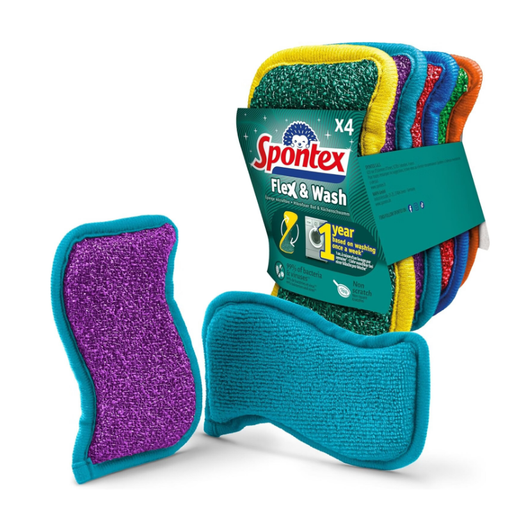
Why we chose it ? The perfect solution for modern kitchens with non-stick pans, ceramic hobs, and stainless steel. For those who want to scrub effectively without worrying about scratching their equipment.
Its scouring side is specifically designed not to scratch, with fibres engineered for sensitive surfaces. No more stress about accidental scratches.
This dual-sided sponge is reusable and machine-washable up to 52 times. A smart, durable investment that ensures perfect hygiene and reduces waste.
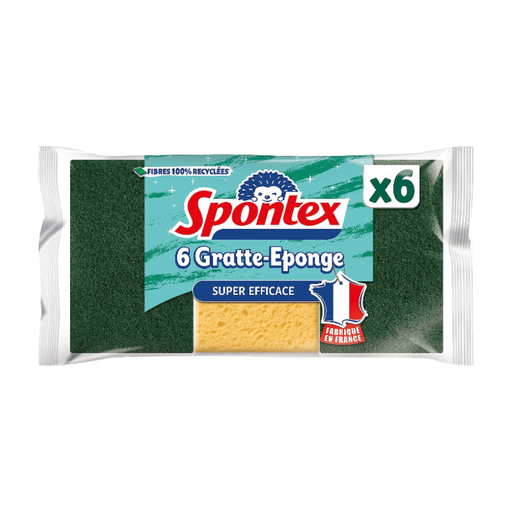
Why we chose it ? For those who are mindful of their environmental impact but refuse to compromise on effectiveness. This sponge combines cleaning performance with sustainable materials.
This product is all about transparency. Its scouring pad is made from 100% recycled fibres and its sponge part is plant-based. A mark of quality that helps avoid low-grade materials that disintegrate.
Made in France, this multi-purpose sponge is machine-washable. It combines an effective scouring pad with a vegetable cellulose sponge (cotton, wood pulp, linen)—a winning combination.
While sponges are essential, a well-equipped kitchen doesn't stop there. Discover our full selection of practical and durable kitchen utensils.
For hygiene reasons, it's advisable to replace it every two weeks with heavy use. If your sponge is machine-washable, you can extend its life by running it through the washing machine regularly (at 40°C or 60°C, depending on the manufacturer). Throw it away as soon as it shows signs of wear or develops a persistent odour.
The easiest way: put it in the dishwasher on the top rack during a full cycle. Another option: moisten it and microwave it for one to two minutes (be careful to check that it contains no metallic parts!). Finally, soaking it in a mixture of water and white vinegar helps to neutralise odours.
It all depends on your priorities. The vegetable cellulose sponge is highly absorbent and biodegradable, making it a more eco-friendly choice. On the other hand, the polyurethane foam sponge is often more resistant to wear and tear, offering better longevity. Both can be very effective, provided you choose a quality model.