
Livraison le jour même ou le lendemain

Qualité garantie

Débloquez vos offres de bienvenue: Livraison GRATUITE | Jusqu'à -80 % | 30 jours d'essai gratuits à JoyPlus
Téléchargez l'application
A leaky pipe, a torn tarp, a cable that needs securing… The first instinct is often to reach for a roll of repair tape. Yet, who hasn't felt the disappointment of a repair that gives out after just a few days? The reason is simple: not all adhesive tapes are created equal. The problem is that the market is flooded with products making tempting promises that often hide critical flaws. Before you make your choice, it's crucial to know how to spot the pitfalls so you don't end up with a shoddy repair and money down the drain.
Here are the two most common mistakes to avoid:
To select an adhesive tape that will live up to its promises, you need to look beyond the packaging and focus on three key technical criteria.
The backing is the very structure of the tape. A quality cloth-backed tape consists of a fabric scrim (often cotton or a synthetic blend) laminated with polyethylene.
The adhesive is the most critical component. There are two main types:
A tape's ability to conform to the surface is paramount. A tape that is too rigid will only be effective on a perfectly flat surface. To repair a hose, a bike seat, or any object with curves, a flexible polyurethane tape or one with a backing specially designed for flexibility will be far more effective and durable.
For every repair headache, there's an adhesive solution. Here are our recommendations, matched with typical user profiles to help you hit the mark.
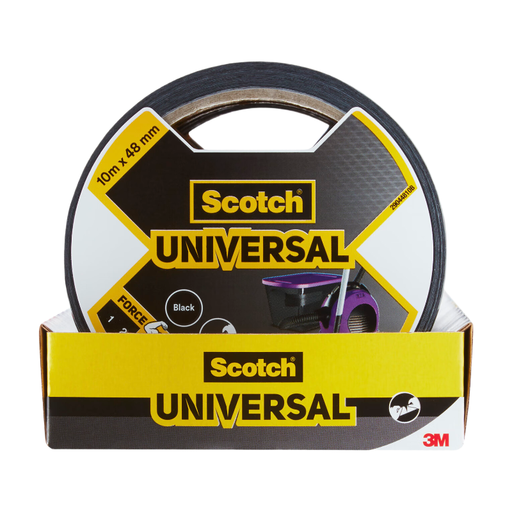
Why we love it: It's the classic you should always have in your toolbox for everyday indoor mishaps. Ideal for bundling cables, fixing a vacuum hose, or reinforcing a cardboard box, it handles the unexpected with no fuss.
It plays it straight. Clearly positioned for general indoor use, it avoids the "false all-rounder" trap that fails at the first sign of rain. Its synthetic adhesive is reliable on common surfaces like plastic, wood, and metal.
Super convenient, it tears easily by hand. Its surface is writable, a welcome bonus for staying organised.
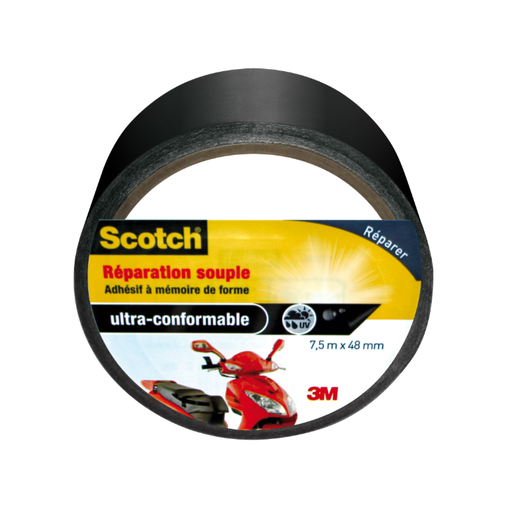
Why we love it: The perfect partner for repairs on objects with awkward shapes. Whether patching a tear on a jacket, a car seat, or fixing a garden hose, its flexibility ensures a wrinkle-free, bubble-free application.
It's the antidote to rigidity. Where a classic cloth tape would peel away, its ultra-conformable polyurethane backing perfectly hugs contours, ensuring lasting adhesion and a tight seal, even under tension.
Its exceptional flexibility and resistance to torsion make it a reliable solution for both indoor and outdoor applications.
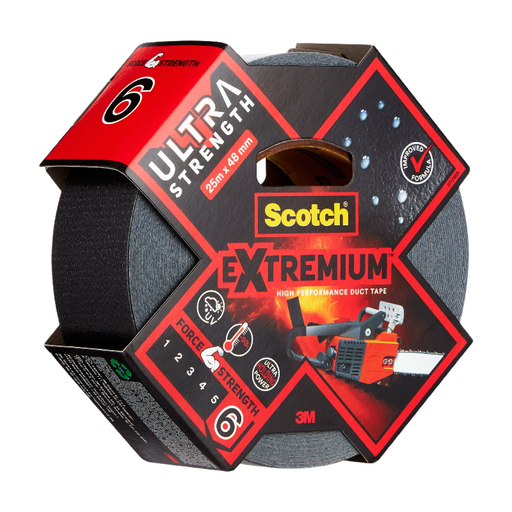
Why we love it: For demanding DIYers and pros who refuse to compromise. Ideal for heavy-duty repairs, sealing leaks (gutters, garden sheds), and creating durable outdoor fixes where water resistance and strength are paramount.
Its mission: unbeatable durability. Its ultra-thick backing and super-strong natural rubber adhesive guarantee an immediate bond and long-lasting hold, even on difficult surfaces like metal or concrete.
Waterproof backing and a powerful adhesive for maximum durability in the harshest conditions. Its 25-meter roll makes it an economical choice for heavy users.
Explore our complete range of adhesive solutions to find the product that precisely matches your repair and DIY requirements.
Historically, the term "duct tape" refers to a specific type of robust cloth-backed tape with a polyethylene backing over a fabric scrim. Today, the term is often used generically, but the quality can vary enormously. A black duct tape from a recognised brand like 3M Scotch guarantees a superior design and adhesive, a far cry from generic versions, offering better adhesion and greater durability.
For optimal adhesion, the secret is in the surface preparation. Make sure the area to be repaired is perfectly clean, dry, and free of grease. Then, apply the tape by pressing down firmly and evenly across its entire surface to push out air bubbles and maximise the adhesive's contact.
Yes, but only with a waterproof repair tape specifically designed for it, like the Scotch Extremium ULTRA. It can provide an effective solution for non-pressurised leaks (e.g., a gutter or a bucket). However, for pipes under pressure, this fix should only be a temporary solution until a professional can intervene.