
Livraison le jour même ou le lendemain

Qualité garantie

Débloquez vos offres de bienvenue: Livraison GRATUITE | Jusqu'à -80 % | 30 jours d'essai gratuits à JoyPlus
Téléchargez l'application
Fixing a picture frame, skirting board or bathroom accessory without getting out the drill may seem straightforward. However, choosing the wrong extra-strong double-sided adhesive tape can result in it coming loose, damaging the wall or leaving marks that are particularly difficult to remove. Whether you live in rented accommodation, are working on a car, setting up an office or tackling a home improvement project, the right choice depends on the surface, the weight of the item and its surroundings.
A powerful double-sided tape may stick as soon as it is applied without having reached its maximum strength. Some mounting adhesives need several hours, or even 24 hours, to develop their full holding capacity. Installing a heavy item straight away or handling it too soon could cause the tape to come loose or the item to fall.
Check the setting time specified by the manufacturer and hold the tape firmly against the surface when applying it.
An adhesive described as suitable for “all surfaces” is not necessarily appropriate for a porous painted wall, textured wallpaper or a dusty surface. Glass, metal, tiles and some plastics generally provide a smooth base. Untreated wood, plaster and uneven walls require extra care.
A greasy, damp or dusty surface significantly reduces the contact between the adhesive and the surface.
When used outdoors, moisture, temperature changes, rain and ultraviolet rays can weaken a tape that was not designed to withstand the elements. Conversely, a permanent tape is not the best choice if you plan to change your décor regularly.
Choose outdoor double-sided tape for installations exposed to the weather and removable adhesive tape for temporary fixings.
The stated load capacity generally applies under specific conditions: a clean surface, a stationary object, a suitable temperature and a sufficiently large contact area. It is therefore not a guarantee for every possible setup.
For a shelf, mirror or letterbox, distribute the tape across several areas. For small accessories, pre-cut pads make application easier. For example, the 20 × 40 mm Pattex pads claim to support up to 2 kg per pad after 24 hours, according to their product information.
Before applying the tape, remove dust and then degrease the surface with a product that is compatible with its finish. Allow it to dry completely. Next, cut a suitable length, avoid touching the adhesive side and apply even pressure across the entire area.
On a painted wall or delicate surface, test the tape first in an inconspicuous place. When removing it, avoid pulling suddenly: peel it off gradually to reduce the risk of lifting paint or damaging the finish.
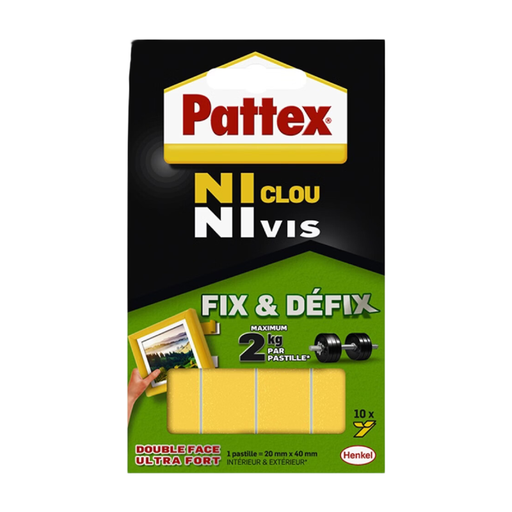
Why this choice suits this profile : The ten pre-cut pads are ideal for small items, so you do not need to buy a whole roll for a one-off installation.
The product information explains how to prepare the surface and specifies a 24-hour setting time, helping to prevent mistakes caused by applying a load too soon.
20 × 40 mm pads, supporting up to 2 kg per pad after 24 hours, with removal described as residue-free on suitable smooth surfaces.
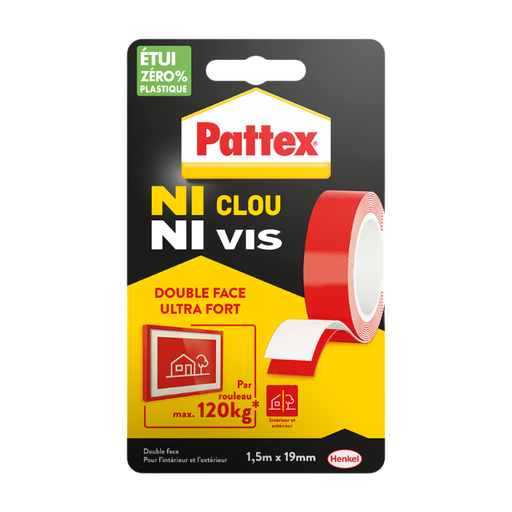
Why this choice suits this profile : Its 1.5 m roll is ideal for home improvement projects that require a custom cut.
The product information lists compatible materials as well as resistance to moisture and high temperatures, rather than making vague claims about suitability for every surface.
19 mm width, suitable for indoor and outdoor use, with stated compatibility with glass, metal, wood, stone and certain plastics.
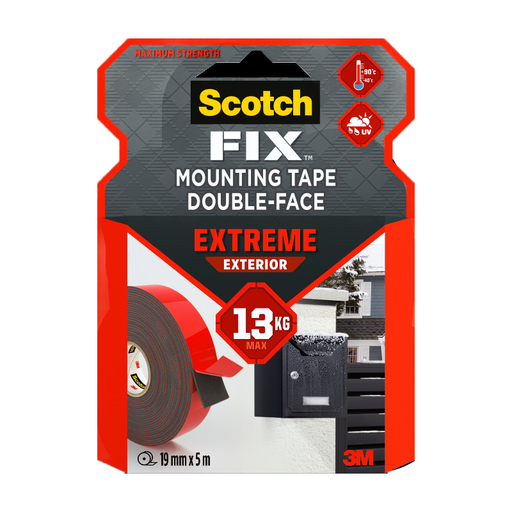
Why this choice suits this profile : At 5 m long, this roll is suitable for repeated fixings on fences, walls and various outdoor structures.
It is described as weather-, rain-, sunlight- and UV-resistant, giving it a clear advantage over standard indoor tape.
5 m × 19 mm roll, permanent black adhesive, with a stated capacity of up to 13 kg depending on the conditions of use.
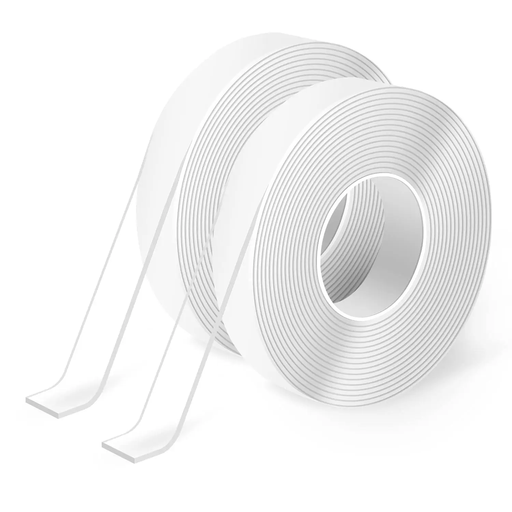
Why this choice suits this profile : Its two transparent rolls are suitable for frames, rugs, decorative panels and accessories that you may want to reposition.
The tape is described as washable and reusable, but testing it first remains essential on delicate paintwork and finishes.
Two 4 m rolls, 2 cm width, transparent material and a design suitable for domestic, professional or automotive use.
We have put together a complete, real-time updated list of products that fully meet these strict selection criteria and European safety regulations.
It depends on its formulation. Pattex pads state that they reach their final strength after 24 hours. Other tapes offer immediate adhesion, but the actual load they can support always depends on the cleanliness of the surface, the pressure applied and the bonded area.
Some nano gel tapes are described as washable and reusable. Their lifespan varies depending on the amount of dust, humidity, the number of times they are removed and the condition of the surface. After washing, allow the tape to dry completely and check its adhesion before attaching an item to it.
Start by slowly lifting one corner without pulling suddenly. Moderate heat can sometimes soften the adhesive, but test it first in an inconspicuous area. On wallpaper, fragile paint or a porous surface, residue-free removal cannot be guaranteed: always test it on a small area first.