
Livraison le jour même ou le lendemain

Qualité garantie

Débloquez vos offres de bienvenue: Livraison GRATUITE | Jusqu'à -80 % | 30 jours d'essai gratuits à JoyPlus
Téléchargez l'application
Are you a meticulous DIYer, a passionate gardener, or a home cooking enthusiast? A good pair of precision shears is the tool that transforms a chore into a simple, efficient task. Yet, the market is flooded with models making tempting promises that often fall short. A tool that dulls after a few cuts or has a faulty safety lock isn't just a bad investment—it's a potential hazard.
As the Head of Product Curation at Joybuy, I'm here to guide you through this jungle of options and help you make the right choice. Let's break down the pitfalls to avoid and the criteria that truly separate a reliable tool from a disposable gadget.
Before you pull out your credit card, learn to spot the design flaws that make a tool nearly unusable in the long run.
To avoid these disappointments, here are the technical specifications on which you should make no compromises.
The quality and longevity of the cut depend directly on the steel used.
For certain DIY jobs, the precision of the cutting angle is absolutely crucial.
User comfort and safety go hand-in-hand with performance.
Rather than a random list, we've selected models that meet specific needs while avoiding the pitfalls we've just discussed.
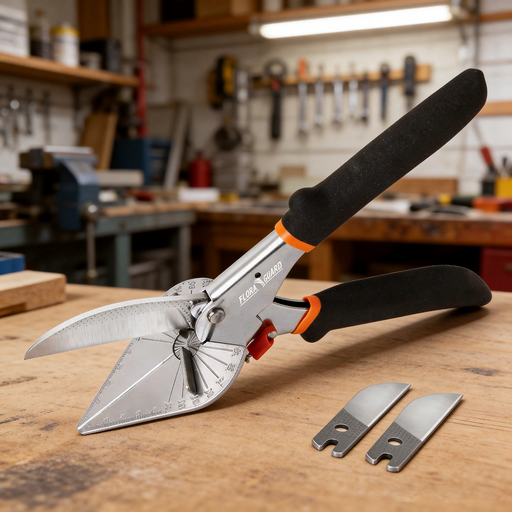
Why we chose it: Ideal for small finishing projects (installing trim, quarter round) without breaking the bank. It offers all the precision required for occasional jobs.
Its SK5 steel blade guarantees a far superior cutting edge compared to generic stainless steel. The engraved measurement scale and rotating safety lock check all the boxes for precision and safety.
Excellent value for money, with 2 replacement blades included to extend the tool's lifespan.
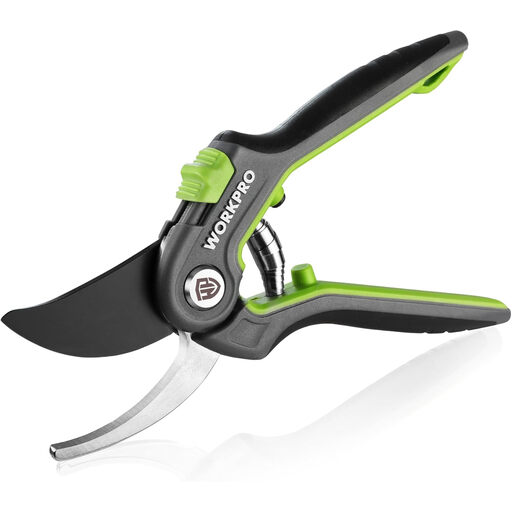
Why we chose it: Specifically designed for pruning plants, shrubs, and roses. Its clean "bypass" cut is essential for not crushing stems and ensuring proper healing.
The SK5 steel blade, featuring an anti-rust coating, ensures a durable edge. Its safety lock is reliable, and its ergonomic, spring-loaded handle limits fatigue.
A clean cut up to 19 mm in diameter on green wood, which preserves plant health. A reliable ally for regular garden maintenance.
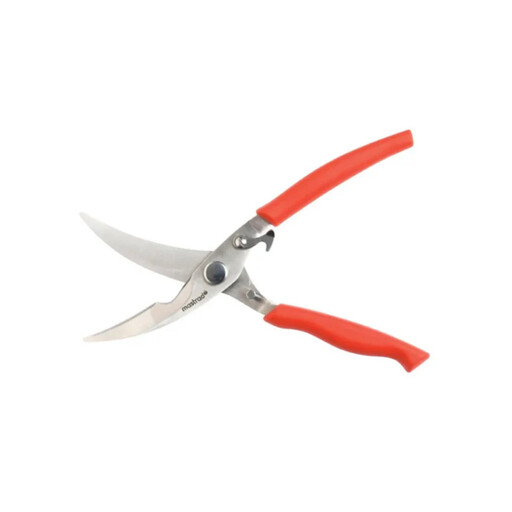
Why we chose it: A pro-grade, powerful, and specialized tool for the kitchen. Perfect for cleanly cutting poultry, pizza, or a tart without mangling the toppings.
Its blades are made of high-quality, reinforced stainless steel, perfectly suited for food contact. The pruner-style mechanism multiplies cutting force, while the integrated safety lock proves very reliable.
Its long, curved blades allow for a clean, controlled cut, even through small bones or thick crusts. The result: a consistently impeccable presentation.
We have curated a complete selection of products that meet our quality criteria and current safety standards.
Maintenance is simple but crucial. After each use, wipe the blade with a cloth to remove sap and debris. Make sure it is completely dry before storing it. Occasionally, apply a thin coat of oil (camellia oil or tool lubricant) to the blade and pivot. This will protect it from moisture and ensure the mechanism remains smooth.
Absolutely not. These tools are designed exclusively for soft materials: pine wood, PVC, MDF, rubber gaskets, etc. Attempting to cut hardwood, metal, or thick branches will irreversibly damage the blade's edge and risk bending the mechanism.
Bypass pruners, like the WORKPRO model in our selection, work like scissors: two blades cross over to make a clean cut. This is the preferred technology for living wood (branches, rose bushes) because it doesn't crush the plant's tissues. In contrast, an anvil pruner uses a sharp blade that closes against a flat surface (the anvil). It is therefore better suited for dead, dry wood, which it cuts by crushing.