
Same-day & Next-day Delivery

Quality Guaranteed

Unlock Your Welcome Offers: FREE Delivery | Up to 80% OFF | Free 30-day JoyPlus trial
Download the APP
A portable induction hob can be incredibly useful in a studio flat, student accommodation, small kitchen or motorhome. It can also provide an extra cooking zone when your main cooker is already in use. The problem is that many models look alike in photos, while their uses, dimensions and safety features can vary considerably.
Before placing your order, avoid these three common pitfalls:
For everyday use, a maximum power rating of between 1 800 and 2 000 W is generally enough to boil water, prepare soup, cook pasta or sear food in a frying pan. However, a 2 000 W induction hob does not consume 2 000 W continuously: it all depends on the level selected and how long it is used.
The number of settings is also important. A touch-control induction hob offering 8 to 10 power levels allows you to switch from gentle simmering to more intense cooking. Some appliances also display a temperature range, such as 60 to 270 °C, depending on the product specifications. Preset programmes can make the appliance easier to use, but they do not always replace precise manual adjustment.
A single-zone induction hob is often suitable for one person, temporary accommodation or occasional cooking. Its compact size makes it easy to store in a cupboard.
A two-zone induction hob is better suited to couples, families or anyone who wants to cook two dishes at the same time, such as vegetables and a saucepan. However, check the total power available when both zones are operating simultaneously. The Taurus Darkfire Domino, for example, states a total power of 2 900 W, divided between two zones of 1 300 W and 1 600 W.
In a small kitchen, measure the available space before ordering. Also consider storage, the appliance’s weight, the cable length and airflow around the hob.
A timed induction hob can automatically stop heating once the programmed time has elapsed. Pan detection or automatic shut-off when no cookware is present also prevents the appliance from running empty. The child lock disables the touch controls, but you should still remain vigilant: the surface and cookware stay hot after cooking.
For cleaning, a ceramic-glass or smooth glass surface can be wiped with a soft, slightly damp cloth after unplugging the appliance and allowing it to cool. Never immerse the hob, cable or plug. Use it on a dry, level, stable and heat-resistant surface, taking care not to block the ventilation openings.
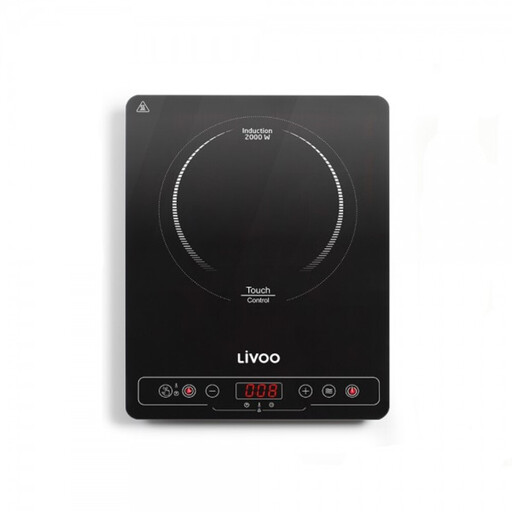
Why this choice suits this profile: This single-zone induction hob remains compact. Its 22 cm zone and easy-to-use digital controls are enough for everyday meals.
The product specifications state 10 power levels, an adjustable temperature from 60 to 240 °C and a 180-minute timer, rather than just a basic on/off button.
Maximum power of 2 000 W, keep-warm function and stated dimensions of 37 × 29 × 4,5 cm.
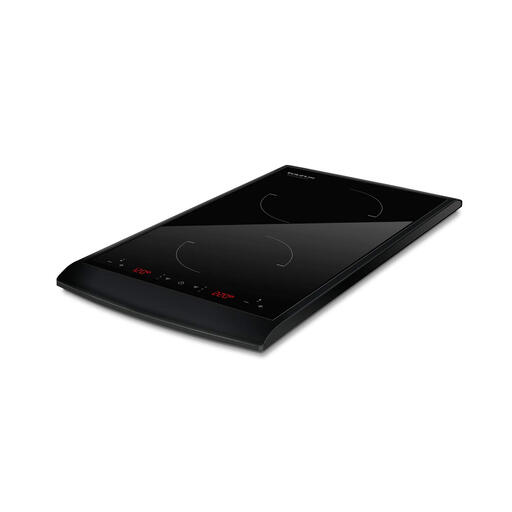
Why this choice suits this profile: Its two zones allow you to prepare a complete meal, whether in a main kitchen or in a sufficiently spacious mobile setup.
The specifications state the power of each cooking zone, the diameter of compatible pans — from 12 to 24 cm — as well as the inclusion of a timer and child lock.
Two cooking zones, 10 power levels, touch controls, black glass and overheat protection.

Why this choice suits this profile: With its stated thickness of 44,5 mm, it can be stored easily in a motorhome, office or home where worktop space is limited.
The specifications mention pan detection, overheat protection and a cookware diameter range of 12 to 26 cm.
8 power levels, stated temperature range of 60 to 270 °C, 7 preset functions, timer of up to 3 hours and child lock.
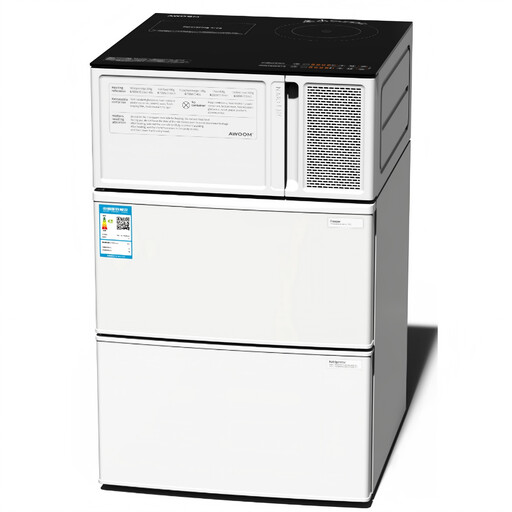
Why this choice suits this profile: This unit combines a hob, microwave and refrigerated storage to create a fully equipped kitchen area in a limited space.
The specifications provide details of its dimensions, weight and different capacities, so you can check that the whole unit will fit before buying.
Dimensions of 550 × 587 × 900 mm, 52 l fridge, 40 l freezer, 20 l microwave and stated 220 V power supply.
We have put together a complete, real-time updated selection of products that meet these demanding criteria and European safety standards.
A portable induction hob must be connected to a suitable, properly earthed socket that is compatible with the specifications stated on its product page. Avoid overloaded extension leads, poor-quality extensions and unstable surfaces.
In a motorhome or caravan, check the available power in the electrical system before choosing a 2 000 W model. When camping, an induction hob designed for indoor use should not automatically be used outdoors. The Livoo model’s specifications specifically state that it is intended for indoor domestic use. Always protect the appliance from moisture, allow air to circulate around it and unplug it before cleaning.
For cookware, choose a flat, magnetic base with a diameter that matches the cooking zone. A cast-iron or steel frying pan compatible with induction will work perfectly well, such as the WANGYUANJI wok, which is stated to have an induction-compatible flat base. A pan that is too small, incorrectly centred or lacking a magnetic base may not be detected.
Consumption depends on the selected power level and how long the appliance is running. A 2 000 W appliance used at full power for 30 minutes theoretically consumes 1 kWh. In practice, heating often alternates between several levels. To estimate the cost, multiply the energy consumed by the kilowatt-hour rate shown on your electricity bill.
No. Place a magnet underneath the cookware: if it sticks firmly, the saucepan is generally compatible with induction. Also check the diameter accepted by the hob, as the limits vary from one model to another.
It depends on how often it is used, how well it is maintained, ventilation and whether the manufacturer’s instructions are followed. Do not block the vents, avoid impacts to the ceramic-glass surface, do not leave an empty pan heating for a long time and wait until the appliance has cooled down before moving it.