
Same-day & Next-day Delivery

Quality Guaranteed

Unlock Your Welcome Offers: FREE Delivery | Up to 80% OFF | Free 30-day JoyPlus trial
Download the APP
Choosing a new induction hob can quickly become a headache. Between marketing promises, technical jargon, and the jungle of available models, it's easy to feel lost and end up regretting your purchase. Our mission? To help you see things more clearly. Let's cut through the noise and get straight to the point to find the induction cooktop that will truly meet your needs, with no unpleasant surprises.
Before you start, here are the three most common pitfalls to avoid so the bill doesn't skyrocket:
To avoid falling into these traps, focus on the few technical criteria that truly matter. They will ensure your future hob fits perfectly into your kitchen and your habits.
This is THE one technical point you should never overlook. The total power of an induction hob, expressed in Watts (W), determines its installation requirements.
Our expert tip: Before you even start comparing models, take a look at your electrical panel to check the type of installation you have and the maximum power your subscription can support.
A built-in induction hob must, by definition, fit into your worktop with millimetre precision. There are two key measurements:
For smaller spaces like studios, kitchenettes, or even camper vans, a two-zone induction hob or a portable induction hob is a flexible and remarkably effective solution.
The number of zones is good. Their flexibility is better.
To help you bring your project to life, here are a few options that cater to different user profiles, focusing on performance and practicality.
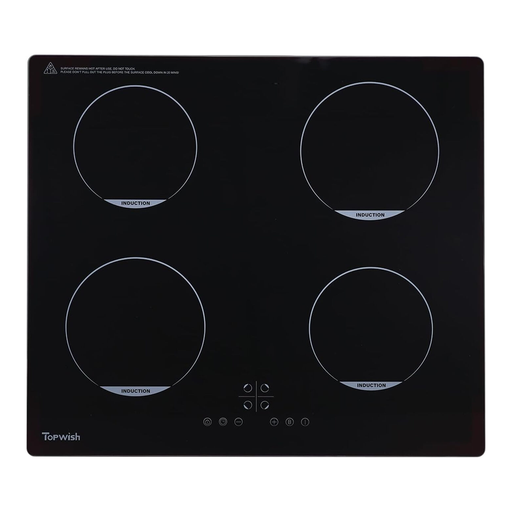
This model gets straight to the point. With its four cooking zones, simple touch controls, and essential safety features (child lock, residual heat indicator), it perfectly meets the needs of a family that cooks daily. Its standard 60 cm size makes it easy to integrate into most kitchens.
It focuses on the features that are actually useful (booster, timer) without being cluttered with connected gadgets. Its 7,200 W power rating is clearly displayed, prompting you to check your 32A installation's compatibility beforehand.
An excellent features-to-price ratio. The 4 zones with an individual booster function offer great versatility for managing multiple cooking tasks at the same time.
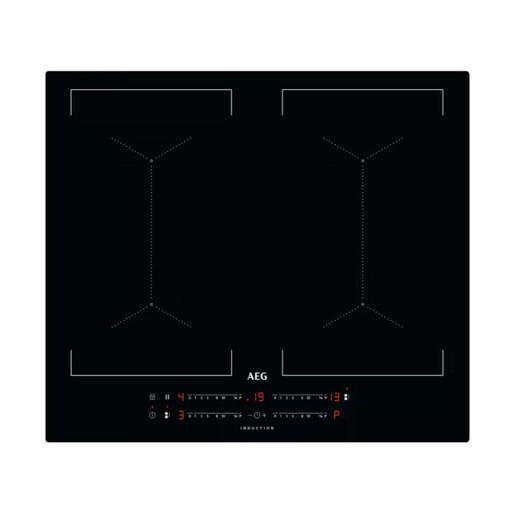
For those who like to think big, this hob is a game-changer. Its FlexiBridge flexible zone merges two hobs to accommodate a griddle or a large casserole dish, offering a creative freedom that standard hobs don't allow. The colour TFT display makes control as precise as it is intuitive.
Here, technology isn't a gimmick: it serves the flavour. The flexible zone is a real asset for cooking, and its added value is felt directly on the plate, not on some obscure mobile app.
The FlexiBridge function, which merges two hobs into a single XXL zone. The assisted cooking programs automatically adjust the temperature for perfect results without any effort.
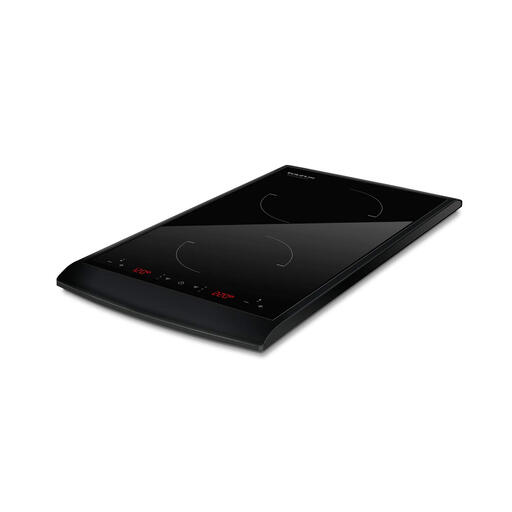
The perfect solution for studios, second homes, kitchenettes, or van trips. It offers the performance of induction without the constraints of a fixed installation. Just set it down, plug it in, and you're ready to cook.
It meets a specific need without trying to be something it's not. Its 2,900 W power is designed for a standard outlet, which eliminates any electrical complications.
Its portable and ultra-slim design with two independent zones for maximum flexibility. The glass surface wipes clean with a sponge and is easy to store.
Our complete selection features models that strictly adhere to our performance criteria and French safety standards.
Not necessarily. To work on an induction hob, a utensil must have a ferromagnetic base. The trick is simple: hold a magnet to the bottom of your pot or pan. If it sticks firmly, it's compatible. Many modern utensils, even stainless steel ones, have a suitable base. However, pure copper, glass, or aluminium without a ferromagnetic base will not work.
Absolutely. Induction is the champion of energy efficiency. Nearly 90% of the energy is transferred directly to the cookware, compared to about 60% for a ceramic hob and 50% for gas. In practice, this means faster heating times and minimal heat loss, which helps reduce your electricity bill in the long run.
A well-made, well-maintained induction hob can easily last you for 8 to 10 years, or even longer. To preserve it, clean it regularly with suitable products once it has cooled down, avoid hitting it with heavy objects, and make sure the ventilation underneath the hob is never obstructed.