Who is this choice for?

Households keeping their existing pans

You’re replacing your hob but don’t want to automatically replace your frying pans and saucepans too. UFC-Que Choisir and Electrolux support advise that the base of your cookware determines whether it’s compatible with induction.

Households redesigning their kitchen

You’re comparing different technologies while taking the worktop cut-out and available connections into account. Legrand France and Promotelec provide details about electrical connections; what’s possible will depend on your installation.

Cooks with a variety of cookware

You use saucepans of different sizes and shapes and want to check how they’ll fit on the cooking zones. Bosch and Electrolux product information shows that zone layouts vary by model.

What should you look for before choosing?

Induction hob

Worth considering: if the cookware you’re keeping has a ferromagnetic base and is suitable for the model’s cooking zones.

Check: UFC-Que Choisir and Electrolux specify that a compatible base is essential. Also check its dimensions against the instructions.

Ceramic hob with radiant zones

Worth considering: if keeping non-ferromagnetic cookware is a priority and you’re happy with radiant heating.

Know the difference: Bosch points out that “ceramic” can refer to the surface of an induction hob. Check the type of heating used by the zones.

Mixed induction and gas hob

Worth considering: if you want to use induction with compatible cookware while also keeping gas cooking.

Check: induction zones still require compatible cookware. The ministry responsible for the environment states that gas installations are subject to technical and safety regulations.

Replace some of your cookware

Worth considering: if you’d prefer induction and only some of the cookware you use is incompatible.

Plan ahead: identify which items you’ll need to replace and check their dimensions before choosing a hob.

Consideration What to check Who places the most importance on it
Cookware compatibility Test the base with a magnet; compare its flatness and diameter with the guidance in the instructions. If I want to keep my saucepans and frying pans, I’ll check their bases before deciding whether induction is right for me. Around 29% of consumers prioritise keeping their existing cookware.
Fitting and connections Compare the existing cut-out with the model’s dimensions; have the connections checked if necessary. When redesigning my kitchen, I need to make sure the hob suits the space and the available connections. Around 23% of consumers prioritise whether the hob can be fitted and connected.
Number and layout of zones Compare the bases of your cookware with the size of the zones and the combination options listed. If I use a range of pan sizes or cook several dishes at once, I’ll look at how much space is actually available on the zones. Around 18% of consumers prioritise the zone layout.
Total cost of the change Consider the model, any cookware you’ll need to replace and any work or adaptations required. To keep my budget on track, I’ll consider the cookware and any necessary changes, not just the hob. Around 18% of consumers weigh up the total cost of the project first.
Keeping gas cooking Check the layout of the zones and whether the gas installation is suitable for the exact model. If I want to keep gas cooking for certain uses, I’ll check the layout and installation requirements of the mixed hob. Around 12% of consumers make keeping gas their priority.

Mistakes to avoid

  • Judging compatibility by the material name alone

    The words “stainless steel” or “aluminium” aren’t enough to tell you whether cookware will work on an induction hob. UFC-Que Choisir and Electrolux state that the base must be ferromagnetic; its shape and dimensions matter too.

    Test the base with a magnet, then compare its diameter with the dimensions permitted in the instructions for the hob you’re considering.

  • Confusing a ceramic glass surface with radiant zones

    An induction hob can have a ceramic glass surface without working like a radiant hob.

    Check the heating technology listed for each zone rather than relying on the surface material alone.

  • Choosing based only on the stated width

    The advertised width alone doesn’t tell you whether the cut-out and connections in your kitchen are suitable for the model. A mixed hob also means checking the gas installation.

    Compare the fitting dimensions and instructions with your kitchen, and have the connections checked if your project requires it.

  • Assuming how the zones are arranged on a mixed hob

    The Electrolux product information for reference KDI641723K contains conflicting details about the number of gas and induction zones.

    Before choosing this model based on its layout, check the diagram and instructions for the exact reference.

Brands to consider when comparing models

Bosch

The French models PIX63SHC1F and PKM61RAA8F are examples of an induction hob and a ceramic hob respectively.

  • According to Bosch Électroménager France, the PIX63SHC1F has four zones and a flexible zone.
  • The PKM61RAA8F is described as a ceramic hob with three zones. The flexible zone is a feature of the PIX63SHC1F, not the entire brand range.

Siemens

The iQ700 EX651HEC1F is an example of a four-zone induction hob with a flexible zone.

  • Siemens France’s product information lists touchSlider controls and a flexible zone on this model.
  • The product information also mentions Home Connect. Check whether the connected features and their access requirements are useful to you. They don’t replace checking that your cookware is compatible.

Electrolux

The French models LIB60320CK and KDI641723K are examples of an induction hob and a mixed induction and gas hob.

  • Electrolux France lists three induction zones for the LIB60320CK and describes the KDI641723K as a mixed hob.
  • The details on the KDI641723K product page about the zone layout don’t match. Check the instructions before choosing it on the basis of this feature.

Whirlpool

The AKT 8090/NE is an example of a four-zone electric ceramic hob.

  • Whirlpool France lists touch controls and a timer for each zone on this model.
  • These features apply to the AKT 8090/NE and shouldn’t be assumed to be available on other hobs from the brand.

Joybuy products related to this choice

The models below include induction hobs and hobs with a ceramic or ceramic glass surface. Check the heating technology, cookware compatibility and installation requirements on the product page for the model you’re considering.
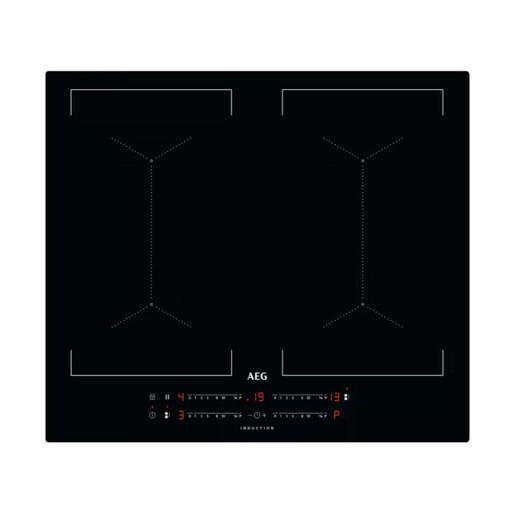
AEG IKS64453IB 60 cm induction hob

AEG IKS64453IB, 60 cm induction hob

Worth considering if the cookware you’re keeping has a ferromagnetic base.

Four zones; Bridge function; 60 cm size.

View on Joybuy
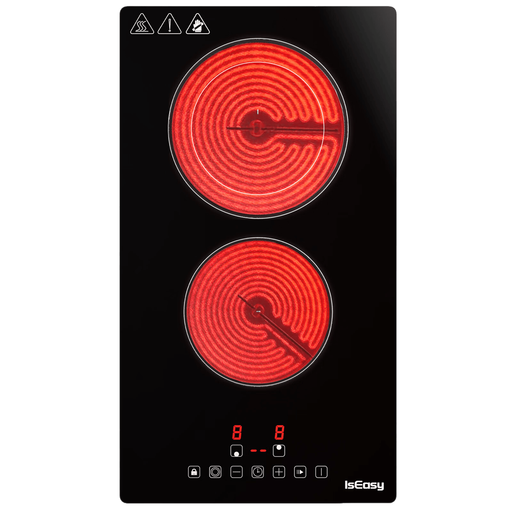
Two-zone ceramic hob, 3,200 W

Two-zone ceramic hob, 3,200 W

Worth considering if you’re comparing a ceramic hob with induction models. Check the exact heating technology of the zones and whether your cookware is compatible.

Two zones; 3,200 W; nine power levels; pause function and child lock.

View on Joybuy
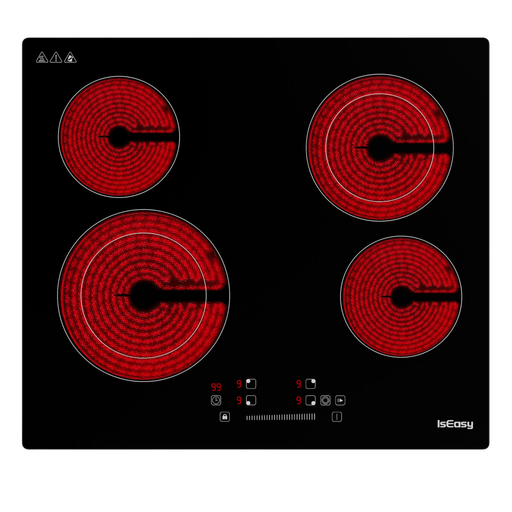
Four-zone ceramic glass hob, 6,600 W

Ceramic glass hob, four zones, 6,600 W

If you’re comparing different layouts, check the heating type of the zones and which cookware is compatible with the model.

Four zones; touch controls with dual-circuit zones; nine levels; 99-minute timer.

View on Joybuy
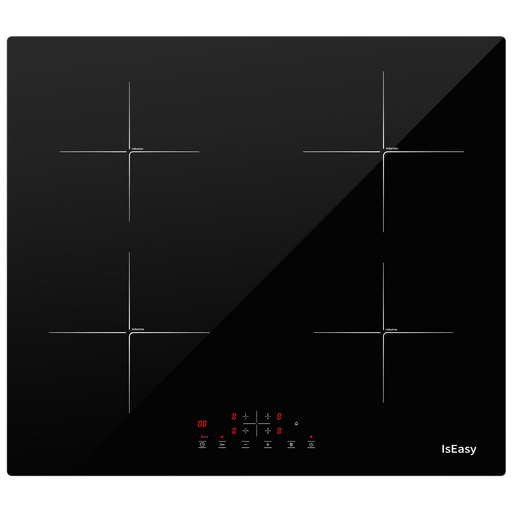
IsEasy built-in induction hob, four zones, 60 cm

IsEasy, built-in induction hob, four zones, 60 cm

Worth considering if the cookware you’re keeping has a ferromagnetic base and the cut-out dimensions suit your kitchen.

Four zones; 6,800 W; nine power levels; timer from 1 to 99 minutes.

View on Joybuy
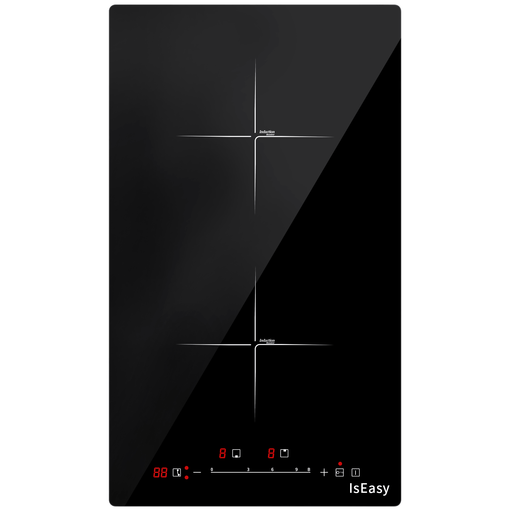
IsEasy domino induction hob, two zones, 29.5 cm

IsEasy, domino induction hob, two zones, 29.5 cm

Worth considering if two zones meet your needs and the cookware you use has a ferromagnetic base.

3,400 W; nine settings; timer and Booster function; the product information lists built-in or freestanding installation and a voltage of 220–240 V.

View on Joybuy

Frequently asked questions

How can I check a saucepan I already own?

Test whether a magnet sticks to the base, then check that it’s flat and that its diameter is suitable for the zone specified in the instructions. Electrolux support points out that the material name alone isn’t always enough to assess a multi-layer base.

Can I connect a built-in induction hob to a standard socket?

Don’t assume a standard socket is suitable for a built-in hob: Legrand France describes a dedicated circuit for this type of hob. For a single-phase installation, Legrand specifies, among other things, a 6 mm² conductor, a 32 A circuit breaker and 30 mA Type A residual-current protection. Have a professional check your actual installation and follow the model’s instructions.

Will a mixed hob let me keep all my cookware?

Not on its induction zones: only cookware with a ferromagnetic base will work on them. The gas zones may suit other uses, provided the installation complies with the relevant regulations. Also check the exact layout of the model.

How should I care for the glass surface of an induction hob?

Let the surface cool and follow the care instructions in the manual. Bosch’s guide explains that an induction hob doesn’t heat its surface directly like a radiant zone, which can make it easier to clean; however, the cookware can still transfer heat to it.

What rules apply to the gas section of a mixed hob in France?

The ministry responsible for the environment states that gas appliances and indoor installations, including hobs, are subject to technical and safety regulations. The requirements depend on the work and installation involved, so check what applies before choosing this option.