
Livraison le jour même ou le lendemain

Qualité garantie

Débloquez vos offres de bienvenue: Livraison GRATUITE | Jusqu'à -80 % | 30 jours d'essai gratuits à JoyPlus
Téléchargez l'application
Choosing a new induction hob can quickly become a daunting task. Between promises of power, high-tech features, and various designs, it's easy to get lost or make a purchase you'll regret. As a product expert at Joybuy, I'm here to decode the spec sheets for you, so you can invest in an appliance that truly matches your cooking habits without falling for the most common marketing traps.
Manufacturers' marketing is full of arguments that can sometimes be misleading. Here are three key points to keep in mind to avoid wasting your budget.
To ensure your future induction cooktop lives up to its promises, here are the technical points you should never overlook.
Before you even look at the power, determine your space constraints.
The performance of an induction hob is measured by its ability to heat up quickly and maintain precise temperatures.
Beyond the child lock, the following features simplify use and secure your kitchen:
To help you see how these criteria apply in practice, here are a few models that meet specific needs while avoiding the pitfalls mentioned.
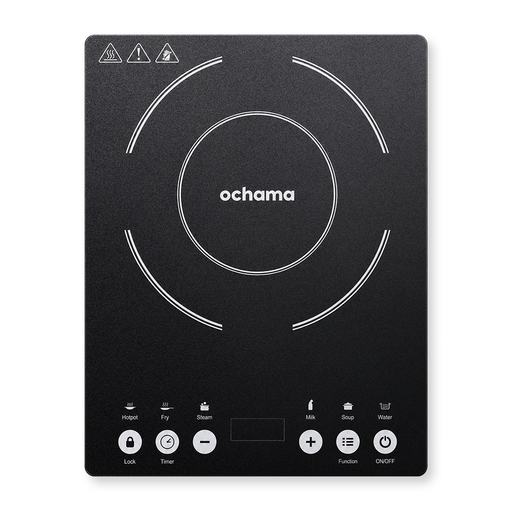
The ideal user: Perfect for a student or as a portable solution, this hob is compact, easy to store, and plugs into a standard wall socket. Its 2000W power is more than enough for daily cooking for one or two people.
As a single-zone model, there's no confusion about power distribution. The advertised 2000W is entirely dedicated to your cooking.
It offers 10 power levels and 6 preset functions (fry, boil, etc.) that simplify its use. The glass surface is very easy to clean.
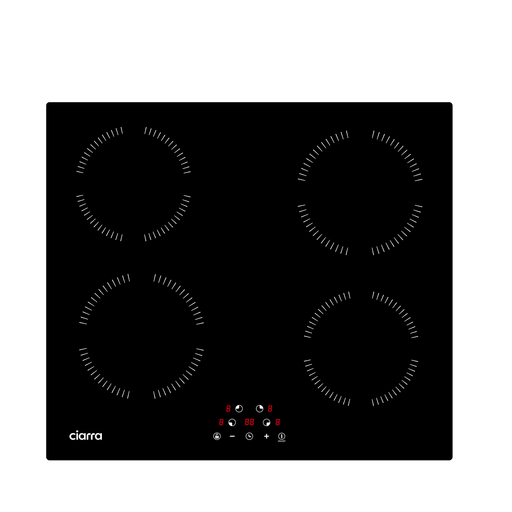
The ideal user: This 60 cm built-in model is a well-balanced option for family use. Its four independent zones and 6000W total power allow you to manage several dishes at once without a noticeable drop in performance.
It includes a full suite of safety features: child lock, residual heat indicator, pan detection, and automatic shut-off. Much more than just a marketing claim.
Each zone has 9 power levels and an individual timer, offering precise control and great flexibility for everyday meals.
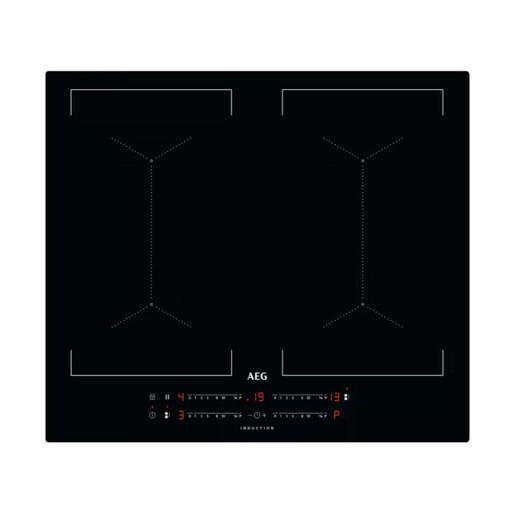
The ideal user: For those who love to cook with large cookware like fish kettles or griddles, this model offers superior flexibility thanks to its advanced technologies and ultra-precise control interface.
It offers a true "bridge" function (FlexiBridge) that combines two zones into a single, large, and even cooking surface, with no cold spots in the centre. The technical answer to the "fake flexible zone" trap.
Its DirectTouch control panel and assisted functions (SenseBoil, which detects boiling) provide highly intuitive control for perfect cooking results.
Discover our complete selection of induction hobs, all rigorously chosen for their performance, reliability, and compliance with European safety standards.
1. What is the lifespan of an induction hob? The average lifespan of an induction hob is between 10 and 15 years, which equates to about 2,500 to 3,000 hours of operation. This longevity depends on the quality of the electronic components (especially the power board and inductors) and adherence to installation guidelines, particularly ensuring good ventilation underneath the appliance.
2. Does an induction hob use a lot of electricity? That's a common misconception. Induction is the most energy-efficient electric cooking technology. Its efficiency is around 90%, compared to 60% for ceramic and 50% for gas. This means that 90% of the energy consumed is transferred directly to the pan. Its rapid heating speed (thanks to the booster function) also reduces usage time, which helps keep your electricity bill in check.
3. Does an induction hob require special electrical installation? Yes, this is a crucial point. A built-in induction hob (2, 3, or 4 zones) is a high-power appliance (from 3000W to over 7200W). It must be connected to a dedicated electrical circuit, protected by an appropriate circuit breaker (usually 32A) with a suitable cable gauge (often 6 mm?). The installation must be carried out by a qualified electrician to ensure safety and compliance with local electrical codes (like the NF C 15-100 standard in France). Only single-zone portable hobs can be plugged into a standard 16A outlet.