Joybuy Insights

Outdoor Wall Light Guide: How to Choose Wisely

Choosing an outdoor wall light? It seems easy. Yet, it's a purchase where every detail matters. A poor choice can quickly result in a fixture eaten away by rust after a single winter, disappointing lighting, or premature failure. To prevent your design project from turning into a headache, it's best to know the few pitfalls that can turn a good investment into a regret.

The goal isn't just to light up a facade or a walkway, but to do so with style, safety, and for years to come. This guide is here to arm you with the right criteria and help you make a truly informed choice, far from sometimes misleading marketing promises.

The 3 Mistakes to Avoid When Buying an Outdoor Wall Light

Relying solely on design or price is the surest way to head for disaster. Here are three key points to watch for that separate a successful purchase from a real disappointment.

  1. Ignoring the Ingress Protection (IP) rating: Most models display an IP44 rating. This is the bare minimum, acceptable for a sheltered location like a porch or under an awning. But if your wall is fully exposed to the elements, this protection will quickly prove insufficient, with a high risk of water infiltration and short circuits.
  2. Underestimating the impact of climate on materials: A standard aluminium fixture will do just fine in most regions. But by the sea, the salty air is highly corrosive, attacking metals and accelerating corrosion. A coastal wall light worthy of the name must be made of brass, copper, or galvanised steel to avoid ending up as a pile of rust in a single season.
  3. Falling for the allure of low-end solar lights: The solar outdoor light is an attractive promise: practical, eco-friendly, no installation work. But be warned, not all models are created equal. An undersized solar panel or a cheap battery, and you'll end up with weak lighting and ridiculous battery life, especially in the heart of winter.

Technical Criteria to Check Before You Choose

To avoid these pitfalls, a close look at the technical specifications is essential. Here are the points that guarantee the performance and longevity of your lighting.

1. The Ingress Protection (IP) Rating?: Your Waterproofing Guarantee

The IP rating is an international standard that classifies a device's level of protection against the intrusion of solid objects (dust) and liquids (water). It's a non-negotiable criterion.

  • IP44: Protected against solid objects larger than 1?mm and water splashes from all directions. Ideal for: sheltered areas (under a roof, a balcony, a porch).
  • IP54: Protected against dust deposits and water splashes. A good compromise for more exposed facades, but not against a direct water jet.
  • IP65: Completely dust-tight and protected against water jets. Essential for walls highly exposed to the elements.

2. The Material?: The Key to Longevity

The choice of material directly affects the lifespan and maintenance of your light fixture.

  • Aluminium and painted metal: Lightweight, modern, and offer good value for money. A black aluminium wall light is a timeless classic of contemporary design that fits many architectural styles.
  • Stainless steel: Durable and modern, but pay attention to the quality (opt for 316L stainless steel, known as "marine grade," for coastal areas).
  • Brass, copper, galvanised steel: Essential for marine climates. These materials naturally resist salt corrosion. Brass and copper develop a noble patina over time, giving them a unique charm.

3. The Lighting Type?: Functionality and Ambience

Beyond durability, the lighting effect is paramount.

  • Integrated LED or a socket? An integrated LED outdoor wall light offers a sleek design and low energy consumption. The flip side: if the LED fails, you often have to replace the entire fixture. A model with a socket, like a GU10 outdoor light or E27, offers the flexibility to change the bulb to adjust the brightness, colour temperature, or even opt for a smart bulb.
  • Lighting effect: An up and down wall light creates architectural lighting that sculpts the volumes of a facade. A downlight-only fixture is more functional for marking a path.
  • Additional features: An outdoor light with a motion sensor is a major asset for high-traffic areas. It acts as a deterrent and enhances security, while also saving energy by only turning on when needed.

Outdoor Wall Light Recommendations

To put theory into practice, here are a few models that perfectly illustrate these criteria and meet specific needs.
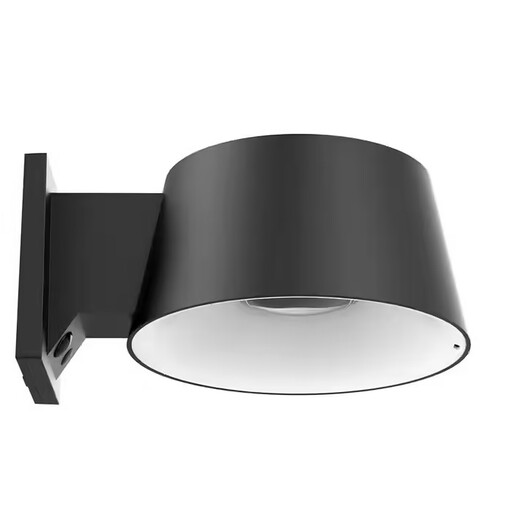
IDEAL FOR : EASY, COST-FREE INSTALLATION
ezilight Solar Wall S28

ezilight Solar Wall S28

Why this model fits: Perfect for accent lighting without getting into electrical work. Ideal for a balcony, walkway, or an entrance where running cables is a headache. Its minimalist design fits in anywhere.

How it avoids a pitfall

It bypasses complex electrical work. It also highlights the importance of quality for solar products: its panel is designed for efficient charging, provided, of course, it's placed in a sunny spot.

Key advantage

100% wireless installation in minutes and zero electricity consumption, for an absolutely nil running cost.
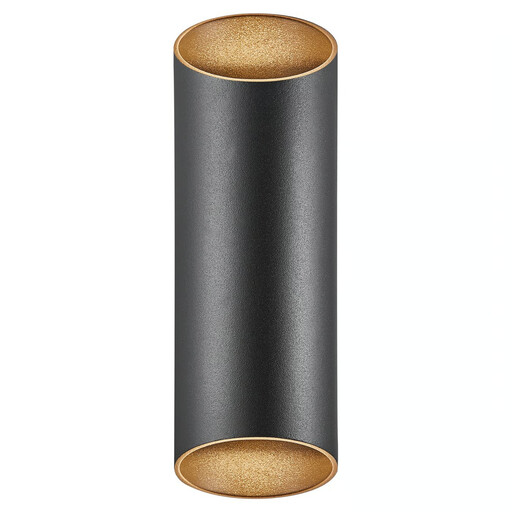
IDEAL FOR : FANS OF ARCHITECTURAL DESIGN
NICO Round 22 Wall Light - GU10 - Black

NICO Round 22 Wall Light - GU10 - Black

Why this model fits: For those looking to enhance a facade with a play of light. Its up-and-down effect highlights architectural lines and transforms a simple wall into a true visual signature.

How it avoids a pitfall

With its IP54 rating, it offers superior protection to the IP44 baseline, making it more durable on exposed walls. Its GU10 socket allows the bulb to be replaced, avoiding the waste of having to throw away the entire fixture in case of failure.

Key advantage

Decorative up/down lighting effect, flexibility thanks to the replaceable GU10 socket, and robust aluminium construction.
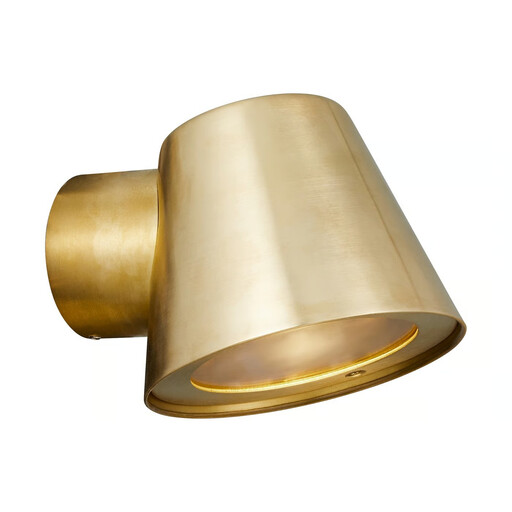
IDEAL FOR : SEASIDE HOMES
ALERIA Seaside Wall Light - GU10 - Brass

ALERIA Seaside Wall Light - GU10 - Brass

Why this model fits: Specifically designed for coastal areas where salty air and humidity put standard materials to a severe test. It's the ultimate peace-of-mind investment for a demanding environment.

How it avoids a pitfall

It avoids the pitfall of an unsuitable material. Made of solid brass, it is naturally resistant to corrosion and develops a noble patina over time, without ever rusting or deteriorating.

Key advantage

Anti-corrosion solid brass material and an elegant design that improves with age. According to the manufacturer Nordlux, the "Designed For Seaside" range comes with a 15-year warranty against surface deterioration.

Looking for other models?

We have selected a full range of products that meet our quality criteria and current standards.

Frequently Asked Questions

What brightness should I choose for an outdoor wall light?

It all depends on the use. Forget watts; today, we talk in lumens (lm).

  • For a soft ambience on a terrace or balcony: 100 to 300 lumens per light is sufficient.
  • To mark a pathway or staircase: aim for 300 to 500 lumens for clear, safe lighting.
  • To secure an area (entrance, garage): a luminous flux of 700 lumens or more is recommended, often paired with a motion sensor.

Do I need to hire an electrician for installation?

It depends on the model.

  • No, for solar models or lights that plug into an existing outdoor socket. Installation is a breeze.
  • Yes, it is essential to hire a qualified professional for Class I fixtures that connect directly to the mains. These require a ground connection, a crucial step to ensure your safety and the compliance of the installation.

How does an outdoor light with a motion sensor work?

Most models use a passive infrared (PIR) sensor. This detects heat variations emitted by a moving body (a person, an animal). When movement is detected in its field of view, it triggers the light to turn on for a predefined duration. The dual advantage is clear: security, by creating a surprising deterrent effect, and energy savings, since the light only turns on when needed.