
Livraison le jour même ou le lendemain

Qualité garantie

Débloquez vos offres de bienvenue: Livraison GRATUITE | Jusqu'à -80 % | 30 jours d'essai gratuits à JoyPlus
Téléchargez l'application
An outdoor wall light can transform a poorly lit entrance, make a path safer or bring out the best in your home’s exterior. But choosing the right model is essential. From weak light and casings that struggle in the rain to sensors triggered by every passer-by and bulbs that are impossible to replace, some purchases can quickly lead to disappointment.
Before you fall for the look of an outdoor wall light, it’s worth considering what really matters. Ingress protection rating, power supply, bulb type, light output, sensor… Here are the criteria to look at, common mistakes to avoid and a selection of models to suit different needs in France.
IP44, IP54 and IP65 ratings are more than just marketing claims. The first digit indicates the level of protection against solid objects and dust; the second tells you how resistant the product is to water.
Even an IP54 or IP65 wall light isn’t designed to be submerged. The quality of the installation, the condition of the seals and the light’s position also play an essential role in how long it lasts.
A solar wall light can be installed without running a cable to the mains, but how long it lasts depends directly on how much light its panel receives. A north-facing wall, shade from a tree or nearby buildings can significantly reduce charging, especially in winter.
Check that you can position the panel correctly and plan to clean it from time to time. Solar models are generally better suited to marking out a path, lighting a secondary entrance or providing extra light than to delivering powerful illumination all night.
Some wall lights are sold without a bulb, so check which fitting they take and the maximum permitted wattage:
A Class I appliance must be earthed and connected in accordance with the electrical regulations in force in France. For a mains installation, it’s best to use a qualified electrician.
Start by considering where the wall light will be installed. Under a porch or canopy, an IP44 rating may be sufficient in some cases. On an exterior wall directly exposed to the elements, an IP54 wall light offers a more comfortable margin of safety. For a garage or a spot that may be exposed to water jets, an IP65 wall light will often be more suitable.
The IP rating says nothing about resistance to impact or salt-air corrosion, or how securely the light can be fixed in place. If you live by the sea, look for a clear statement that the light is suitable for coastal environments.
The number of lumens indicates how much light a product produces. The requirements for lighting an entrance, a side passage or a garage are not the same. A downward-facing beam helps reduce glare and makes it easier to light a path; light cast both upwards and downwards adds more depth to your home’s architecture.
For a warm atmosphere, a colour temperature of between 2,700 and 3,000 K is generally the most pleasant. At around 4,000 K, the light becomes more neutral and practical. In all cases, stay within the maximum wattage supported by the light fitting.
An outdoor wall light with a motion sensor can help prevent the light being left on unnecessarily, and is particularly useful by a door or garage. Check the stated detection range and angle carefully, as well as whether you can adjust how long the light stays on.
When it comes to smart homes, a Philips Hue connected wall light often requires a bridge or an additional accessory. Also check the model’s power supply: low voltage, direct mains connection or a dedicated transformer.
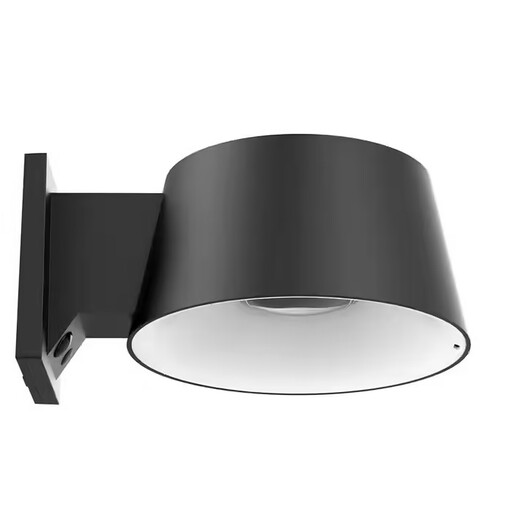
Why this is a good match for you: This solar wall light is for anyone who wants to light an entrance, balcony or path without running an electrical cable. It’s described as easy to install on a wall and switches on automatically at dusk.
It avoids the need for a mains connection, while highlighting an important limitation of solar models: direct sunlight and a clean panel are essential for regular charging.
Integrated solar panel, automatic switch-on at dusk and a downward-facing beam, ideal for an entrance or path.
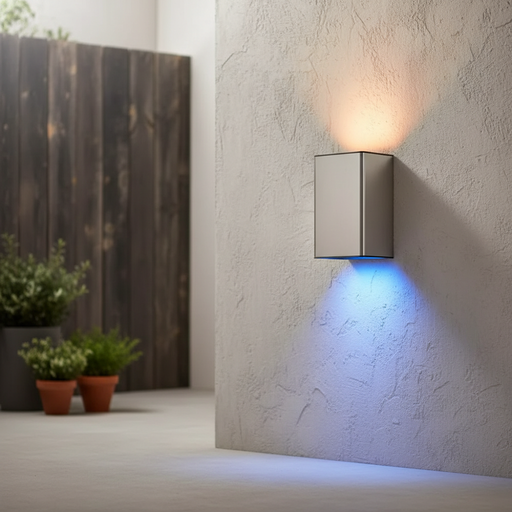
Why this is a good match for you: This wall light is designed for anyone who wants to manage the ambience of a patio, entrance or exterior wall using the Philips Hue app and integrate it with their smart home system.
Compatibility with the Philips Hue ecosystem is clearly stated. However, it needs a fixed connection and should be installed by a qualified electrician.
Adjustable white or coloured lighting, stainless steel construction and control through the Philips Hue app.
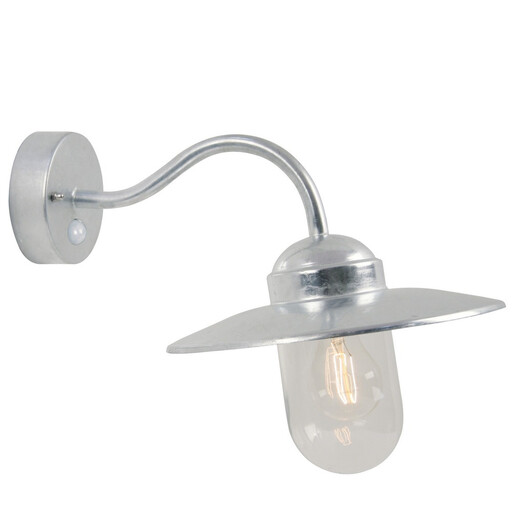
Why this is a good match for you: Its motion and light sensor makes it suitable for a busy entrance, garage or path. It’s also described as suitable for coastal environments.
The stated PIR sensor range of 0 to 12 m gives you a useful point of reference. The E27 fitting also means you can replace the bulb without changing the whole light.
Motion and light detection, E27 fitting, IP54 rating and galvanised steel described as suitable for coastal environments.
We’ve put together a comprehensive, live-updated list of products that meet these strict selection criteria and comply with European safety regulations.
Before you start installing the light, check the voltage, electrical class and accessories supplied. A wall light connected to the mains must be installed with the power switched off, with protected connections and correctly positioned seals. For a Class I appliance, an earth connection is essential.
Regularly clean the glass, metal and solar panel with a soft cloth. Avoid solvents and abrasive cleaners. If the light starts to dim, first check the bulb, whether the light is dirty and the condition of the connections before considering replacing it.
For an entrance or patio, a moderately powerful LED bulb is usually enough. For a path, garage or walkway, focus on the light output in lumens, the beam angle and the installation height. A higher wattage doesn’t necessarily guarantee pleasant or evenly distributed lighting.
Yes, but it may not last as long when the days get shorter or the panel receives little direct sunlight. Install it in an open spot, clean it regularly and treat this type of light as supplementary illumination when charging becomes less reliable.
For a wall light connected to the mains, we recommend using a qualified electrician. The installation must comply with the electrical regulations applicable in France. Solar or wireless models can generally be fixed in place without an electrical connection, provided you follow the instructions and safety guidance carefully.