To choose organic cereal for a sweet breakfast, first check for the certification logo, then compare the sugar content and other nutritional values per 100 g. Plain flakes let you add your own sweetness, while granola or chocolate cereal is a ready-to-serve option – just be sure to check the ingredients and allergens.
Who is this guide for?
Shoppers who value organic certification
You want to identify a certified product rather than rely on packaging that simply suggests it is natural. Look for the EU organic logo (the Euro-leaf) on the pack. Agence Bio explains the conditions for using the European logo on processed foods.
Fans of sweet recipes who care about what goes into them
Chocolate, fruit and crunch can all influence your choice, but two recipes may have quite different nutritional values. The Directorate-General for Competition Policy, Consumer Affairs and Fraud Control (DGCCRF) points out that nutritional information is given per 100 g or 100 ml to make comparisons easier.
Households that like to alternate between recipes
Flakes, muesli, cornflakes and granola offer different ways to prepare breakfast. The ranges featured by Carrefour France and E.Leclerc show just how varied the options are. Choose a specific recipe by checking its ingredients and label.
What should you look for first?
Start by checking the organic certification, then compare recipes that suit the way you like to prepare a sweet breakfast.
| Criteria |
What to check |
Who is it for? |
| Organic certification |
Look for the EU organic logo on the pack and check any accompanying information. The logo does not tell you how much sugar the product contains. |
If I want organic cereal, my first priority is to recognise the certification on the exact product I’m buying. Around 36% of consumers say this is their most important requirement. |
| Sugars and ingredients |
Compare the ‘sugars’ figure per 100 g and the ingredients list of the recipes you’re interested in. |
I want to keep the sweet taste, but know what’s in my bowl before I choose. For around 29% of consumers, comparing sugar content is their top priority. |
| Fibre and cereal base |
Check the fibre per 100 g where it’s listed, and see which cereal is used in the ingredients list. |
If I’m choosing between flakes and other recipes, I want to compare the cereal ingredients. Around 21% of consumers put this and the listed fibre content first. |
| Taste and texture |
Choose between a base you can top yourself and a recipe that’s already chocolatey or crunchy. Check the ingredients and allergens on the pack you choose. |
I’m mainly looking for a bowl with a taste and texture I enjoy, without having to prepare several ingredients. This is the top priority for around 14% of consumers. |
Mistakes to avoid
-
Assuming ‘organic’ means low in sugar
Organic certification and nutritional values answer two different questions. The logo can’t tell you whether a muesli or granola is lower in sugar.
Once you’ve checked the certification, compare the values per 100 g and the ingredients lists of the recipes you’re considering.
-
Relying on the front of the pack for allergen information
A fruit or chocolate recipe may contain ingredients you need to consider if you have an allergy. The DGCCRF states that allergenic ingredients must be clearly highlighted in the ingredients list.
Read the label on the exact recipe, especially if you need to avoid nuts, milk, soya or cereals containing gluten.
-
Judging fibre content by the recipe name alone
The word ‘wholegrain’ or the appearance of a muesli is no substitute for checking its ingredients. Manger Bouger also notes that eating large amounts of fibre can cause digestive discomfort.
Compare the fibre figures per 100 g where they’re shown, and take your usual diet into account if you’re switching recipes.
Brands to know
Carrefour Bio
Carrefour France’s organic range includes oat flakes, cornflakes labelled ‘no added sugar’ and chocolate granola.
- The range includes different types of recipe, so you can choose between a plain base and a chocolatey option.
- Check the ingredients, allergens and nutritional values of the specific product you choose.
Bio Village
E.Leclerc’s range under this brand includes organic muesli with dried fruit, organic cornflakes with no added sugar and organic chocolate-filled cereal.
- The range includes both muesli and ready-to-serve cereal.
- Don’t assume that one product’s ingredients apply to the others – check each pack separately.
Bjorg
Bjorg describes its products as organic and offers cereal products for breakfast.
- This makes the brand one to look out for when exploring organic options.
- On its own, this doesn’t tell you about the sugar, fibre or allergens in a specific recipe.
Cereals to explore on Joybuy
This selection includes flakes and porridges to customise or prepare, along with ready-to-serve chocolate recipes. For each product, check the organic certification on the exact pack and compare the nutritional information according to what matters most to you.
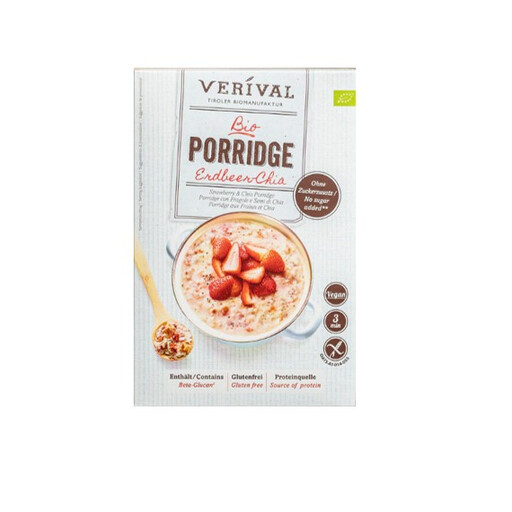 Image unavailable
VERIVAL Organic Chia Fruit Porridge, 350 g
A porridge to consider if you prefer fruit to a chocolate recipe. If you have a nut allergy, check the allergen information on the pack.
View on Joybuy
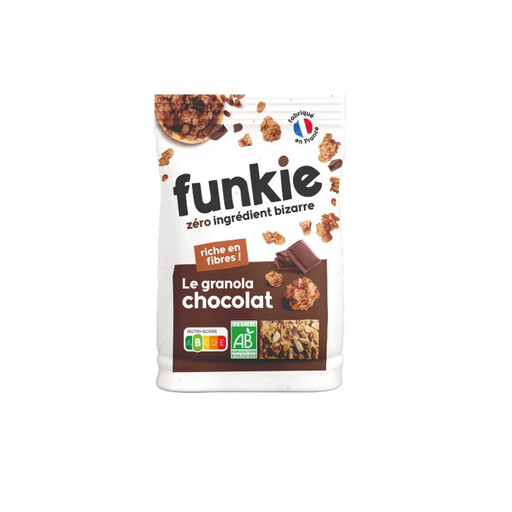 Image unavailable
FUNKIE Organic Chocolate Granola, 300 g
If you’re after a pronounced chocolate flavour and plenty of crunch, compare the sugars per 100 g with those in the other recipes you’re considering. Check the allergens too, particularly gluten and sesame.
View on Joybuy
 Image unavailable
BJORG Organic Oat Flakes, 500 g
A base to consider if you’d rather add your own ingredients to sweeten your bowl. Check the label if you need to take account of gluten from oats.
View on Joybuy
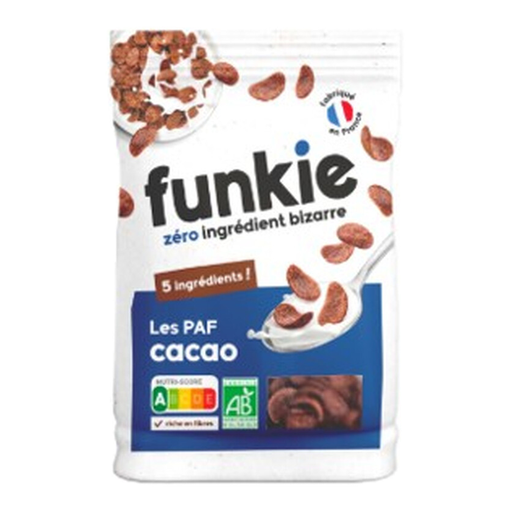 Image unavailable
FUNKIE Organic Cocoa Petals Cereal, 300 g
Cocoa petals to consider if you want a ready-to-serve bowl. Compare the sugars per 100 g and check the fibre content on the pack if that’s a priority for you. This recipe contains wheat gluten.
View on Joybuy
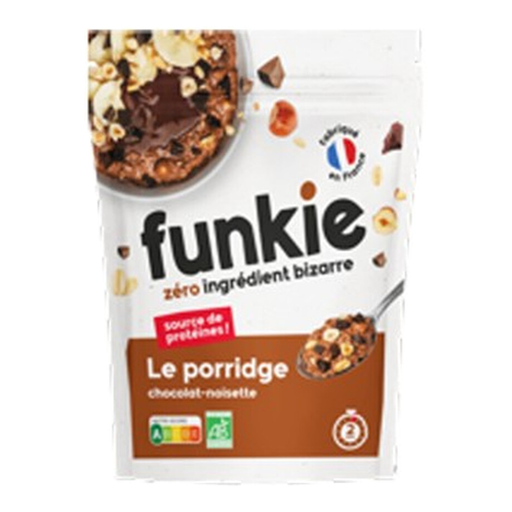 Image unavailable
FUNKIE Organic Chocolate Hazelnut Porridge, 280 g
This porridge is for anyone who enjoys chocolate and hazelnut together. Check the fibre content on the label if it’s part of your comparison, and check for oats and nuts if you have an allergy.
View on Joybuy
Frequently asked questions
How can you recognise organic cereal on the pack?
Look for the EU organic logo (the Euro-leaf) and any accompanying information on the specific product. Agence Bio explains that, for a processed food carrying the European logo, at least 95% of its agricultural ingredients must be organic, subject to the conditions for using that logo.
Is organic cereal always lower in sugar?
No. Organic certification doesn’t tell you how much sugar a product contains. To compare two recipes, check the ‘sugars’ figure per 100 g in their nutritional information, then read their ingredients lists.
Does cereal have to carry a Nutri-Score?
No. Santé publique France says that producers display the Nutri-Score voluntarily. If it appears on a pack, you can use it alongside the nutrition table and ingredients list, but don’t confuse it with organic certification.
What should you check if you have an allergy and are choosing a nut or chocolate recipe?
Read the ingredients list on the specific pack rather than relying on the recipe name. The DGCCRF says that allergenic ingredients must be clearly highlighted on the labels of prepacked foods.


