
Livraison le jour même ou le lendemain

Qualité garantie

Débloquez vos offres de bienvenue: Livraison GRATUITE | Jusqu'à -80 % | 30 jours d'essai gratuits à JoyPlus
Téléchargez l'application
Switching to a washable microfiber cloth promises a smarter, more budget-friendly, and eco-friendly cleaning routine. The problem? The market is flooded with products making tempting promises that, once you get them home, simply fall short. As the Head of the Home Goods section and a product expert, my mission is to help you cut through the noise. Let's forget the marketing jargon: here are the real criteria that make a difference, so you'll never be disappointed again.
From cloths that lose their absorbency after three washes to those that just spread dirt around instead of trapping it, the complaints are numerous. Let's break down the most common pitfalls together so you can finally make the right choice.
To avoid making a mistake, you only need to look for three technical details. They are the true measure of the quality and effectiveness of a reusable microfiber wipe.
Most microfibers are a blend of polyester and polyamide. The most common ratio is 80% polyester (for structure) and 20% polyamide (for absorbency).
A manufacturer that commits to a specific number of wash cycles (e.g., "tested for 500 washes") and provides detailed care instructions (temperature, no fabric softener) is a sign of confidence. This is a far more reliable mark of quality than a vague "long-lasting" claim.
Some products go beyond a simple square of fabric. A sponge with a scrubbing side and a microfiber side, for example, is designed for specific tasks like cleaning the bathroom. To tackle limescale and soap scum, mechanical action is indispensable. Choosing the right tool for the right job is the key to efficiency.
Rather than an endless list, we've selected products that meet specific needs, applying the performance criteria we've just outlined.
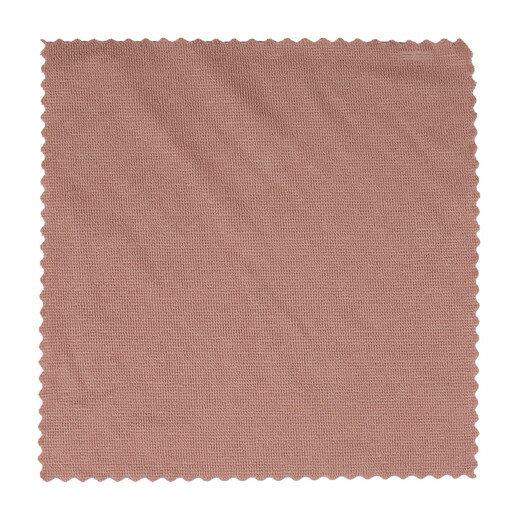
Our take: Perfect for getting equipped without breaking the bank. This set allows you to adopt the best practice of professionals: a color-coding system for each area (kitchen, bathroom, dusting) for impeccable hygiene.
Rather than betting everything on the extreme durability of a single cloth, this pragmatic approach ensures you always have a high-performing microfiber on hand. Its compact size is ideal for finishing touches and areas where a large cloth would be awkward.
An unbeatable price-per-cloth value. Its weave is designed to be lint-free, making it great for smooth surfaces and screens.
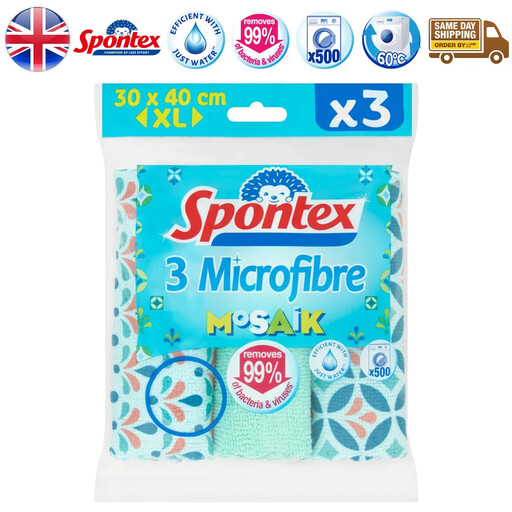
Our take: For those who see buying a cloth as an investment. Designed to stand the test of time and repeated washing, this is the choice for peace of mind, offering both economic and ecological benefits in the long run.
This product tackles the false durability pitfall head-on. The "washable up to 500 times" promise, coming from a trusted brand like Spontex, is a genuine seal of confidence in the resilience of its weave.
Exceptional durability and great versatility (for dry or wet use). Its effectiveness with just water on most types of dirt significantly reduces the need for chemical detergents.
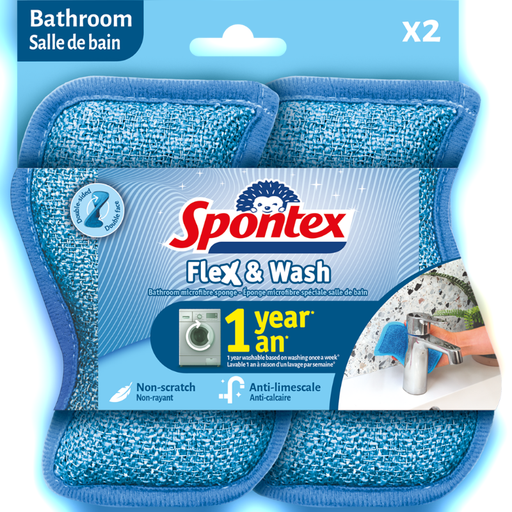
Our take: The bathroom is a unique battleground: limescale, soap scum, constant humidity. This 2-in-1 tool is specifically designed to tackle it, where a simple cloth quickly shows its limits.
It avoids the trap of the "do-it-all" product that is mediocre at everything. As a specialized tool, its performance is targeted and formidable. Its non-scratch scrubbing side attacks limescale without damaging enamel—an impossible mission for a standard cloth.
Its dual-action design: a scrubbing side to dislodge grime, and a microfiber side to wipe and shine. The entire sponge is machine washable for perfect hygiene.
We've compiled a full selection of products that meet our quality criteria and current safety standards.
Yes, for everyday dust and dirt, it's stunningly effective. The thousands of fibers, much finer than a human hair, act like millions of tiny spatulas that lift and trap dirt. For baked-on grease or set-in stains, a little castile soap or white vinegar remains a valuable ally. The goal is to drastically reduce your detergent consumption, not to aim for a 100% product-free clean, which isn't always realistic.
This is the crucial point. Wash them in the machine, between 40°C and 60°C (104°F and 140°F), depending on the label, with your usual detergent but in a reduced amount. The absolute golden rule: never, ever use fabric softener or bleach. These products clog the fibers and destroy their absorbent and electrostatic power. Air drying is ideal to extend their lifespan as much as possible.
It all depends on its initial quality and how you care for it. An entry-level model will be worn out after about fifty washes, whereas a professional-quality cloth can exceed 300, or even 500, washes. The sign that it's time to replace it is simple: if it feels rough to the touch, no longer absorbs properly, or leaves streaks, its fibers are either worn out or saturated with limescale or detergent. Its time is up.