
Livraison le jour même ou le lendemain

Qualité garantie

Débloquez vos offres de bienvenue: Livraison GRATUITE | Jusqu'à -80 % | 30 jours d'essai gratuits à JoyPlus
Téléchargez l'application
A microfibre cleaning cloth saves time, reduces the use of household cleaning products and can replace some disposable kitchen roll. However, not every model is suitable for the same tasks. A cloth that is too small quickly becomes uncomfortable when cleaning windows, while a microfibre cloth that is too thick may leave more moisture on a screen or mirror.
To avoid buying the wrong product, it is better to look beyond claims such as “high performance” or “streak-free”. The composition, size, stated number of washes and care instructions provide far more useful information.
A multi-purpose microfibre cloth can be used for dusting, cleaning furniture, the kitchen or the bathroom. That does not mean it is suitable for every surface without precautions. Screens, treated glass, varnished wood and car bodywork require a clean cloth, free from even the smallest abrasive particle.
For windows and mirrors, look for a streak-free cloth whose manufacturer states whether it should be used dry or slightly damp. For the car, a larger, thicker towel makes drying and finishing easier.
Claims relating to bacteria or viruses should be examined carefully. For example, Spontex states that some models can reduce them by up to 99% under specific laboratory conditions and on particular surfaces. This data does not constitute a general guarantee for every room, type of dirt or household use.
A glass and mirror cloth intended for everyday cleaning should mainly be assessed against verifiable criteria: it should be lint-free, a practical size, have clear instructions and be suitable for machine washing.
Fabric softener can coat the fibres and reduce their ability to trap dust or moisture. Excessive heat can also deform synthetic microfibre. A washable model therefore loses much of its appeal if its care instructions are not followed.
Before buying, check the maximum washing temperature, whether tumble drying is prohibited and the stated number of cycles. A washable and reusable cloth can reduce waste, but its lifespan also depends on keeping uses separate and caring for it properly.
The size directly affects grip and cleaning speed:
A microfibre cloth set in several colours or sizes also makes it possible to reserve certain cloths for the kitchen, bathroom, screens or car. This system reduces the risk of transferring residue from one area to another.
Microfibre is generally made from polyester and polyamide. Polyester contributes to the textile’s durability, while polyamide improves absorbency and flexibility. However, the proportion of each fibre is not enough to assess a product: weave density, stitching and softness to the touch are just as important.
For a scratch-resistant cloth, make sure it is perfectly clean before each use. Even non-abrasive microfibre can trap a grain of sand or a metal particle that could mark a shiny surface. On treated furniture or a screen, always test it on an inconspicuous area before cleaning the whole surface.
A slightly damp cloth is sometimes enough to remove everyday marks from certain surfaces. Cleaning without product reduces residue and may be suitable for windows, mirrors or lightly soiled surfaces. However, ingrained grease may require a suitable cleaning product.
Use a dry cloth for dusting and a slightly damp cloth for cleaning. On glass, finish with a dry section to help minimise water marks. Never use microfibre on a hot surface, a hob that is switched on or an item directly exposed to intense heat.
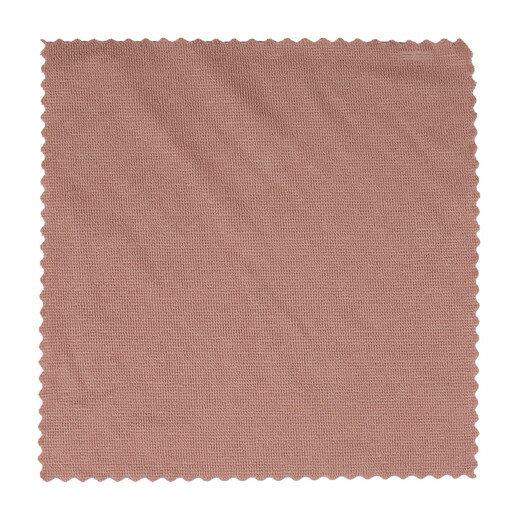
Why this choice suits this profile : This pack of 10 small cloths is ideal for households that want to separate different uses without buying lots of different products. At 22.5 × 22.5 cm, they are well suited to small surfaces and detailed cleaning.
The number of cloths makes it less tempting to use the same one in every room. The instructions advise against using fabric softener and recommend regular washing.
Pack of 10, compact size and fabric designed for dust, greasy marks and small surfaces.
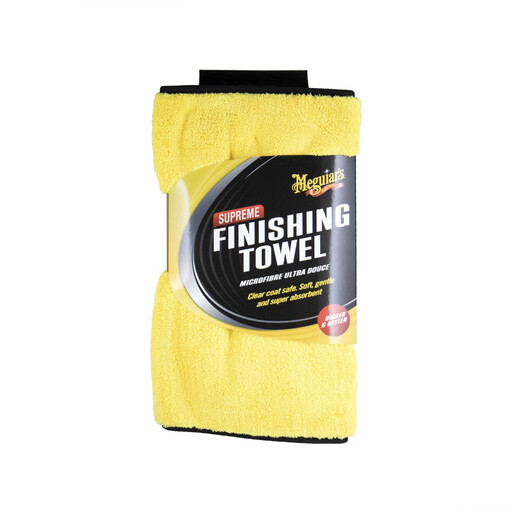
Why this choice suits this profile : Its thick construction and 30 × 50 cm size are designed for car finishing, particularly after washing or applying wax.
It does not claim to replace every household cloth: its purpose is clearly focused on finishing and removing residue.
Thick microfibre, 30 × 50 cm size and intended for water, wax, polish and car surfaces.
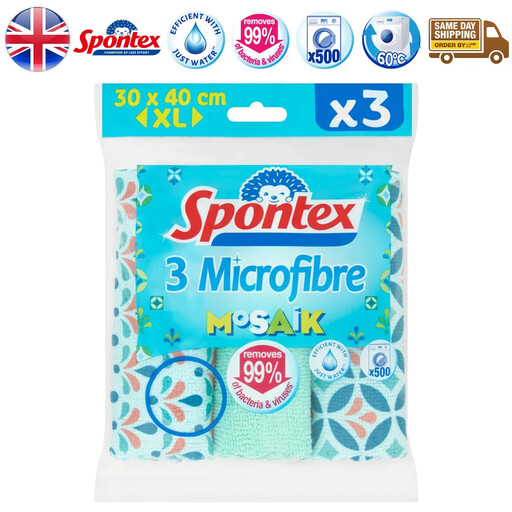
Why this choice suits this profile : The three 30 × 40 cm cloths are suitable for frequent cleaning in the kitchen, bathroom and living areas. The brand states that they can withstand up to 500 washing cycles.
The stated limit of 500 washes comes with precise rules: wash at up to 60 °C, without fabric softener, tumble drying, ironing or dry cleaning.
Three 30 × 40 cm cloths, suitable for dry or damp use, made from 85% polyester and 15% polyamide.
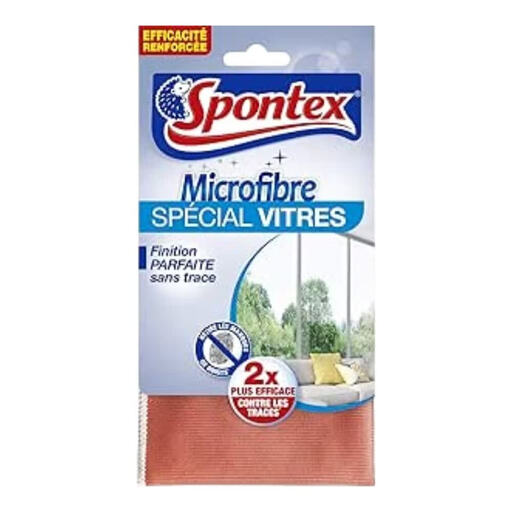
Why this choice suits this profile : Its 35 × 35 cm size is easy to handle on glass surfaces. The product details state that it can be used with water alone and that it has a recyclable design.
The method of use is clear: use the cloth dry or slightly damp, then leave it to dry or polish with a dry section.
35 × 35 cm size, use with water alone according to the product details, machine washable at 60 °C and stated recyclable design.
We have put together a complete, real-time updated list of products that fully meet these strict selection criteria and European safety regulations.
Yes, some cloths are designed to be used with water alone. Lightly dampen the cloth, wring it out thoroughly, then wipe the window. A second pass with a dry section can help reduce streaks. However, if the surface is very greasy, a suitable cleaning product may be necessary.
Its lifespan depends on the quality of the weave, how often it is used and how it is cared for. Some models claim to withstand up to 500 washes, but this assumes that the manufacturer’s instructions are followed. Fabric softener, excessive heat and repeated contact with abrasive particles can accelerate wear.
For screens, instrument panels and small areas, a size of around 22.5 × 22.5 cm provides good precision. To dry or finish the bodywork, a larger, thicker car cloth, such as a 30 × 50 cm model, is more practical. Always use a clean cloth and do not share it with very dirty surfaces.