
Same-day & Next-day Delivery

Quality Guaranteed

Unlock Your Welcome Offers: FREE Delivery | Up to 80% OFF | Free 30-day JoyPlus trial
Download the APP
Makeup remover cotton pads often look the same at first glance. Yet their texture, absorbency and composition can make a noticeable difference to your daily comfort. A pad that sheds leaves fibres on your face, while one that is too absorbent can soak up a good portion of your micellar water or lotion.
To avoid unpleasant surprises, it is better to focus on the concrete information on the packaging rather than on overly general promises. Here are the main criteria to consider, along with a selection suited to different uses.
A very fluffy cotton pad is not necessarily sturdy. Some pads become misshapen once soaked, or even come apart during cleansing. For the eye area, lips or skin folds, choose a structure that stays intact when wet.
Absorbent cotton pads can be practical, but excessive absorbency is not always an advantage: some of the cleansing product remains trapped in the pad instead of reaching your skin.
The term 100% natural cotton describes the fibre, but does not necessarily tell you everything about the bleaching, texture, treatments applied or any additional ingredients. Some organic cotton pads have an identifiable certification, such as GOTS, but always check the full composition stated on the packaging.
If you have sensitive skin, opt for a short ingredients list and, where available, a fragrance-free product. As for the softness promoted by brands, it remains a marketing claim: only your own tolerance can judge the product's real comfort.
A pack of 40 pads may be enough for occasional use. For daily use, formats of 105, 150 or 180 pieces are generally more practical. Shape also matters: oval pads cover more surface area, while smaller pads make precise movements around the eyes easier.
Do not confuse face cotton pads, baby wipes and sanitary pads. Their design and requirements do not serve the same purposes.
Check whether the product is made from 100% cotton, organic cotton or a blend of fibres. For sensitive skin, fragrance-free and unbleached models can be of interest, provided their composition is clearly stated on the pack.
An organic cotton certification provides information about the production method covered by the label. It does not mean that all elements of the product, such as the packaging or the adhesive part of a pad, are organic.
A textured or embossed side can help remove makeup, while a smooth side is better suited to applying a lotion or for the final cleansing pass. Pads that shed few fibres are particularly appreciated with liquid products used near the eyes.
For gentle makeup removal, soak the pad sufficiently, then glide it without pressing hard. At the first sign of discomfort or irritation, stop using it.
Compare the number of pieces, the gram weight when mentioned, and the price per pad rather than the total price of the pack. A large format can reduce repeat purchases, but it must be stored in a clean, dry place.
Reusable cotton pads can reduce waste over time, but they require regular washing and thorough drying. If you are primarily looking for a quick routine, disposable pads remain simpler to manage.
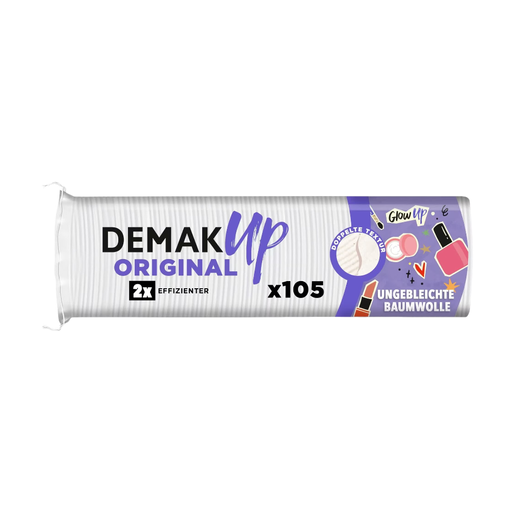
Why this product fits: With its 105 pads, this pack is suitable for a daily routine of makeup removal, cleansing or lotion application.
The listing states pure unbleached cotton and two different textures. This helps you avoid a single pad supposedly suitable for every task.
105 pieces, pure cotton, one textured side and one soft side, with manufacturing stated in France.
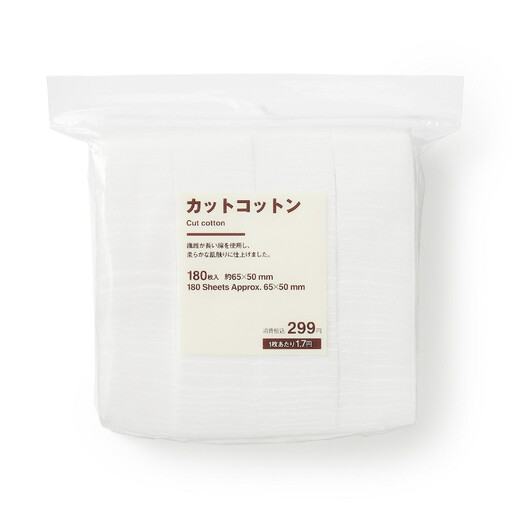
Why this product fits: If you regularly apply lotion, makeup remover or skincare, its large format and stated dimensions of approximately 65 × 50 mm should prove practical.
The listing mentions long fibres and a soft texture – more meaningful indicators than a simple promise of comfort.
Stated 100% cotton composition, 180 pieces, made in Japan and versatile use.
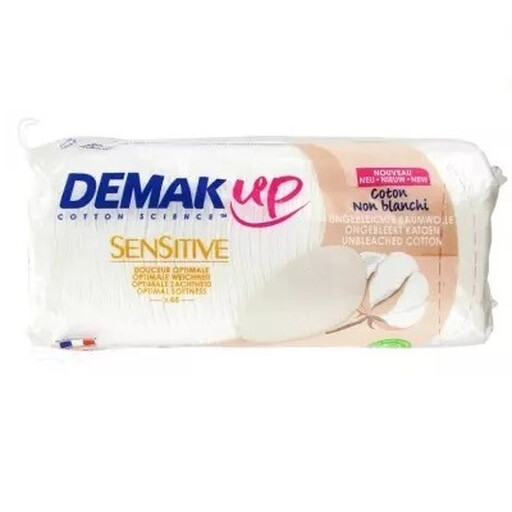
Why this product fits: This format is designed for sensitive areas of the face, particularly the lips and eye contour.
The description mentions cotton fibres and cottonseed oil extracts, rather than relying on a vague promise of softness.
48 pieces, cotton presented as natural and biodegradable, made in France.
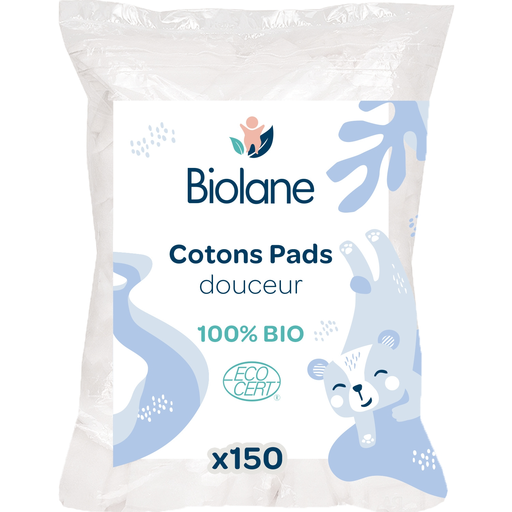
Why this product fits: This large format is designed for cleansing the face and body, as well as for nappy changes, used dry or dampened.
The listing mentions a GOTS certification by ECOCERT, organic cotton and a strength designed for daily care.
150 cotton pads, organic cotton, manufacturing stated in France and packaging made from at least 50% recycled materials.
Cotton sanitary pads do not have the same structure as face cotton pads. They generally combine a surface in contact with the skin, an absorbent core and a waterproof barrier. The RAMDAM SOCIAL models, for example, state an organic cotton surface, manufacturing in Brittany and a regular size of 14 pieces. The RAMDAM Night range is designed for heavy flow, with 10 pads measuring 290 mm in length.
The Naisi and Nass Princess models also state a cotton surface and wings, in sizes of 290 mm and 150 mm. Always Cotton Protection, meanwhile, offers a pack of 22 regular-size pads with a surface presented as made from organic cotton. Compare these features based on your flow, desired length and frequency of changing, without taking a marketing claim as a medical guarantee.
To keep your cotton pads clean and easily accessible, a cotton pad organiser can be practical. The Cotton Pad Container with Bamboo Lid combines a transparent body with a bamboo lid. Its vertical format allows you to quickly see the contents. Clean the body by hand and avoid soaking the bamboo lid.
We have put together an updated selection of products that meet these criteria for composition, format and daily use.
It all depends on the makeup you are wearing and the product you use. A single pad may be enough to apply a lotion, while several may be needed to remove long-wear makeup. Soak the pad sufficiently and avoid rubbing vigorously, especially around the eyes.
They can reduce purchases of disposable products, but their real cost also includes washing, detergent and drying. They are best suited to people who are willing to incorporate this maintenance into their routine. When travelling or when simplicity is a priority, disposable pads remain easier to use.
Keep the pack closed or place the pads in a clean, dry container away from dust. A transparent organiser also allows you to quickly check your stock. Used cotton pads and sanitary pads must never be flushed down the toilet.