For a meal in a care home, consider a low-fat powder if the resident’s dietary plan calls for limiting fat. It is not the right choice for everyone, particularly if they are malnourished or at risk of malnutrition. Compare the powder with the drink as it is actually served: the portion, milk, sugars and allergens all matter. If the packaging displays a Nutri-Score, it does not replace these checks.
Which residents is it for?
Residents who need to reduce their fat intake
When this is specified in an individual dietary plan, the powder’s fat content can help guide your choice. You should also look at the nutritional content of the drink as served, without overlooking the meal’s energy and protein intake.
Residents who need to monitor their sugar intake
The amount of sugar depends on the powder you choose and the portion used. Assurance Maladie points out that a person’s diet when they have diabetes should be tailored to their needs. The choice of drink should therefore form part of their dietary care plan.
Residents who are malnourished or at risk of malnutrition
A reduced intake or weight loss calls for the meal as a whole to be reviewed. Assurance Maladie highlights the importance of getting enough energy and protein, while the French National Authority for Health recommends appropriate care for malnutrition in older people.
What should you check?
Start with the resident’s dietary plan, then compare the powder’s nutritional values with the recipe as it is actually served. A low fat content in the powder alone does not tell you everything about the drink once it is prepared.
| Criteria |
What to check |
Residents concerned |
| Energy and protein intake |
Check the portion, the milk and any additional ingredients specified in the recipe as served. |
If the meal’s nutritional intake needs to be maintained because of a risk of malnutrition, reducing fat without looking at the whole drink would be inappropriate. Around 36% of consumers make this their priority. |
| Sugars |
Compare the sugar content per 100 g of powder and in the prepared portion, using the specified amount. |
When the dietary plan calls for sugar intake to be monitored, the amount actually served is what matters. Around 29% of consumers make this their priority. |
| Allergens and preparation |
Check the label on the batch received and make sure the recipe is compatible with any prescribed dietary adaptations. |
If an ingredient, a declared trace or the drink’s texture could make the recipe unsuitable, compatibility takes priority over choosing a low-fat powder. Around 21% of consumers make this their priority. |
| Fat |
Check the value per 100 g of powder, then the value for the drink prepared with the specified milk and amount of powder. |
When the dietary plan calls for fat to be limited, distinguish between the powder and the drink as served. Around 14% of consumers make this their top priority. |
For a solid powder, European regulations on nutrition claims set a maximum of 3 g of fat per 100 g for the claim ‘low fat’. Meeting this threshold for the powder does not automatically mean that a drink prepared with milk qualifies as low fat.
Mistakes to avoid
-
Assuming a low-fat powder is suitable for every resident
For someone who is malnourished or at risk of malnutrition, reducing the nutritional intake of a meal without a reason set out in their dietary plan may be inappropriate.
Before changing a recipe, check it against the resident’s individual dietary plan. If you have concerns about their nutritional intake, consult the care or dietetics team.
-
Comparing fat content without checking the sugars
A powder can be low in fat but still contain a lot of sugar: Banania states that its Original powder contains 69 g of sugars per 100 g.
Compare both values for the exact product, then work out what they mean for the amount used in the drink as served.
-
Treating the Nutri-Score as approval of the menu
According to Santé publique France, displaying the Nutri-Score is voluntary. A score alone does not tell you about allergens, the recipe made with milk or a resident’s needs.
If the Nutri-Score is shown, use it alongside the nutritional information, ingredients list and individual dietary plan.
-
Relying on an old label for allergen information
Ingredients and declared traces vary between products. The Nesquik product information cited by Carrefour lists soy lecithin, for example, while Carrefour Classic’ warns that the product may contain traces of milk.
Check the packaging on the batch received and make sure the preparation is compatible with the resident’s dietary requirements.
Brands to consider, product by product
These details apply to the powders mentioned, not to every product from each brand. When choosing a recipe to serve, always check the label on the product you buy and the drink as prepared.
Banania
Original chocolate powder contains ingredients including cocoa, cereals, banana and honey.
- Banania states that its Original powder contains 2.2 g of fat per 100 g, below the European threshold for the ‘low fat’ claim on solid foods.
- The same product information states that it contains 69 g of sugars per 100 g. Banania’s recipe for a serving uses semi-skimmed milk, so its nutritional values are not those of the powder alone.
Benco
The Less Sugar product is worth considering when both the sugar and fat content of the powder are relevant to your choice.
- Carrefour’s product information for this powder lists 2.7 g of fat per 100 g and a Nutri-Score of A.
- The Less Sugar name and Nutri-Score are no substitute for checking the sugar content per 100 g, the amount used and the nutritional values of the drink as served.
Nesquik
Check the packaging of the specific product you choose for its ingredients and allergen information.
- Carrefour’s product information for a Nesquik powder lists 23% low-fat cocoa and soy lecithin.
- To assess the fat content of the dry powder, use a value given per 100 g of that powder, not one for a prepared drink.
Carrefour Classic’
Compare this chocolate powder using its own ingredients list and nutritional values.
- Carrefour’s product information states that this product contains 21% low-fat cocoa.
- It lists 77.355 g of added sugars per 100 g and warns that it may contain traces of milk. These points should be considered when choosing a recipe for the resident concerned.
Chocolate powders on Joybuy
These two powders may be worth considering if an individual dietary goal calls for comparing the fat content of the powder. For each one, your decision should also take account of the amount used, the liquid and the resident’s dietary requirements.
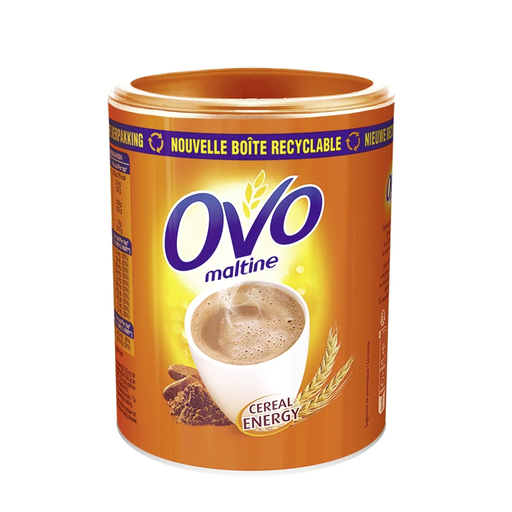 Image unavailable
OVOMALTINE chocolate drink powder, 350 g
Worth considering if the dietary plan calls for limiting the fat content of the powder, while taking account of the drink as actually served.
Compare the sugars in the amount used and check the ingredients and allergens on the packaging received before adding it to the menu.
View on Joybuy
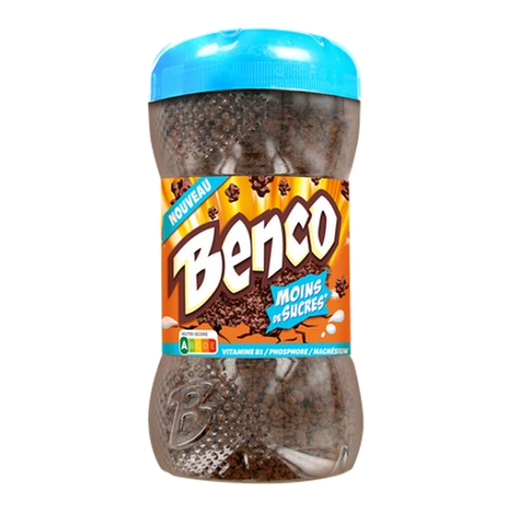 Image unavailable
BENCO Less Sugar chocolate granules, 400 g
Compare this product for a resident whose dietary plan calls for monitoring fat intake, while also assessing the sugar content of the prepared portion.
The Less Sugar label does not remove the need to check the nutritional information for this product. Also check the batch label and the recipe planned with the liquid to be served.
View on Joybuy
Frequently asked questions
Is the Nutri-Score compulsory on chocolate powder?
No. According to Santé publique France, displaying the Nutri-Score is voluntary. If it appears on the packaging, read it alongside the nutritional information and ingredients, but don’t treat it as approval of a recipe intended for a particular resident.
What does ‘low fat’ mean for a powder?
For a solid food, European regulations on nutrition claims reserve this claim for products containing no more than 3 g of fat per 100 g. Assess the powder and the prepared hot chocolate separately, particularly if the recipe includes milk.
Is a low-fat powder suitable for a resident who is malnourished?
Not necessarily: the choice must follow their individual dietary plan. Assurance Maladie highlights the importance of getting enough energy and protein in cases of malnutrition. Before reducing the fat in a recipe, ask the care or dietetics team to review the meal as served.
How should you compare the powder with a serving of hot chocolate?
Use the amount of powder, type of liquid and volume actually planned for serving. For example, Banania calculates its reference serving using 15 g of Original powder and 200 ml of semi-skimmed milk. The nutritional values for this serving should not be confused with those for 100 g of powder.


