
Livraison le jour même ou le lendemain

Qualité garantie

Débloquez vos offres de bienvenue: Livraison GRATUITE | Jusqu'à -80 % | 30 jours d'essai gratuits à JoyPlus
Téléchargez l'application
For families, parents of young children and anyone prone to skin reactions, choosing a liquid laundry detergent for sensitive skin is about more than just spotting a pastel label or the words “hypoallergenic”. The ingredients, dosage and wash temperature all play a part in the final result, as well as how well your clothes feel against your skin.
What’s more, some marketing claims deserve a closer look. Here are the main pitfalls to avoid before you head to the checkout.
A hypoallergenic laundry detergent is formulated to reduce the risk of a reaction, but it doesn’t guarantee no irritation at all. Fragrances, enzymes, preservatives and cleaning agents can still be poorly tolerated by some people.
Even a dermatologically tested laundry detergent or one with a certification can cause an individual reaction. So take the time to check the ingredients list and keep an eye out for any redness or itching after washing.
The absence of methylisothiazolinone and benzisothiazolinone is a feature many households look for. However, this one detail isn’t enough to judge a formula. Fragrances, enzymes and certain surfactants can also be a factor.
Look at the whole composition, especially if you’re after a laundry detergent for allergic skin or one intended for a baby’s clothes.
Cutting the dose right down doesn’t automatically make the detergent kinder to your skin. Using too little can leave dirt and residue trapped in the fibres. On the other hand, over-dosing pushes up the cost of each wash and makes rinsing more difficult.
Follow the recommendations on the packaging, adjusting for the amount of laundry, how dirty it is and the hardness of your water.
For a baby laundry detergent, choose a formula with clearly stated features: hypoallergenic fragrance, no certain preservatives, dermatological testing or independent certification – provided these are actually mentioned by the manufacturer.
Names like Marseille soap laundry detergent or aloe vera laundry detergent refer to one ingredient or a formula’s direction, but they don’t on their own prove it’s any gentler. For example, Le Chat Sensitive combines Marseille soap and aloe vera, while Rainett highlights its aloe vera and plant-based ingredients.
A liquid laundry detergent effective at 20 °C can work well for everyday laundry that’s lightly or moderately soiled, while also helping to cut energy use. The result still depends on the programme you use, the dosage and the type of stains.
For baby clothes, towels or heavily soiled items, a suitable programme and pre-treatment may still be necessary. Always follow the maximum temperature recommended on the garment’s label.
Compare the number of washes stated rather than just the bottle size. Refills can reduce the amount of plastic you use, but they need a compatible bottle and somewhere suitable to store them.
An eco-friendly laundry detergent may stand out thanks to a European ecolabel, recyclable packaging or a proportion of naturally derived ingredients. Check these details on the product page: an environmental certification doesn’t necessarily mean the detergent is fragrance-free or free from potentially irritating ingredients.
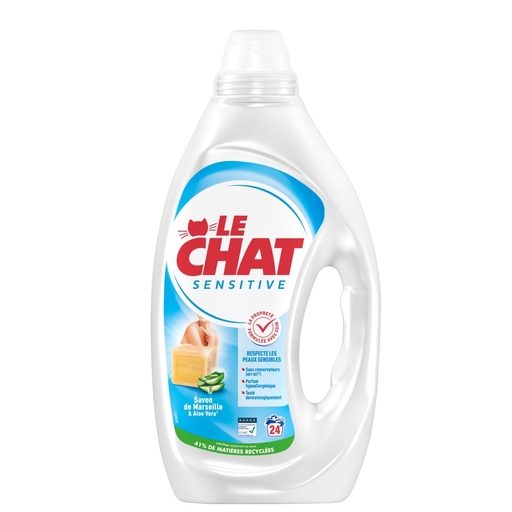
Why this suits this profile: With 24 washes, this size lets you try a liquid laundry detergent for sensitive skin without committing to a large bottle straight away. The formula is said to be suitable for the whole family and effective from 20 °C.
The product page mentions a formula free from MIT/BIT preservatives and a hypoallergenic fragrance, rather than relying on a vague promise of gentleness.
Marseille soap, aloe vera, stated dermatological testing and a bottle containing at least 41 % recycled materials.
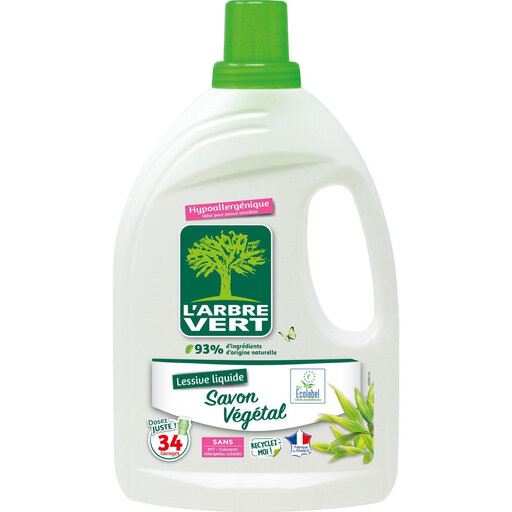
Why this suits this profile: This product is aimed at shoppers who care about ingredients and packaging footprint, and who also want a hypoallergenic laundry detergent for everyday use.
The product page states it’s free from dyes, optical brighteners, phosphonates and MIT, with a formula designed to reduce the risk of allergy.
European ecolabel, stated 93 % naturally derived ingredients, recyclable and refillable bottle.
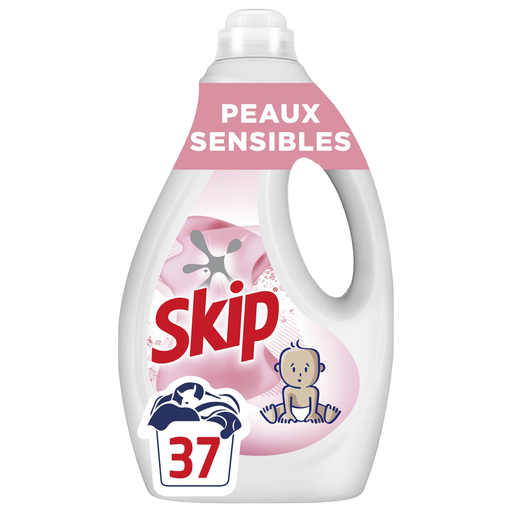
Why this suits this profile: Its formula is said to be compatible with short cycles and low temperatures. It can also be used on wool and silk.
The product page details its use at low temperatures and on delicate fabrics. However, it does list isothiazolinones, so anyone avoiding these will need to check.
37 washes stated, recyclable bottle and compatibility with wool and silk.
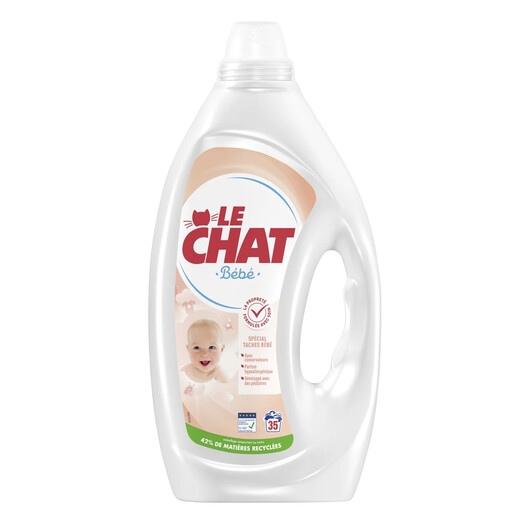
Why this suits this profile: This baby laundry detergent is designed for both machine and hand washing. It targets everyday stains, including milk, cereal and carrot.
The product page mentions a preservative-free formula, a hypoallergenic fragrance and ECARF certification. An individual reaction is still possible, though.
35 washes, suitable for machine or hand washing, packaging containing at least 42 % recycled materials.
We’ve put together a full selection, updated in real time, of products that meet these demanding criteria and comply with European safety regulations.
It can be, as long as its ingredients, fragrance and instructions match your requirements. A baby laundry detergent isn’t necessarily free from all fragranced ingredients. Check the label and stop using it if any irritation occurs.
Yes, some formulas claim to be effective from 20 °C. This temperature is best for everyday, lightly soiled laundry. Stubborn stains may need pre-treatment or a higher temperature, provided it’s suitable for the fabric.
Compare the price based on the number of washes stated, not just the bottle size. A refill can reduce the amount of plastic you use, while a larger bottle may bring the cost per wash down. The actual dosage you use and your water hardness also affect the overall cost.