What should you look for before buying?
First decide whether you want vegetables to cook with or a recipe that’s already prepared. Then compare the figures per 100 g and the portion you’ll actually eat: the DGCCRF notes that presenting information per 100 g or 100 ml makes it easier to compare nutritional information.
| Criterion |
What to check |
Who is it for? |
| Energy threshold |
Energy per 100 g; to carry the ‘low energy’ claim, a solid food must contain no more than 40 kcal per 100 g under EU regulations. |
If I want to meet a specific threshold, the recipe name alone isn’t enough to help me choose. Around 36% of shoppers would put this criterion first. |
| Speed and portion size |
Preparation method, amount eaten and kcal per 100 g. |
When I’m short on time, I look for a convenient frozen option without assuming that one tray is the right amount for my snack. Speed would be the priority for around 29% of shoppers. |
| Building your own meal |
The ingredients list and nutritional information, including fibre, protein and salt; then the foods added to the meal. |
If I start with a bag of vegetables, I want to decide what else goes on my plate. Around 21% of shoppers would prioritise being able to build their own meal. |
| Recipe and ingredients |
Sauces and fats in the ingredients list, as well as energy and salt per 100 g. |
I might prefer a seasoned recipe or particular ingredients, while still checking its energy content separately. Around 14% of shoppers would put this choice first. |
Retailers to consider
These retailers offer different types of frozen food to compare; the presence of a product category doesn’t indicate the nutritional values of every product in it.
Carrefour
The retailer distinguishes between plain vegetables and cooked or pan-fried vegetables.
- Carrefour Extra’s Basque-style vegetable pan-fry lists 73 kcal per 100 g and details the recipe, including peppers, onions, tomato sauce and oils.
- This pan-fry exceeds the 40 kcal per 100 g threshold for the ‘low energy’ claim on solid foods. Its vegetable-based name alone doesn’t qualify it for this category.
E.Leclerc
The Marque Repère range includes vegetables to prepare and ready-made recipes.
- Frozen courgettes, vegetables for couscous and ready-made ratatouille give you several different uses to compare.
- To choose based on calories, check the nutritional information for the specific product rather than relying on its category.
Auchan
The retailer offers frozen ready meals in individual and family-sized portions.
- These formats make it easier to look for a prepared recipe that suits the number of portions you need.
- Auchan’s 900 g paella lists 105 kcal per 100 g. Check the figures and portion size for each meal, even if it contains vegetables.
Lidl
The frozen ready meals featured by the retailer may be available as part of limited-time in-store offers.
- The range can help you spot recipes to look into before you shop.
- Check that the product is available at your local store and read its label before assessing its energy content.
Aldi
The retailer offers frozen vegetables, wok mixes and ready-made recipes.
- A vegetable pan-fry and ratatouille are among the product types you can compare, depending on how you plan to use them.
- Don’t confuse plain vegetables with cream-based purées or gratins: check the ingredients and values for each pack.
Picard
The retailer offers vegetables to prepare as well as ready meals; these two categories should be assessed separately.
- Picard lists 21 kcal per 100 g for its vegetables for grilling, 38 kcal for its soup vegetables and 39 kcal for its grilled vegetable mix.
- These three products are vegetable bases. Their values don’t describe a meal once you’ve added other ingredients, or the retailer’s other ready meals.
Frozen vegetables available on Joybuy
These products are frozen vegetables to use as a base or prepare as a side, rather than complete ready meals. If you’re choosing based on a calorie threshold, check the nutritional information for the specific product and take the finished recipe into account.
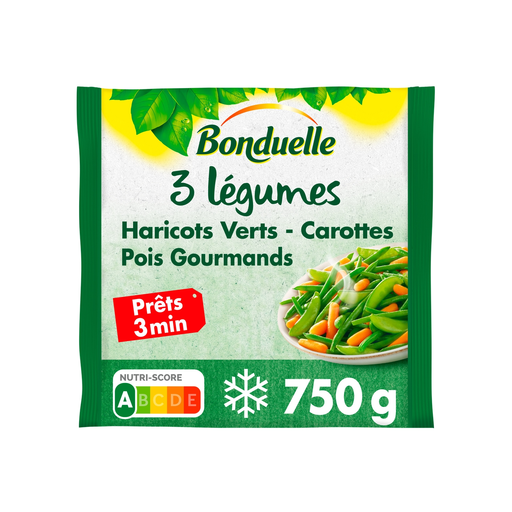 Image unavailable
Bonduelle, mix of green beans, carrots and mangetout, 750 g
For putting together a vegetable side without choosing a recipe that’s already seasoned. Plan separately what else you’ll serve with it and take any added ingredients into account.
View on Joybuy
 Image unavailable
Bonduelle, extra-fine green beans, 750 g
A vegetable to prepare and serve as a side. If you’re looking for a complete meal, choose the other items for your plate too and check their nutritional values.
View on Joybuy
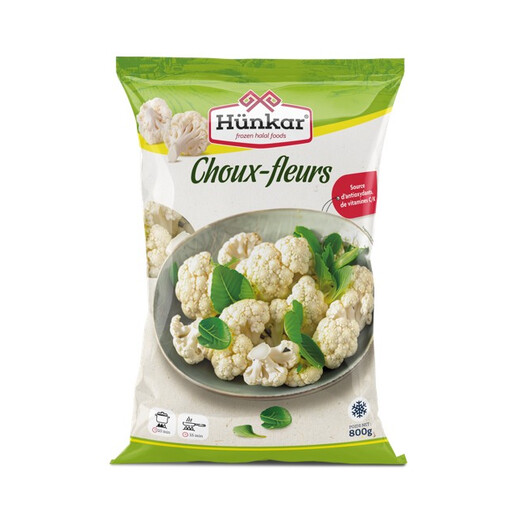 Image unavailable
HÜNKAR, cauliflower, 800 g
Use this cauliflower as a base and add ingredients to suit the meal you’re planning. Your chosen preparation method and any extras all contribute to the nutritional values of the finished portion.
View on Joybuy
Frequently asked questions
What does ‘low energy’ mean for a solid frozen food?
To use this claim, EU regulations set a maximum of 40 kcal, or 170 kJ, per 100 g of solid food. This threshold applies to the energy content of the product; it doesn’t mean that a bag of vegetables makes a complete meal by itself.
Is a Nutri-Score A enough if I’m watching my calorie intake?
No: check the kcal per 100 g separately. Picard lists both a Nutri-Score A and 96 kcal per 100 g for its Mexican-style vegetables, which is above the threshold for the ‘low energy’ claim on solid foods.
How do I compare two frozen products in different pack sizes?
First compare their nutritional values per 100 g, then work them out for the amounts you plan to eat. The DGCCRF says that providing information per 100 g or 100 ml makes comparison easier. You should also check fat, sugars, protein and salt, depending on what matters to you.
Is a seasoned vegetable recipe the same as plain vegetables?
No, their ingredients and nutritional values may differ. Carrefour Extra’s Basque-style vegetable pan-fry contains tomato sauce and oils, among other ingredients; its product information lists 73 kcal per 100 g. Compare the specific recipe and serving size, rather than relying on the word ‘vegetables’ alone.


