
Livraison le jour même ou le lendemain

Qualité garantie

Débloquez vos offres de bienvenue: Livraison GRATUITE | Jusqu'à -80 % | 30 jours d'essai gratuits à JoyPlus
Téléchargez l'application
The centerpiece of our social gatherings, the large wooden board has become the star of entertaining. Ideal for showcasing cured meats, cheeses, fruits, and other delicacies, it transforms a simple appetizer spread into a true feast for the eyes and palate. But with an overwhelming number of options available, it's easy to get lost. To help you see clearly, here are the common pitfalls to avoid and the essential criteria to check before you make a purchase.
The excitement for the art of tablescaping can sometimes lead to purchases we bitterly regret. Here are the most common traps that turn the dream into a disappointment.
To ensure you invest in a board that will last for years, a few technical points need to be verified.
The choice of wood is crucial?: it determines the lifespan and look of your board. Solid woods like mango wood, acacia, or oak are favored for their durability and the unique character of their grain. Bamboo, which is not a wood but a grass, remains a popular option in wooden tableware for its hardness, moisture resistance, and rapid growth, which makes it a renewable choice. Check that the product description clearly states "solid wood" or "100% bamboo" to steer clear of low-end composites.
An XXL charcuterie board should be generous without becoming a nightmare to handle. Before you fall in love, take out your measuring tape and measure your cupboards! For a reception serving board, a length of 50?cm or more is ideal. Beyond that, integrated handles or a manageable weight are no longer a luxury, but a necessity for serving. Also, consider its use?: a large flat surface is perfect for a grazing table board, while compartments can be practical for separating ingredients.
This is the non-negotiable point?: food safety. A quality board is always treated with a food-grade mineral oil. This treatment nourishes the wood, protects it from moisture, and is completely safe for contact with food. Steer clear of vague descriptions like "protective finish" and demand products that detail the exact nature of the treatment.
Rather than an endless catalog, here is our curated selection that meets specific needs while adhering to our quality criteria.
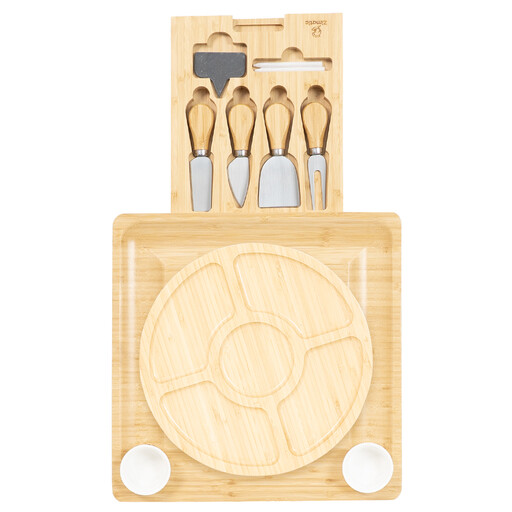
The perfect match: Perfect for those who love all-in-one solutions. This board features a clever drawer with a complete set of cheese knives. The result: impeccable, hassle-free service. It's also an excellent housewarming gift idea.
Made from bamboo, a material renowned for its durability, it sidesteps the fake wood trap. Its ingenious design optimizes the serving area without being too bulky, making it easy to store.
Integrated cutlery set and compartments. Compact and ultra-functional design.
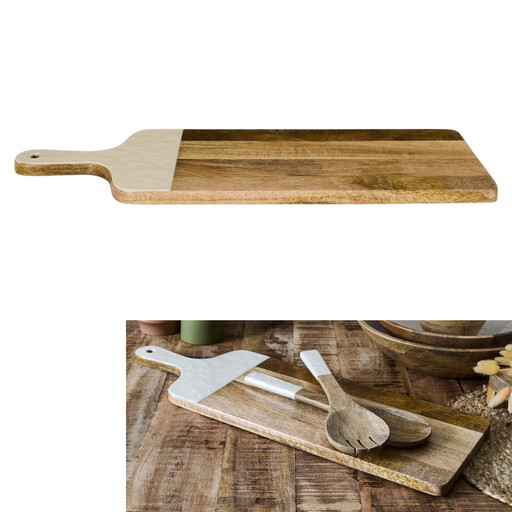
The perfect match: For those who see the board as a true centerpiece. Its 58 cm length and the raw beauty of the mango wood serving platter make it the ideal canvas for a grazing table board that will wow your guests at your next event.
This model is made of 100% natural mango wood, a guarantee of authenticity and sturdiness that puts it light-years ahead of imitations. Its clean design showcases the noble material without any unnecessary gadgets.
XXL presentation surface (58 cm). Premium aesthetic and unique character of mango wood.
Explore our full selection of boards that strictly adhere to our quality criteria and current standards.
Cleaning should be done exclusively by hand with a soft sponge, warm water, and a neutral soap. Most importantly, never let it soak and forget the dishwasher: the wood could swell, warp, or crack. Dry it immediately after washing with a clean cloth. To nourish the wood and preserve its appearance, regularly apply a thin layer of food-grade mineral oil over its entire surface.
Bamboo, which is a grass, is very dense and not very porous. It naturally resists moisture and bacteria well. The downside: its extreme hardness can dull your knife blades more quickly. Mango wood, on the other hand, is a hardwood from fruit trees at the end of their productive life, making it an eco-friendly choice. Its rich grain and warm tones give it a highly sought-after, unique aesthetic. Softer than bamboo, it is gentler on the cutting edge of your knives.
Yes, wood is a natural and therefore porous material. Foods with strong colors (beets, red berries) or strong flavors (garlic, onion, pungent cheeses) can leave stains or odors. To minimize this risk, make sure your board is always well-oiled: the oil acts as a protective barrier. Clean it promptly after use. A classic trick for stubborn odors? Rub the board with half a lemon and coarse salt, rinse, and then dry immediately.