
Livraison le jour même ou le lendemain

Qualité garantie

Débloquez vos offres de bienvenue: Livraison GRATUITE | Jusqu'à -80 % | 30 jours d'essai gratuits à JoyPlus
Téléchargez l'application
Far more than a simple accessory, the wooden board is a cornerstone of the kitchen. It serves as a work surface, a presentation platter for your appetisers, and a genuine decorative object. However, choosing the right one can quickly become a headache. Between marketing promises and materials with unclear properties, it's easy to end up with a product that warps, cracks, or is simply unsuitable for your daily needs. To help you make the right choice, let's review the common pitfalls to avoid.
The first pitfall is believing in the myth of the "universal" board. A board designed for the aesthetic presentation of a cheese platter will not withstand the repeated blows of a chef's knife. Using a serving board as a daily cutting board is the surest way to damage it prematurely and create grooves that are difficult to clean.
The second pitfall concerns the material. Not all woods are created equal—far from it. Some, like pine, are too soft and will be scarred by the first cut, while others, which are extremely hard, risk dulling your knives at lightning speed. Not to mention finishes that are not food-safe, which can pose health risks. It is therefore essential to understand the specific characteristics of each type of wood.
Finally, many people underestimate the importance of maintenance. A beautiful solid wood board can warp or split after just a few washes if the golden rules are not followed. A successful purchase is one where you master its use and long-term maintenance.
To avoid these unpleasant surprises, focus on a few key criteria that will make all the difference in your board's performance and durability.
The choice of wood is, of course, the starting point. It determines not only the aesthetics but also the resistance, weight, and maintenance of your board.
Beyond the wood itself, certain design details transform a simple board into a practical and well-thought-out tool.
To illustrate these criteria in practice, here are a few models we recommend, each suited to a specific user profile.
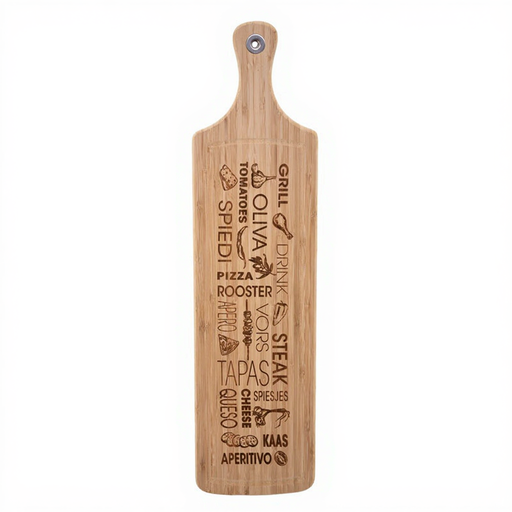
Why we chose it : This board is designed for efficiency in the kitchen. Its elongated shape is practical for slicing bread and vegetables, while the bamboo provides a durable cutting surface for intensive use.
It is specifically designed for cutting, avoiding the "universal" board trap. The inclusion of a juice groove and integrated handles are details that make all the difference in daily use.
Dense and resistant bamboo material. Functional design with a groove and handles. Lightweight and easy to handle (0.5 kg).
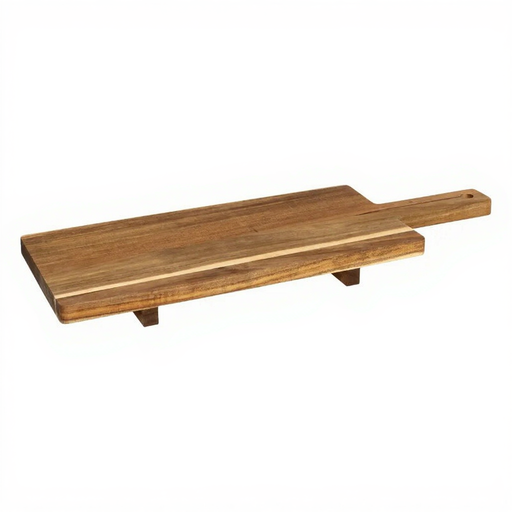
Why we chose it : For those who love to entertain, this large acacia board is a prime choice. Its generous dimensions (70 cm) allow for creating spectacular arrangements for appetisers or desserts.
It is clearly dedicated to presentation and embraces it perfectly. The choice of acacia offers a good compromise between aesthetics and durability, avoiding the trap of a wood that is too soft and would be damaged after the first use.
Very large serving surface (L 70 x W 25 cm). Noble and robust material (acacia). Suitable for professional use.
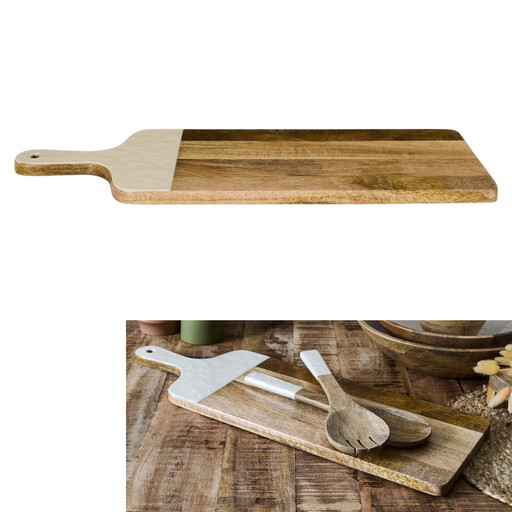
Why we chose it : This board is a true statement piece. The mango wood, with its unique grain and warm tones, makes it as much a decorative object as a serving platter for special occasions.
Its purpose is clearly presentation. By reserving it for this use, you avoid damaging it with knives, thus preserving its beauty. The description warns against using steak knives, a welcome caution to protect its surface.
Remarkable aesthetics of 100% natural mango wood. Large 58 cm surface ideal for entertaining. Meticulous finish that highlights the wood's grain.
We have compiled a complete selection of products that meet our quality requirements and current standards.
Maintenance is simple but essential. After each use, wash your board by hand with warm water and a little mild soap. Never let it soak in water and never put it in the dishwasher, as the excessive heat and moisture could cause it to swell, warp, or even crack. Dry it immediately and thoroughly with a cloth. To nourish the wood and preserve its finish, regularly apply (once a month for frequent use) a thin layer of food-grade mineral oil.
For hygiene and food safety reasons, it is recommended to avoid cross-contamination. Ideally, use separate boards: one for raw meat and fish, and another for ready-to-eat foods like bread, vegetables, and fruits. If you only have one board, wash and disinfect it scrupulously between cutting raw meat and other foods.
There is no absolute answer, as the choice depends on your priorities. Bamboo is denser, less porous, and often more scratch-resistant than many woods. It is an ecological and durable choice. However, this hardness can also dull the edge of your knives more quickly. Solid wood boards, such as acacia or beech, are gentler on blades, and many people appreciate their traditional aesthetic. Solid wood may require a bit more attention in terms of oiling to prevent it from drying out.