
Livraison le jour même ou le lendemain

Qualité garantie

Débloquez vos offres de bienvenue: Livraison GRATUITE | Jusqu'à -80 % | 30 jours d'essai gratuits à JoyPlus
Téléchargez l'application
For a family of 3 to 5 people, a large-capacity washing machine helps reduce the number of cycles and makes light work of household laundry. But a bigger drum alone doesn't guarantee a good purchase. Real depth, drying capacity, noise level and available programmes can quickly turn a bargain into an impractical everyday appliance.
Before comparing models, here are the main pitfalls to avoid.
On a washer-dryer, the capacity is often given as two values. An 8 kg/5 kg machine can wash up to 8 kg of laundry, but only dry 5 kg. If the drum is fully loaded, you'll need to remove some items before starting the drying cycle.
For a household that mainly washes everyday clothes, this difference is fairly easy to manage. It becomes more of a hassle with sheets, towels or children's clothing.
A 9 kg or 10 kg washing machine can be deeper than a standard model. In a French bathroom, a narrow utility room or a fitted kitchen, just a few extra centimetres can prevent the door from opening properly or make plumbing connections difficult.
Measure the available space, taking several factors into account:
A slim washing machine can be a good solution when depth is limited. However, always check its actual capacity and the manufacturer's recommended stability.
Steam, quick wash or a quiet motor can be useful, but their value depends on the programme selected. A 15-minute cycle is generally fine for freshening up lightly soiled fabrics, not for replacing a full cotton cycle.
Similarly, a BLDC inverter motor runs without brushes and can help reduce vibration and noise. However, the noise level also depends on the load, the type of flooring and how well the machine is levelled.
The biggest drum isn't always the best choice. A machine that's often used with a very light load reduces the expected economic benefit. The capacity should match your washing frequency and the space you have available.
A 1400 rpm washing machine extracts more water from laundry than a slower model. This can reduce drying time on the line or in a tumble dryer. However, this speed isn't essential for all fabrics: delicate programmes typically use a gentler spin.
The European energy label allows you to compare consumption on a common basis. An energy class A rating applies to washing according to the current scale. Labels like "A-10%" should be treated as a feature highlighted by the manufacturer and verified on the product sheet, especially to clearly distinguish washing energy use from drying energy use.
For family use, choose a machine that offers at least:
When stated on the model's product sheet, a wool programme certified by The Woolmark Company can be suitable for jumpers and knitwear. However, the garment's care label should always be your final reference.
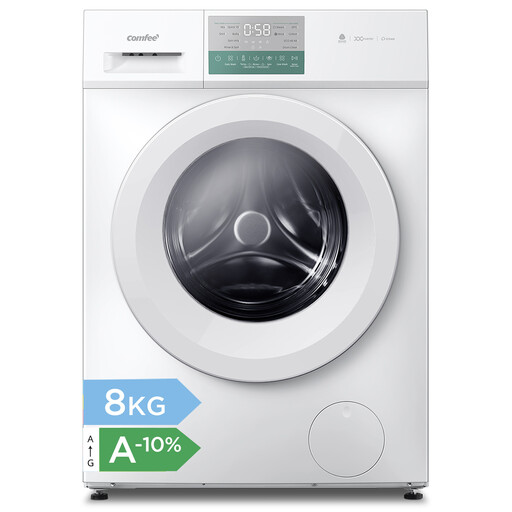
Why this choice suits this profile: Its 8 kg format is ideal for regular washes in a moderately sized household. The touch panel and programmes are easy to get to grips with.
The stated capacity is clearly defined, and the 15-minute quick cycle is presented for lightly soiled items. This helps avoid unrealistic expectations.
8 kg drum, BLDC motor, steam, wool programme and drum cleaning at 90 °C as stated on the product sheet.
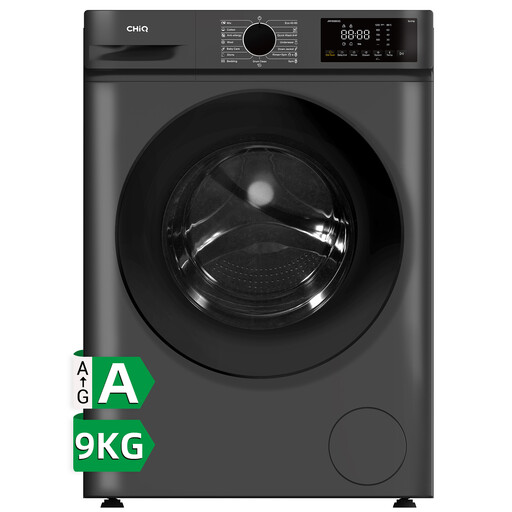
Why this choice suits this profile: This model combines a 9 kg capacity with a stated depth of 465 mm, an interesting format when every centimetre counts.
The stated depth allows you to check installation requirements before buying, rather than relying solely on drum volume.
Class A stated, spin up to 1400 rpm, 16 programmes, steam and a 12-year motor replacement warranty according to the product sheet.

Why this choice suits this profile: This 2-in-1 format is ideal for households that want to wash and dry their laundry without installing two separate appliances.
The 10 kg wash and 7 kg dry capacities are clearly separated. This makes it easier to anticipate having to transfer some items.
Steam, wool and quick wash functions, BLDC motor, automatic drying as stated, and a capacity suited to a household of 4 to 5 people.
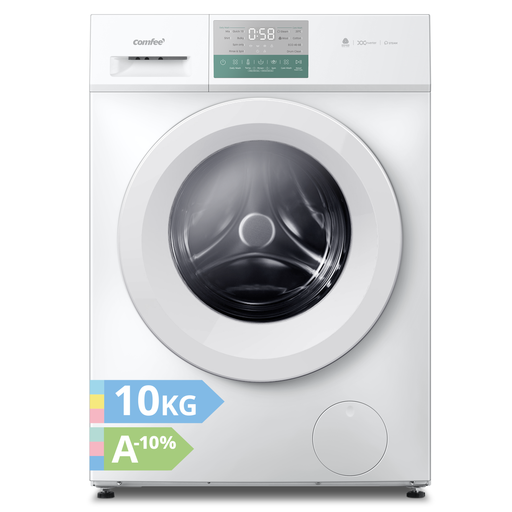
Why this choice suits this profile: Its large drum is ideal for big washes, sheets and households that run their machines less frequently.
The 10 kg capacity assumes a sufficiently deep installation space and washing habits that genuinely justify this volume.
1400 rpm spin, BLDC motor, steam, wool programme, touch panel and A-10% rating on the manufacturer's product sheet.
We've put together a comprehensive, real-time updated list of products that meet these demanding selection criteria and European safety standards.
An 8 or 9 kg machine is generally suitable for a family of four who do several washes a week. 10 kg becomes worthwhile for washing sheets, towels and sportswear, or for households that prefer to batch their laundry together.
Drying typically uses more energy than washing alone. Check the data for wash cycles and wash-dry cycles separately. Since the drying capacity is often lower than the wash capacity, avoid filling the drum to the maximum before starting a combined cycle.
Remove the transit bolts before first use, place the machine on a stable floor and carefully adjust its feet. A well-balanced load, a clean filter and a spin speed suited to the fabrics also contribute to quieter, smoother operation. A BLDC inverter motor can help reduce noise, but the quality of the installation remains the most important factor.