If you want dry laundry without an airer, consider a tumble dryer or washer-dryer, depending on the space available. If you’re keeping your airer, a good spin cycle removes more water from fabrics, while a dehumidifier helps manage moisture in the room without replacing existing ventilation or extraction. For air-drying, ADEME recommends using a large, well-ventilated room or one with a mechanical ventilation extract vent.
Who are these solutions for?
People short on space
If there’s no room in your flat for another appliance, compare your washing machine’s spin performance with the options for drying laundry on an airer. If you’re thinking of stacking two appliances, check their dimensions and whether the stacking kit is compatible.
Households that often dry laundry indoors
If your airer is in a living room or bedroom, you’ll also need to consider the moisture it adds to the room. For air-drying, ADEME recommends using a large, well-ventilated room or one with a mechanical ventilation extract vent.
People who want to do without an airer
A tumble dryer or washer-dryer can meet this need, provided you have a suitable place for it. Also check the drying capacity and how the chosen model collects or drains away condensed water.
What should you check before choosing?
Start with the factor that will make the biggest difference to your choice: whether or not you’ll keep using an airer. Then consider whether you have a suitable room and enough space for an appliance.
| Priority |
What to check |
Depending on your needs |
| Doing without an airer |
Compare the drying capacity with your usual loads. Measure the space and check how condensed water is collected or drained away. |
I want dry laundry without setting aside space for an airer: a separate tumble dryer or a washer-dryer can meet this need, if installation is possible. |
| Keeping your airer |
Check your washing machine’s spin-drying class and settings. ADEME advises choosing a class A spin cycle if you need laundry to dry quickly indoors. |
I can keep drying my laundry on an airer, but I want to reduce the amount of water left to evaporate after washing. A suitable spin cycle helps before you hang your laundry up; it doesn’t manage moisture already in the room. |
| Room humidity |
For air-drying, ADEME recommends using a large, well-ventilated room or one with a mechanical ventilation extract vent. If you’re considering a dehumidifier, compare its stated coverage with the room’s volume and check how it’s emptied. |
I’ll keep using an airer, but want to manage humidity while my laundry dries. A dehumidifier can complement the way you use the room, but it won’t replace existing ventilation or extraction. |
| Space and installation |
Measure the width, height and depth, as well as the door opening and clearance needed. For stacking, Whirlpool says a kit must secure the appliances and the washing machine must be at least as deep as the tumble dryer. |
My space is narrow, so I need to check the dimensions of the exact models before choosing a second appliance, a stacked setup or a combined appliance. |
| Electricity use |
Compare tumble dryers’ energy labels and kWh figures on a like-for-like basis. For a dehumidifier, look at its power rating and the expected running time rather than relying on a general promise of savings. |
If I’ll use the appliance often, I want to compare figures that reflect how I’ll use it, rather than estimating its consumption from a single advertised feature. |
Mistakes to avoid
-
Choosing a tumble dryer based only on its stated dimensions
You’ll also need to leave enough room for the door and connections. If you’re stacking appliances, Whirlpool says the washing machine must be at least as deep as the tumble dryer.
Measure the entire space and check that a stacking kit is compatible with both appliances before you buy.
Stacking may require a separate compatible kit.
-
Treating a dehumidifier as a replacement for ventilation
Drying laundry on an airer releases moisture into your home. For this method, ADEME recommends using a large, well-ventilated room or one with a mechanical ventilation extract vent.
Keep using your existing ventilation or extraction, and check that the dehumidifier’s stated coverage is suitable for the room.
Remember to account for the appliance’s electricity use and emptying its tank or connecting a hose.
-
Confusing washing capacity with drying capacity
For the Bosch WNG24402FR washer-dryer, Bosch states a washing capacity of 9 kg, but a capacity of 6 kg for a wash-and-dry cycle. So a load that fits the maximum washing capacity won’t necessarily fit the combined cycle.
Compare the two capacities separately and check whether you’ll need to split your usual loads before drying.
-
Assuming claims about fast drying or savings apply to every situation
A figure advertised for a particular programme, model or test condition won’t necessarily reflect your load of laundry or your room.
For a tumble dryer, compare the exact model’s kWh use and noise level. For a dehumidifier, check its power rating and the conditions behind its stated capacity.
A guide to brands and models
These examples illustrate different types of appliance; their features won’t necessarily apply to every model from each brand.
Whirlpool
The Whirlpool CWD84MWWSFR heat pump tumble dryer is an example of a separate appliance for drying laundry without an airer.
- Whirlpool states that this model has an 8 kg capacity, a noise level of 63 dB and dimensions of 59,8 × 84,6 × 60,7 cm.
- Before stacking, check the dimensions of both appliances and find a compatible kit. Compare energy use using the label for the model you choose.
Bosch
The Bosch WNG24402FR washer-dryer combines washing and drying in a single appliance.
- Bosch states a capacity of 9 kg for washing and 6 kg for a wash-and-dry cycle.
- The combined cycle has a lower capacity than washing alone, so check that it suits your usual loads.
Beko
The Beko B5WFT31145W washing machine is a useful example for anyone keeping an airer and looking at spin performance first.
- Beko states that this model has a B spin-drying class and a selectable spin speed.
- The spin cycle removes water before you hang your laundry up; it doesn’t remove the moisture released into the room afterwards.
Rowenta
The Rowenta DH5260F0 dehumidifier is an option for homes where laundry is dried on an airer.
- For this model, Rowenta states that it has a laundry mode, a capacity of 16 L/day and coverage of up to 40 m² or 100 m³.
- These stated figures don’t guarantee the same results in every room. Also check how to empty the collected water.
Appliances available on Joybuy
This selection includes a washer-dryer, three dehumidifiers for use with an airer and a separate tumble dryer. First choose the type of appliance that suits the way you dry your laundry, then check the requirements of the specific model.
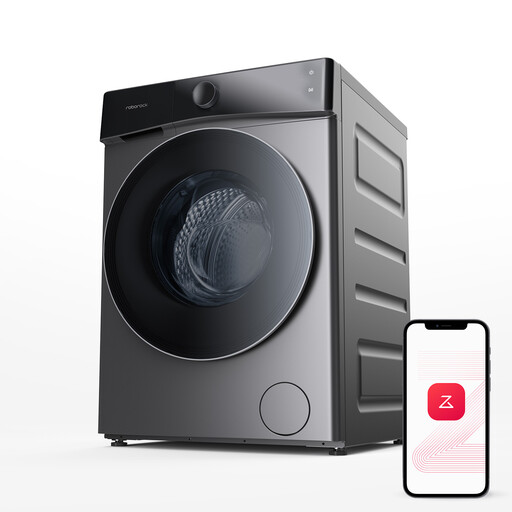 Image unavailable
Roborock Zeo Lite Gray, 10 kg / 6 kg washer-dryer
One appliance combines washing and drying, so you can do without an airer without installing two machines. The product name states a 10 kg washing capacity, a 6 kg drying capacity and 27 wash programmes. Compare your usual load with the drying capacity. Check the model’s dimensions, energy use and installation requirements before making space for it.
View on Joybuy
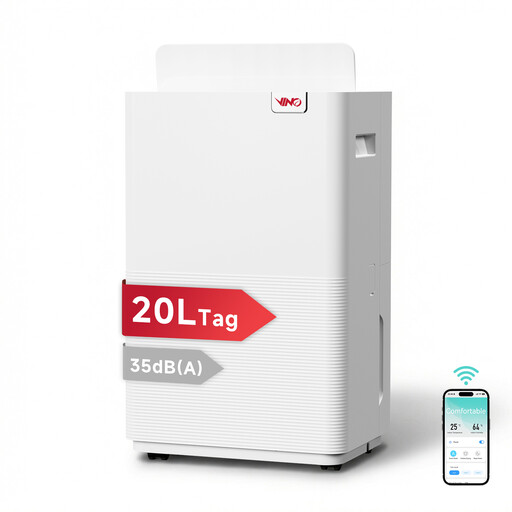 Image unavailable
VINO, 20 L/day dehumidifier with Wi-Fi
Worth considering if you dry laundry on an airer and want to manage the room’s humidity. The product states that it has a Dry mode, coverage of up to 40 m² and a 2,5 L tank. Its 20 L/day capacity alone won’t predict the results in your home. Check the conditions behind this figure and the noise level of the exact variant.
View on Joybuy
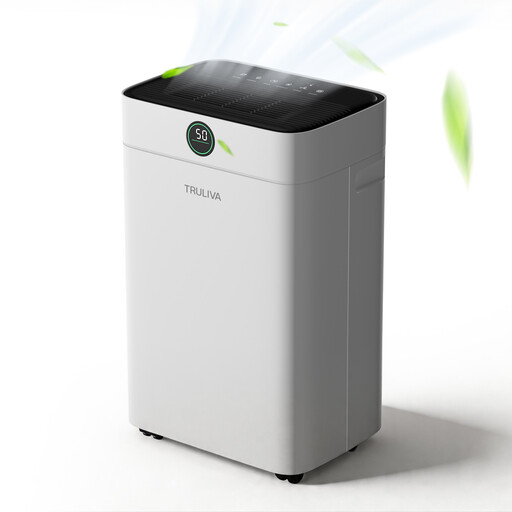 Image unavailable
TRULIVA, 25 L/day dehumidifier with laundry mode
This model lets you keep drying laundry on an airer and has a dedicated laundry mode. The product states that it has a 2,8 L tank and a hose for continuous drainage. Its stated capacity of 25 L/day is based on 95 °F and 90 % relative humidity. Don’t assume you’ll get the same results in your room, and check that the drainage option suits you.
View on Joybuy
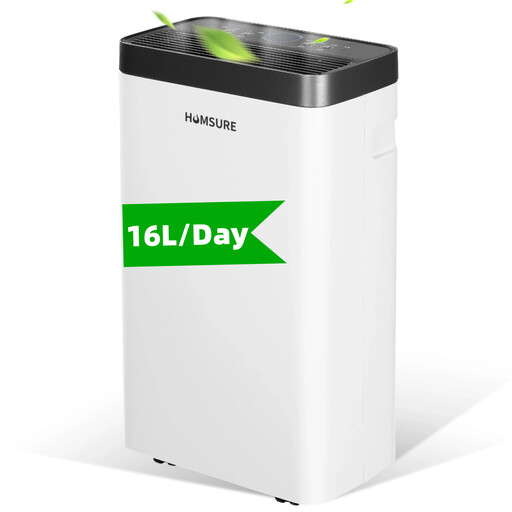 Image unavailable
HUMSURE, 16 L/day dehumidifier for 25 m²
If you’re using an airer, check that the stated coverage of 25 m² suits the room. The product states that it has a 1,4 L tank and a capacity of 16 L/day at 95 °F and 90 % relative humidity. This figure doesn’t guarantee the same results in other conditions. Plan to empty the tank or check that you can connect the hose.
View on Joybuy
 Image unavailable
Hotpoint CHD84MWBSEE, 8 kg heat pump tumble dryer
This separate tumble dryer is a good option if you want to dry laundry without an airer, provided you have a suitable space for it. Its name states an 8 kg capacity and a C energy rating. Check its dimensions, energy use in kWh and how water is collected or drained before installation.
View on Joybuy
Frequently asked questions
Do you need a tumble dryer to dry laundry in a flat?
No. If you’re keeping your airer, you can look at your washing machine’s spin performance and how to manage humidity in the room. A tumble dryer is better suited to anyone who wants to do without an airer. For air-drying, ADEME recommends using a large, well-ventilated room or one with a mechanical ventilation extract vent.
Can you stack a tumble dryer on top of a washing machine?
Yes, as long as the two appliances and the stacking kit are compatible. Whirlpool says the washing machine must stay on the floor, the kit must secure the appliances and the washing machine must be at least as deep as the tumble dryer. Check the requirements for the exact models, particularly if they’re from different brands.
How do you drain water from a tumble dryer or dehumidifier?
It depends on the model: check whether you need to empty a tank or whether you can connect a drainage hose. Bosch’s guide advises checking the tank and hose when one is used. For its DH5260F0 dehumidifier, Rowenta describes a 3 L tank and continuous drainage. Check the appliance manual and consider where the hose can run.
How can you estimate a dehumidifier’s energy use?
Use the power rating of the model you choose and how long you expect to run it. For domestic dehumidifiers in general, Rowenta gives a range of 200 to 400 W, equivalent to 0,2 to 0,4 kWh for one hour of continuous use. This isn’t a figure for every appliance or every use.


