
Livraison le jour même ou le lendemain

Qualité garantie

Débloquez vos offres de bienvenue: Livraison GRATUITE | Jusqu'à -80 % | 30 jours d'essai gratuits à JoyPlus
Téléchargez l'application
Buying a washing machine is not simply a matter of comparing capacity or spin speed. An appliance that is too deep could prevent a door from opening, while an oversized drum may often run half empty. A machine marketed as quiet can also remain clearly audible during the spin cycle. To avoid buying a model that is not right for you, it is better to focus on the factors that genuinely matter in everyday use.
A large-capacity washing machine of 10 or 11 kg is mainly intended for families who regularly build up large laundry loads, wash duvet covers or often deal with bulky fabrics. For a couple, an 8 kg washing machine is generally sufficient. A larger capacity does not guarantee better performance and could encourage you to run cycles with an insufficiently full drum.
The stated capacity refers to the maximum weight of dry laundry, not the amount that can be loaded for every programme. Delicates, wool and duvets may be subject to specific limits, as detailed in the user manual.
An A rating is a good starting point, but it is not enough to estimate the total running cost. Also check energy consumption in kWh per 100 cycles, the amount of water used per cycle and the duration of the Eco 40-60 programme. Two A-rated appliances can therefore show different consumption figures depending on their capacity and settings.
The European energy label makes it possible to compare appliances using a harmonised method. However, this does not mean that consumption will be identical in every household. The selected temperature, programme used, washing frequency and weight of the load all have a direct impact on the result.
A steam washing machine, a connected model or an appliance with an inverter motor can provide genuine convenience, but these features alone are not enough to justify a purchase. Depending on the programme, steam can freshen certain clothes or help reduce creasing. Connectivity makes it easier to monitor a cycle, while an inverter motor generally uses electronic control and a brushless design, depending on the model.
Always check exactly what each feature includes, as well as the dedicated programme and conditions of use. A label such as “anti-allergy” or “hygiene” refers to a cycle or option specific to the manufacturer; it is not a medical guarantee.
Measure the available width, height and, above all, depth. Remember to allow for the hoses, the door and the space needed to open it fully. A front-loading washing machine or front-loading model often allows you to use the top as storage space, provided you leave a clear area in front of the appliance.
A top-loading model may be more practical in a narrow room. The Candy TCA464TM4-S, for example, is 40.5 cm wide and holds up to 6 kg of laundry. This format is worth considering when width is the main constraint.
For one person or a couple, a capacity of 6 to 8 kg will cover most everyday needs. A family may prefer an 8 to 10 kg model, or even larger for bulky loads. The term 1400 rpm washing machine indicates the maximum spin speed, but not necessarily the speed used for every programme.
A higher speed will generally extract more water before clothes go into the tumble dryer or onto the washing line. However, noise levels and spin-drying efficiency should be considered just as carefully. To protect your clothes, also follow the care symbols and do not overload the drum beyond the recommended capacity.
Compare the noise level during the spin cycle, expressed in dB(A). As an indication, the product specifications consulted list 68 dB(A) for the Haier X Series 11 and 72 dB(A) for certain Hisense, Samsung and Electrolux models. Perceived noise also depends on floor stability, how the feet are adjusted and the quality of the installation.
Even a quiet washing machine must be perfectly level to minimise vibrations. Also check for a drum-cleaning programme, a child lock, leak protection and an easily accessible filter. Removing the transit bolts, checking the connections and leaving the door ajar after each use all contribute to a safer installation and longer service life.
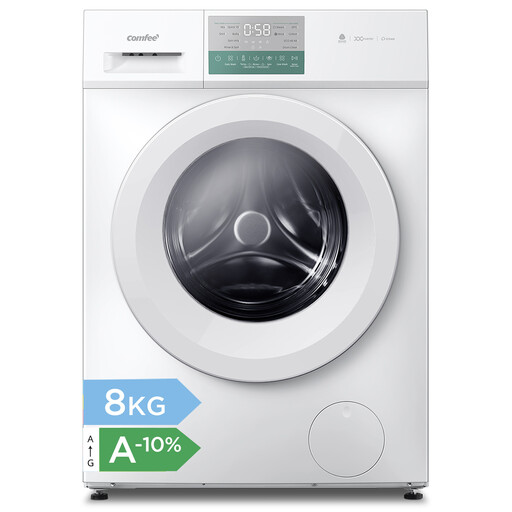
Why this choice suits this profile : Its 8 kg capacity is suitable for the regular laundry needs of a couple or small household. The appliance also features a touchscreen interface and a 15-minute quick programme.
The specifications mention an A-10% rating, a steam function and load sensors. However, it is still essential to check the exact consumption figures and conditions of use in the manual.
8 kg capacity, BLDC motor, spin speed of up to 1400 rpm and a wool programme listed by the manufacturer.
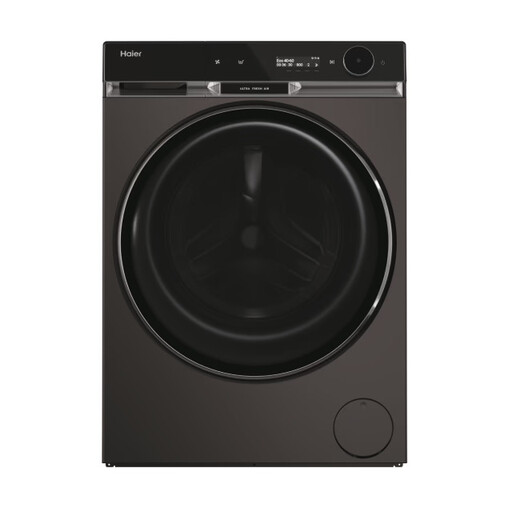
Why this choice suits this profile : It combines a 10 kg capacity with automatic detergent dosing, steam and app control. This configuration is designed for households that want a wide range of settings.
The connected features are backed by precise data : 41 kWh per 100 cycles, 48 l per cycle and 68 dB(A) during the spin cycle.
Direct-drive motor, AutoDose, 1400 rpm spin speed, Wi-Fi and a steam refresh programme.
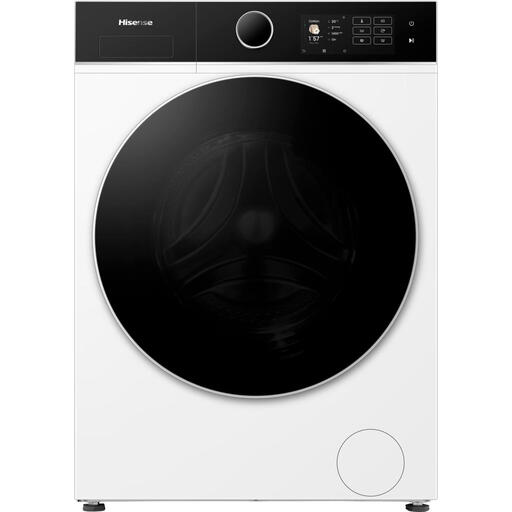
Why this choice suits this profile : Its stated depth of 47 cm makes it suitable for smaller utility rooms, while still offering an 8 kg capacity and dedicated programmes for pets, sportswear and delicate fabrics.
Its compact size can be verified from the stated dimensions. The specifications also list 33 kWh per 100 cycles, 38 l of water per cycle and 72 dB(A) during the spin cycle.
A rating, inverter motor, Wi-Fi, steam function, interior light and spin speed of up to 1400 rpm.
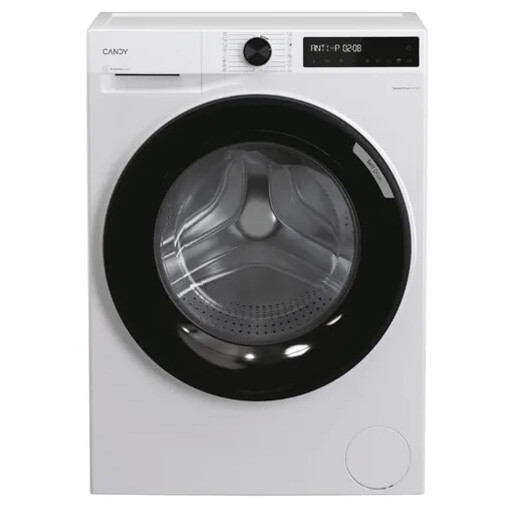
Why this choice suits this profile : With its 11 kg capacity and 78 l drum, it is suitable for households that regularly wash large quantities of laundry.
This large capacity is backed by verifiable data : 37 kWh per 100 cycles, 48 l per cycle and 72 dB(A) during the spin cycle.
A rating, inverter motor, 16 programmes, Wi-Fi, 14-minute quick cycle and spin speed of up to 1400 rpm.
We have put together a complete, real-time updated selection of products that meet these demanding purchasing criteria and European safety standards.
A family washing machine with an 8 kg capacity is suitable for many households. If you do several loads a week, regularly wash duvets or live in a large family, a capacity of 10 or 11 kg can reduce the number of cycles. The right choice mainly comes down to matching the capacity to your actual habits.
The cost depends on the consumption shown in kWh per 100 cycles, the price of electricity, water consumption and how often the machine is used. To estimate the cost, multiply the stated consumption by the number of cycles you run, then apply your tariff. Short programmes are not always the most energy-efficient.
This depends on the quality of the installation, observing the maximum load, cleaning the filter and door seal, and how frequently the machine is used. Before buying, check the warranty terms, the availability of spare parts and the manufacturer’s recommendations.