If you only have room for one appliance, choose a washer-dryer based first on how much laundry you actually want to dry in one cycle, not just its washing capacity: the two load sizes can differ. Then check the dimensions and the details for a complete wash-and-dry cycle. If you can dry clothes on a line in suitable conditions, you could also save machine drying for certain loads.
Who is a washer-dryer for?
One space for washing and drying
You want two functions in one machine because you don’t have room for a second appliance. A post on the Les Numériques forum illustrates this need in a small flat without a balcony, though it doesn’t indicate how common this situation is.
Wash and dry without transferring your laundry
You want to start a load and then collect dry laundry without moving it between two appliances. Bosch says the WDU8H500FF can handle up to 6 kg in a complete cycle, compared with 10 kg for washing alone.
Save machine drying for certain loads
You can hang some of your laundry out to dry and compare this approach with using a tumble dryer. ADEME points out that air-drying clothes releases moisture into the air indoors, so available space and moisture management matter too.
What to check before you buy
First, check that the appliance will fit your space and can dry the load you have in mind. Then compare cycle times, energy and water use, and maintenance requirements to suit your laundry routine.
Washer-dryer
Worth considering: if you only have room for one appliance and want to run both functions back to back without transferring your laundry.
Bear in mind: the drying load may be smaller than the washing load. UFC-Que Choisir also reports that most of the models assessed in its testing use water during drying.
Two separate appliances
Worth considering: only if your space and layout genuinely allow you to install both appliances.
Bear in mind: you can only stack the appliances if the models are compatible. Bosch recommends checking compatibility and using the appropriate stacking kit.
Air-drying
Worth considering: if you can wait for your laundry to dry and have a suitable place to hang it.
Bear in mind: you’ll need space, and ADEME notes that air-drying clothes indoors releases moisture into your home.
| What matters |
What to check before buying |
Who this matters most to |
| Making sure the appliance fits |
Check the overall dimensions, especially the maximum depth, and consult the manual for the exact model number. For the LWR98B166X, AEG France gives dimensions of 870 × 597 × 636/660 mm (H × W × min/max D). |
If I only have room for one appliance and every centimetre counts, I check the dimensions before choosing. This is a priority for around 25% of consumers. |
| Drying the load you have in mind |
Check the capacity for the wash-and-dry programme, which is different from the washing capacity. Bosch says the WDU8H500FF can handle up to 6 kg in a complete cycle and 10 kg for washing alone. |
If I want to collect a dry load without taking some laundry out between stages, I choose an appliance based on its drying capacity. This matters to around 25% of consumers. |
| Fitting around your schedule |
Compare the duration and permitted load for the programme you’ll actually use. For the LWR98B166X, AEG lists a 3-hour Clean&Dry programme for 3 kg; this doesn’t apply to the maximum drying capacity. |
If I need to collect my laundry at a particular time, the cycle duration and corresponding load determine how I plan my day. Around 20% of consumers prioritise this. |
| Comparing energy and water use |
Distinguish between washing alone and washing plus drying, and compare figures for the same mode. The EU energy label shows, among other things, energy use per 100 cycles, water use and cycle duration. UFC-Que Choisir reports that most of the models in its testing use water during drying; this finding doesn’t automatically apply to every model or technology. |
If I plan to use the dryer regularly, I want to check the water and electricity figures for that mode, rather than for washing alone. This is a priority for around 20% of consumers. |
| Planning for maintenance and support |
Check the maintenance instructions in the manual for the exact model and note the identifiers you’ll need to find it again. Bosch uses the E-Nr; AEG gives the model number or PNC product code. |
Knowing how to maintain the appliance and find its instructions matters to me when choosing. Around 10% of consumers put this at the top of their list. |
Mistakes to avoid
-
Choosing based only on washing capacity
The washing load may be larger than the load the complete programme can dry. For example, the Bosch WDU8H500FF is rated for 10 kg when washing and up to 6 kg for washing and drying.
Start with how much laundry you want to dry at once, then check the washing capacity separately.
If the load exceeds the drying limit, you’ll need to split it up and handle it more often.
-
Confusing the washing energy rating with the complete-cycle rating
The two modes can have different energy ratings. For the LWR98B166X, AEG gives it an A rating for washing and a B for washing and drying.
If you plan to use the dryer regularly, compare the details for the complete cycle and the mode you’ll use.
-
Assuming a quick programme can handle a full load
The stated duration may apply to a particular load size. For the LWR98B166X, AEG lists a 3-hour Clean&Dry programme for 3 kg, while the maximum stated drying capacity is 6 kg.
Check the programme, its duration and the permitted laundry load together.
-
Assuming you can always stack appliances or use an airer
Stacking requires compatible appliances. Drying clothes indoors takes up space and, according to ADEME, can increase moisture levels in your home.
Choose either option only if it’s genuinely practical to set up and use in your home.
Stacking requires compatible appliances and the right setup; an airer takes up space that needs to be available for your laundry.
Brands and models to know
Bosch
A few Bosch models illustrate how washing and drying capacities can differ; they don’t represent the entire range.
- Bosch lists the WNA144V0FR at 9 kg for washing and 5 kg for drying; the WDU8H500FF is rated for 10 kg when washing and 6 kg in a complete cycle.
- The WNA144V0FR’s drying capacity is lower than its washing capacity. These figures don’t show that the brand is better overall.
LG
The F964R33WRS is one example of an LG washer-dryer, rated for 9 kg when washing and 6 kg when drying.
- LG France gives both capacities for this specific model.
- Its drying capacity won’t automatically dry a full 9 kg washing load. The manufacturer’s descriptions of its features aren’t independent test results.
AEG
The LWR98B166X Series 9000 is an example of a heat pump washer-dryer rated for 10 kg when washing and 6 kg when drying.
- AEG France gives it an A rating for washing and a B for washing and drying, as well as a 3-hour Clean&Dry programme for 3 kg.
- Its stated overall dimensions include a height of 870 mm and a maximum depth of 660 mm. Check the space it needs and the limits for each programme.
Washer-dryers on Joybuy
These appliances combine washing and drying in one machine. Compare their stated capacities with the amount of laundry you want to dry at once.
 Image unavailable
Samsung WD11DG6B85BEU3
Its stated capacities may suit households looking to wash a large load with a two-in-one appliance.
11 kg washing capacity; 6 kg drying capacity. The drying load is smaller than the washing load.
View on Joybuy
 Image unavailable
Samsung WD10HG6U34BEU3
This two-in-one model may suit you if you’re comparing a 10 kg washing capacity with a smaller drying load.
10 kg washing capacity; 6 kg drying capacity. The stated drying capacity is lower than the washing capacity.
View on Joybuy
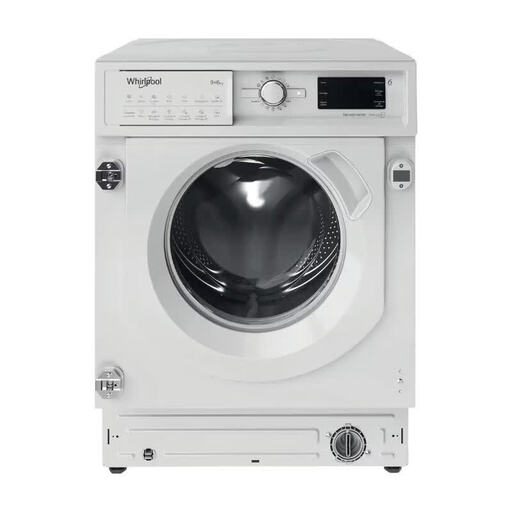 Image unavailable
Whirlpool BI WDWG, 9 kg, 1400 rpm
Its integrated design may suit you if your home has a space made for this type of appliance.
The product name lists 9 kg and 1400 rpm. The model is described as integrated, so check that your kitchen or utility room is designed for this type of installation.
View on Joybuy
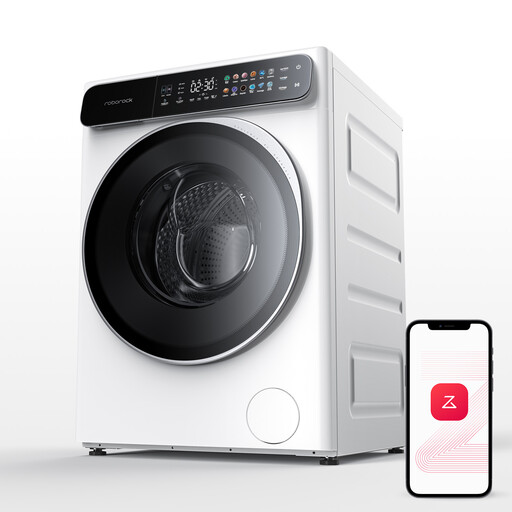 Image unavailable
White Roborock Zeo One
Its stated capacities are worth considering if you want to wash and dry in the same appliance, while keeping the drying limit in mind.
10 kg washing capacity; 6 kg drying capacity. The name also mentions Zeo-Cycle and the LintClear system.
View on Joybuy
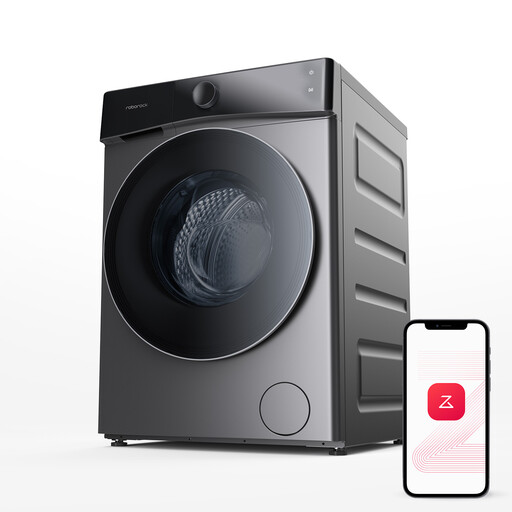 Image unavailable
Grey Roborock Zeo Lite
This two-in-one model is worth comparing if you’re looking for a stated washing capacity of 10 kg, while bearing the drying limit in mind.
10 kg washing capacity; 6 kg drying capacity. The name mentions 27 programmes, app control, LintClear and automatic dosing.
View on Joybuy
Frequently asked questions
Can you compare energy and water use for washing alone and washing plus drying as though the loads were the same?
No. First check the mode and its stated capacity. The EU energy label distinguishes between energy use per 100 cycles, water use and cycle duration, among other details; washing and drying capacities can differ.
Will a quick wash-and-dry programme handle the maximum load?
Not necessarily. For the LWR98B166X, AEG lists a 3-hour Clean&Dry programme for 3 kg, while the maximum stated drying capacity is 6 kg. Stick to the limit given for the programme you choose.
How can you find the right installation and maintenance instructions?
Look up the manual using the appliance’s identifier: Bosch uses the E-Nr, while AEG uses the model number or PNC product code. This helps you find instructions for your specific model rather than a different variant.
Can you stack two appliances to save space?
Only if your home allows for this setup and the models are compatible. Bosch recommends checking compatibility and using the appropriate stacking kit. This won’t solve the problem if you don’t have a suitable space.
Is drying clothes indoors always a good alternative?
No. ADEME points out that air-drying clothes releases moisture into the air indoors. Consider the space you have available and how you’ll manage the moisture before choosing this approach.


