
Livraison le jour même ou le lendemain

Qualité garantie

Débloquez vos offres de bienvenue: Livraison GRATUITE | Jusqu'à -80 % | 30 jours d'essai gratuits à JoyPlus
Téléchargez l'application
A kitchen sink strainer can be used to rinse vegetables, drain dishes or catch food scraps before they reach the plughole. But not all models are designed for the same jobs. A colander that’s too short will wobble in the sink, a basket that’s hard to clean will eventually hold onto odours, and a poorly sized filter will tear quickly.
So before you buy, it’s worth looking beyond the marketing claims. Here are the criteria you need to examine to compare models properly – whether you live in a flat, a rental or a family home.
Simply saying “expandable” isn’t enough. Check the minimum and maximum lengths, as well as the width and depth. An expandable drain basket needs to sit stably on both edges of the sink. Otherwise, it risks tipping over under the weight of dishes or a large quantity of vegetables.
Also remember to measure the basin itself, not just the overall opening of the sink. A single or double basin, a shallow basin or an inset sink may all require different dimensions.
A decorative coating can chip or trap residue as soon as it gets scratched. For regular contact with food, an uncoated 304 stainless steel sink colander is a good option. That doesn’t mean you can skip maintenance, though: rinse the utensil after each use and dry it to minimise marks and deposits.
Plastic baskets have the advantage of being lightweight and practical, but check their rigidity, the strength of the handles and their stated heat resistance. Avoid pouring very hot water into them if the product specification doesn’t allow it.
Perforations that are too wide let small food items through. On the other hand, holes that are too fine slow down drainage and make cleaning more fiddly. For rinsing fruit, vegetables or dishes, go for evenly spaced perforations that are easy to clean under the tap.
To protect the plughole, a strainer doesn’t necessarily replace a sink strainer filter. Mesh nets and waste-catching grids for sinks serve a different purpose: they catch particles and are replaced once they’re full.
For a kitchen drain basket, the key points are as follows:
An expandable model can suit several configurations, but it must be fully extended and stable before you put a heavy load on it.
304 stainless steel, also known as 18/8 stainless steel, is described on some product pages as corrosion-resistant and suitable for food contact. An uncoated surface reduces the risk of chipping from scratches. That doesn’t mean you should use abrasive products or steel wool, though.
For cleaning, use a soft sponge and a standard washing-up liquid. If the manufacturer says the product is dishwasher-safe, also follow their drying recommendations.
One accessory can’t cover every need:
If you cook often, pairing a washable basket with disposable sink strainer filters can be especially handy.
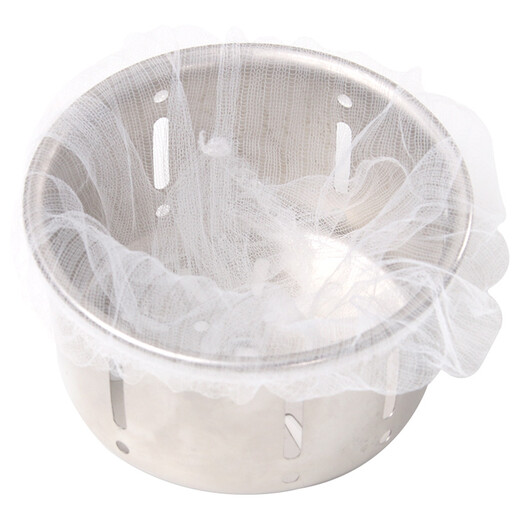
Why this suits this profile: This pack of 200 bags is ideal for students, tenants and households who want to start catching waste without installing a permanent accessory.
The quantity on offer lets you replace the net regularly, rather than reusing a saturated or hard-to-clean model.
A pack of 200 bags designed to catch residue in the sink.
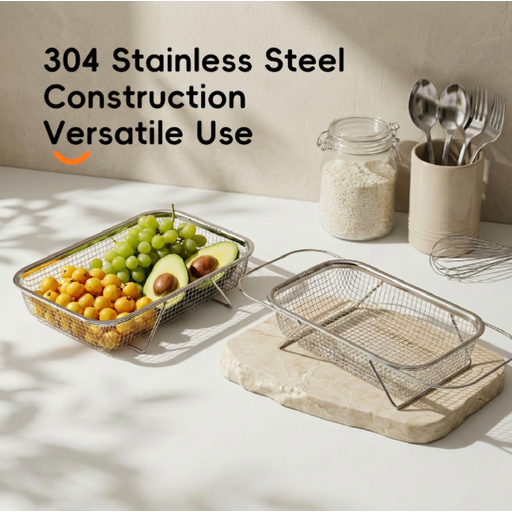
Why this suits this profile: With its intermediate size of 42.6 × 21 × 6.9 cm and telescopic design, this basket suits kitchens looking for a durable, space-saving accessory.
The dimensions are clearly stated and the basket retracts for easy storage. Still, check your sink width before buying.
304 stainless steel, uncoated surface, evenly spaced holes and dishwasher compatibility according to the product page.
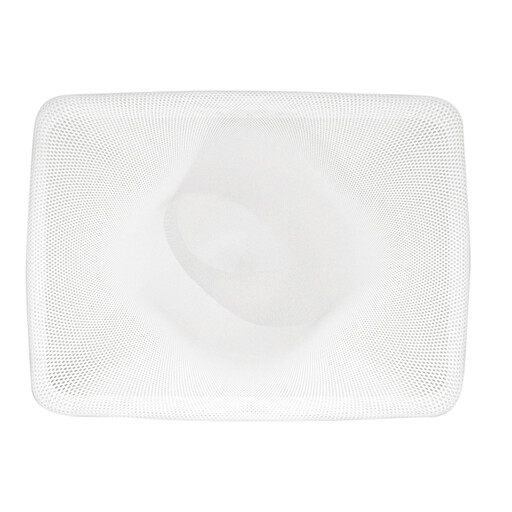
Why this suits this profile: This pack is aimed at kitchens that regularly produce waste, especially when preparing family meals or washing large amounts of dishes.
The bulk pack means you don’t have to keep buying small quantities. However, check whether a holder is included – this model is listed without a basket.
A pack of 100 nets designed for sink and dishwasher drains.
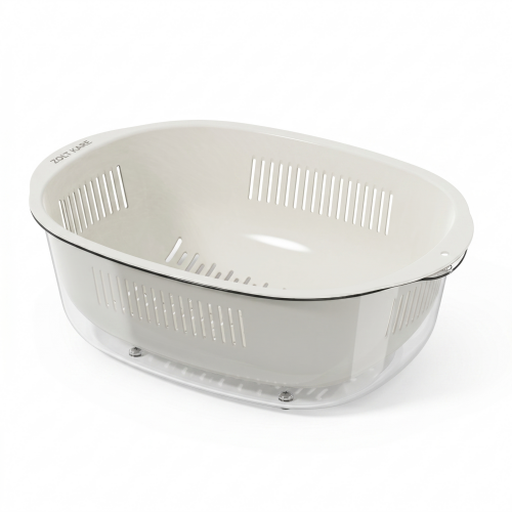
Why this suits this profile: This double-layer basket is ideal for rinsing rice, fruit and vegetables, or draining pasta, without letting water spill directly onto the worktop.
The outer container catches the water – there’s no mistaking it for a simple sink colander.
Two separate layers, handles described as ergonomic and versatile use for rinsing and draining.
We’ve put together a full selection, updated in real time, of products that meet these demanding criteria and European safety standards.
Measure the distance between the two opposite edges, then check the width and depth of the basin. Compare these values with the minimum and maximum dimensions stated on the product page. When loaded, the basket must stay stable and not rest solely on its handles.
A colander is used to rinse or drain food and dishes. A sink strainer filter, sink filter net or waste-catching grid catches small particles before they go down the drain. These accessories are complementary and don’t necessarily replace each other.
Its lifespan depends on the material, how often you use it and how you look after it. Rinse it after each use, remove any residue stuck in the perforations and dry it thoroughly. Replace it if you notice cracks, warping, signs of corrosion or sharp edges.