
Livraison le jour même ou le lendemain

Qualité garantie

Débloquez vos offres de bienvenue: Livraison GRATUITE | Jusqu'à -80 % | 30 jours d'essai gratuits à JoyPlus
Téléchargez l'application
A stainless steel kitchen strainer can be used to drain pasta, filter stock, retrieve food from oil, or prepare pour-over coffee. But not all models are interchangeable. A mesh that's too wide lets residue through, a poorly designed handle heats up quickly, and the wrong size often ends up forgotten at the back of a drawer.
Before you buy, there are three pitfalls worth watching out for.
The term 304 stainless steel is often sought after for utensils that come into contact with food. It refers to a grade of stainless steel used in many kitchen tools and accessories. However, it doesn't replace the need to check the manufacturer's information: composition, recommended care and any usage limitations are still essential.
To choose a durable utensil, also check the following points:
Stainless steel doesn't mean the product can be left indefinitely in a pan or boiling oil. Always follow the warnings provided with the item and use suitable protection if the handle gets hot.
Choosing a fine mesh filter depends on what you want to catch.
A very fine mesh can slow down the flow and clog more easily with thick mixtures. Conversely, a wide mesh won't catch fine sediment. The key is to choose an opening diameter that suits your everyday use.
Measure the opening of your saucepan, sink or portafilter before ordering. For a hand-held strainer, the diameter and handle length directly affect stability. With espresso, just a few millimetres can make an accessory incompatible with the portafilter.
If you use an air fryer, also check the internal dimensions and air circulation. A mesh or accessory that's too large may hinder cooking. In every case, consult the product listing and the stated dimensions rather than relying solely on a photograph.
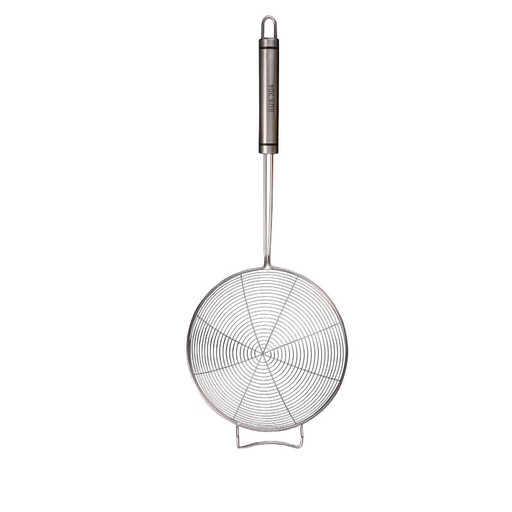
Why this choice suits this profile: Its 15 cm diameter and hand-held design are ideal for everyday tasks: filtering a sauce, retrieving food or draining small quantities.
The stated size helps you avoid choosing a strainer that's too bulky for occasional use. However, do check that 15 cm is sufficient for your cookware.
304 stainless steel stated in the product name and a hand-held design suited to small preparations.
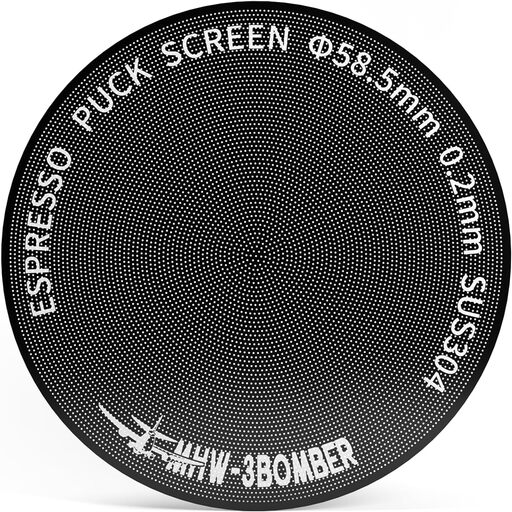
Why this choice suits this profile: This accessory is aimed at espresso enthusiasts who own a 58 mm portafilter and are looking for a reusable metal filter.
The 58.5 mm diameter and stated compatibility with 58 mm portafilters allow you to check the size before purchasing.
Stated thickness of 0.2 mm, 10,385 perforations and stainless steel with a titanium coating. Rinsing recommended; dishwasher not advised.
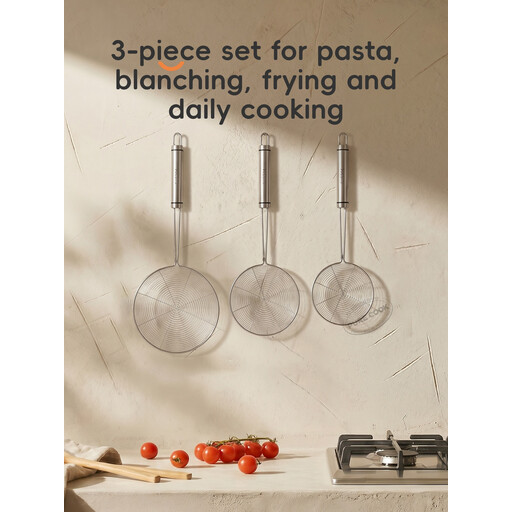
Why this choice suits this profile: The three sizes cover a wide range of preparations: noodles, blanching, fondue serving or deep frying.
The three sizes reduce the risk of using an undersized skimmer. The manufacturer also states a one-piece construction with no reported rough edges.
304 stainless steel, dense mesh, hanging holes and dishwasher-safe according to the manufacturer.
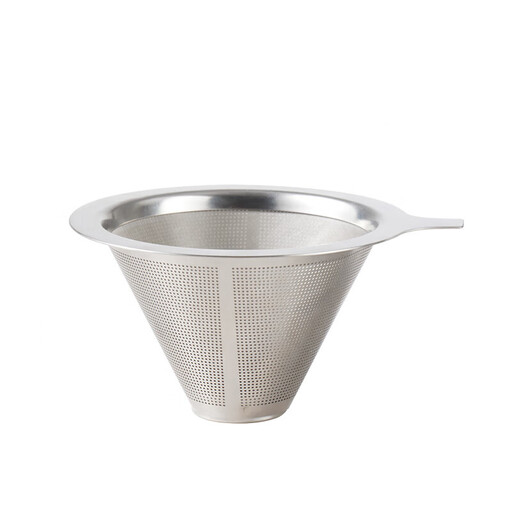
Why this choice suits this profile: This reusable coffee filter is aimed at those who want to make pour-over coffee without always using paper filters.
The reference specifies an 800 mesh and 304 stainless steel: two details to compare with the fineness you need and the diameter of your brewer.
Reusable filter, stated 304 stainless steel construction and design suited to the pour-over method.
We've put together a comprehensive, real-time updated list of products that fully meet these strict selection criteria and European safety regulations.
Rinse the strainer as soon as possible after use to prevent residue from drying in the mesh. A soft brush or non-abrasive sponge will help preserve the surface. Even when a product is labelled as dishwasher-safe, dry it thoroughly after the cycle to minimise water spots.
For frying accessories, let the oil cool down before handling and don't leave the skimmer submerged longer than necessary. Handles can become very hot. With an espresso filter, rinsing after each extraction and thorough drying are particularly important. The MHW-3BOMBER model recommends against using the dishwasher to protect its coating and perforations.
A sink strainer or drain mesh serves a different purpose: it catches waste before it goes down the drain. Disposable formats or packs of 100 or 500 pieces may suit regular use, but they don't replace a reusable food strainer. Always check your sink dimensions and whether a holder is needed.
It depends on the product listing. Some models, like the PURECOOK set, are stated as dishwasher-safe. Other accessories, particularly espresso filters with a coating, may require hand washing. Follow the manufacturer's instructions and avoid abrasive products.
A strainer is mainly used for draining food or liquids. A kitchen sieve typically has finer mesh and is used to filter a sauce, stock, flour or small particles. A skimmer is used to remove food from liquid or oil, without necessarily filtering fine residue.
Its cost of use depends mainly on how you care for it and how long it lasts. A reusable stainless steel filter doesn't require a consumable for every use, but it does need to be rinsed and dried after each use. For coffee or deep frying, compare the purchase price, compatibility with your equipment and ease of cleaning rather than just the listed price.