
Livraison le jour même ou le lendemain

Qualité garantie

Débloquez vos offres de bienvenue: Livraison GRATUITE | Jusqu'à -80 % | 30 jours d'essai gratuits à JoyPlus
Téléchargez l'application
A Japanese dinnerware set can sometimes transform an ordinary meal into a truly enjoyable dining experience. But appearance is not everything. Vague descriptions, dimensions given in inches or difficult-to-verify claims about durability can quickly turn an impulse purchase into a disappointment.
Before choosing your Japanese ceramic tableware, take the time to consider three things: how you intend to use it, its technical specifications and the care instructions. This approach helps you distinguish between a beautiful decorative piece and tableware that is genuinely suited to everyday meals, tea or sushi preparation.
A Japanese plate or bowl may stand out thanks to a textured glaze, an irregular shape or a subtly nuanced colour. These details add character to your table, but they can also make cleaning more difficult or stacking less practical. A rough exterior, for example, may occasionally require hand washing to preserve its appearance.
So check for a glazed inner surface, a stable base and compatibility with your storage space.
A bowl sold as a ramen bowl will not necessarily be suitable for a generous serving. Likewise, Japanese tea cups with a capacity of 160 ml do not offer the same experience as a 205 ml model. Capacity should be considered alongside your usual habits:
Claims such as ‘lead-free’ or ‘cadmium-free’ should always relate to the specific product and its description. In the selection below, TEANAGOO models are presented as being made from ceramic with lead- and cadmium-free glazes. This information cannot be extended to all Asian tableware.
For each item, check the manufacturer’s guidance on food use, the dishwasher, oven and microwave. If no information is provided, it is best not to assume that the piece is heat-resistant.
Ceramic is suitable for many uses, but its longevity depends on how it is made, the quality of its glaze and how it is cared for. A smooth inner surface is easier to clean and retains fewer residues. A textured exterior can improve grip, but generally requires a little more care.
When choosing lead-free ceramic tableware, look for an explicit statement in the product description. This does not replace checking the warnings and conditions of use.
Even when a product is advertised as microwave- and dishwasher-safe, it remains sensitive to changes in temperature. In particular, avoid transferring it directly from the freezer to the microwave. The TEANAGOO models featured here are listed as being compatible with the microwave, oven, freezer and dishwasher. However, hand washing is recommended to preserve their textured finishes.
Tian Hu Shan sushi moulds are designed for a different purpose: made from polypropylene, they must be washed by hand and should not be used in the microwave or dishwasher.
A tableware set for 2 people is ideal for a couple or a small household. A set of four cups is better suited to sharing a tasting experience. As a gift, a carefully packaged gift tableware set is often simpler than choosing individual pieces separately.
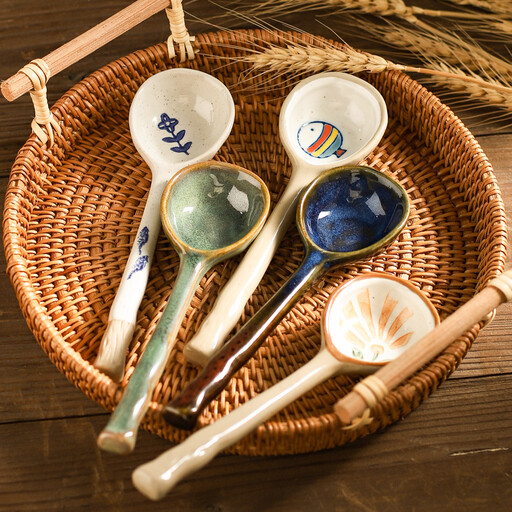
Why this choice suits this profile : These four spoons in assorted designs allow you to build on an existing table setting gradually, without investing in a complete set straight away.
The pack of four and the assorted designs are clearly stated, making it easy to check whether they meet your needs.
Pack of 4, Japanese-inspired design and 4 assorted styles.
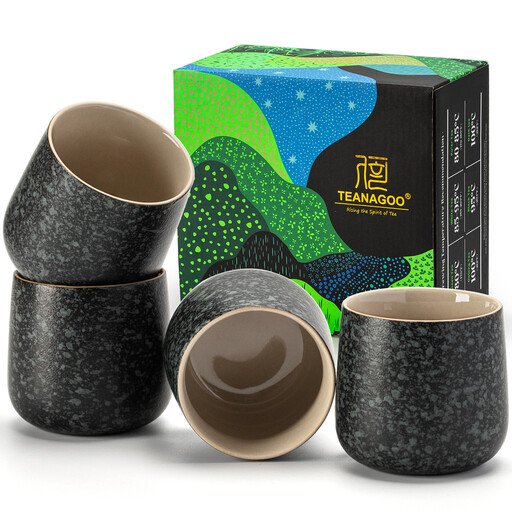
Why this choice suits this profile : Their textured exterior and glazed interior are a natural fit for a tea-tasting table, while remaining versatile enough for everyday use.
The 205 ml capacity, the stated lead- and cadmium-free composition and the temperature guidance are all clearly specified.
Set of 4 cups, 205 ml capacity, smooth interior and stated microwave and dishwasher compatibility.
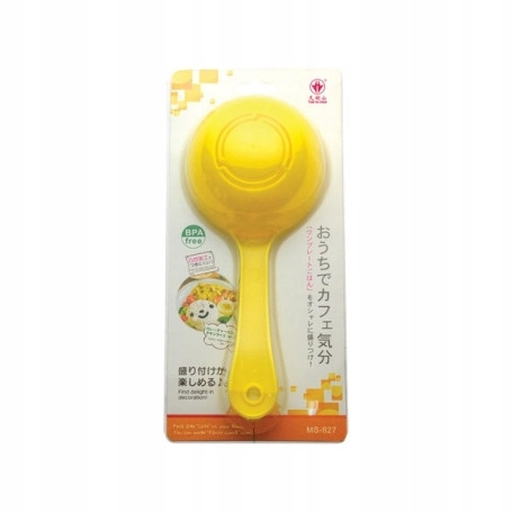
Why this choice suits this profile : This accessory is designed for those who regularly prepare sushi, rice balls or neatly presented dishes at home.
The product description specifies the material — polypropylene —, the capacity of five portions and that it must not be used in the dishwasher or microwave.
5-compartment mould, flap-release mechanism and recommended hand washing.
We have selected a comprehensive, regularly updated range of products that meet these demanding criteria as well as European safety standards.
Wash each piece before first use. For textured finishes, hand wash with a non-abrasive sponge to preserve the appearance of the glaze. Avoid thermal shock, and never place an item in the oven or microwave unless its product description explicitly permits it.
Japanese ceramic bowls, Japanese plates and Japanese mugs should also be stored with enough space between them to prevent their edges from knocking together. For handleless cups, hold the piece carefully when the drink is hot.
A capacity of 160 to 180 ml is suitable for tea served in small quantities and for tastings. A 205 ml model is more versatile for coffee, sake or cold drinks. It all depends on the type of service you are looking for and the size of your portions.
Some pieces are advertised as dishwasher-safe, but this is not a general rule. Always check the product description. To preserve textures, decorations and glazes, hand washing is often preferable, even when dishwasher use is permitted.
You can complete your set with ceramic spoons, a sushi mould, dipping bowls for sauces, ramen bowls or matcha tea accessories. Coordinate the colours and sizes, while checking that each item is suitable for its intended use.