
Livraison le jour même ou le lendemain

Qualité garantie

Débloquez vos offres de bienvenue: Livraison GRATUITE | Jusqu'à -80 % | 30 jours d'essai gratuits à JoyPlus
Téléchargez l'application
The appeal of Japanese tableware is stronger than ever. Its minimalist aesthetic, delicate patterns, and underlying philosophy make it a must-have for elevating both daily meals and special occasions. But be warned: the selection is so vast that it's easy to make a mistake. A stunning bowl that's impossible to use every day, a ceramic that chips after the first wash... who hasn't faced these disappointments?
This guide is here to arm you against poor choices. We will break down the essential points to watch out for, helping you find pieces that blend beauty with practicality for a Japanese dining experience that reflects you and, most importantly, lasts.
Before you fall for a pattern or a colour, keep these three classic mistakes in mind, which too often turn an impulse buy into a headache.
To make the right choice, forget aesthetics for a moment and focus on the technical details that make all the difference in daily use.
The generic term Japanese ceramic actually hides very different materials. Knowing how to distinguish them is crucial.
To ensure your new tableware doesn't become a chore, there's only one rule: check its compatibility with your appliances. The "dishwasher-safe" logo is your best friend for hassle-free maintenance. The same goes for "microwave-safe" compatibility, which is essential for reheating a dish directly in its Japanese bowl. This information, normally provided by the manufacturer, is the true guarantee of low-maintenance tableware.
The art of Japanese dining is about the perfect harmony between the container and its contents. The right vessel doesn't just hold food; it enhances it.
To move from theory to practice, here are a few products that check all the right boxes, each suited to a different user profile.
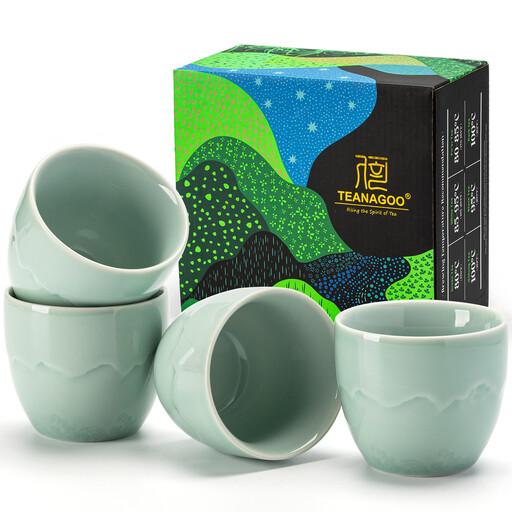
Why we chose it: Perfect for those who want to rediscover the pleasure of an authentic tea tasting. The 180 ml capacity is ideal for Japanese green teas, and the textured exterior ensures a grip that is both pleasant and secure.
This set is designed to be 100% functional: microwave, oven, freezer, and dishwasher safe. It's a far cry from a purely decorative object that just collects dust.
A ceramic guaranteed to be lead and cadmium-free for impeccable food safety. The contrast between the textured exterior and smooth interior isn't just for design: it makes cleaning much easier.
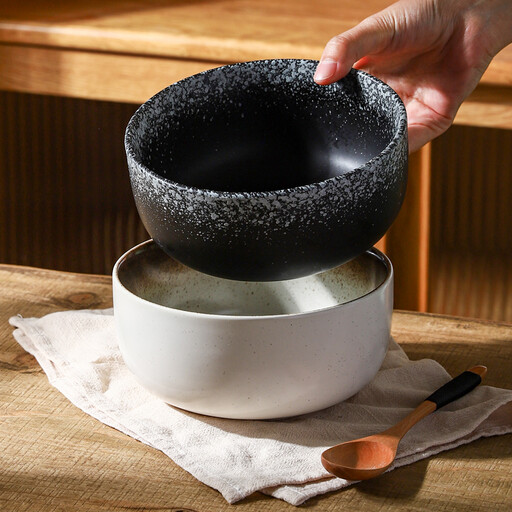
Why we chose it: The perfect bowl for fans of ramen, donburi, or large mixed salads. Its 16.5 cm (6.5 inch) diameter offers the ideal capacity for a generous and comforting single-dish meal.
Marketed as a "noodle bowl," it leaves no doubt about its function. Its dimensions are perfectly calibrated for a specific use, avoiding the classic trap of a bowl that's too small.
Its sturdy ceramic is built for daily use. The pattern, both understated and elegant, complements any table style without ever striking a false note.
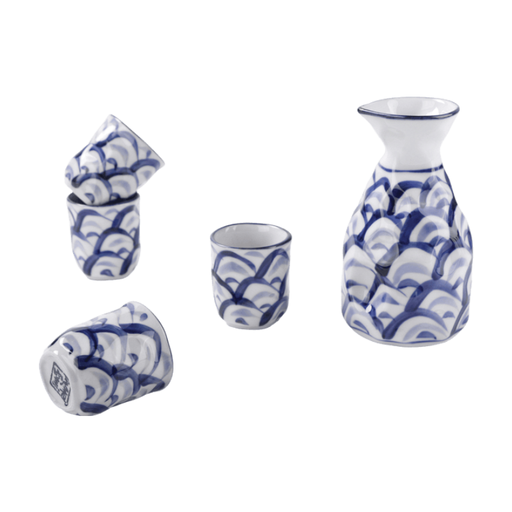
Why we chose it: A must-have for those who love to entertain and share a unique tasting moment. This complete set is perfect for serving sake according to tradition, adding a touch of elegance to an aperitif or the end of a meal.
By offering a complete and matching set (carafe and cups), it eliminates the headache of mismatched pieces. Designed specifically for sake, its use is clear and unambiguous.
Its simple and classic design makes it a beautiful, timeless object, as well as an excellent gift idea for Japan enthusiasts. The quality ceramic promises good longevity.
We've put together a complete selection of products that meet our criteria for quality, practicality, and safety.
It all depends on the material. If the piece is marked as compatible, the dishwasher is an option. However, a gentle hand wash will always better preserve the shine of the glazes and the delicacy of the patterns. The real enemy is thermal shock: never move a dish from the fridge to the microwave, and never pour cold water into a still-hot container.
It's a matter of clay and firing temperature. Porcelain, fired at very high heat, becomes ultra-dense, fine, and non-porous (and therefore very hygienic). Stoneware is thicker, more opaque, with a rougher feel. To sum up: porcelain is robust elegance; stoneware is warmth and authenticity.
Absolutely not. Compatibility depends on the materials and glazes used. Golden rule: any piece with gold or metallic details is strictly forbidden in the microwave. Always rely on the manufacturer's instructions. When in doubt, it's better to abstain to avoid a disaster.