
Livraison le jour même ou le lendemain

Qualité garantie

Débloquez vos offres de bienvenue: Livraison GRATUITE | Jusqu'à -80 % | 30 jours d'essai gratuits à JoyPlus
Téléchargez l'application
The appeal of Japanese tableware has never been stronger. Its clean lines, delicate patterns, and unique textures can turn a simple meal into a true sensory experience. But with so many options available, it's easy to make a mistake and regret your purchase. As a Product Expert at Joybuy, my mission is to help you see clearly, cutting through the marketing to focus on what really matters.
Before you start shopping, here are three common pitfalls to avoid:
To make a smart choice that combines beauty with practicality, here are the essential points to check.
The term Japanese ceramic actually covers several materials, each with very different characteristics.
Knowing the type of ceramic is therefore an excellent indicator of its durability and how you can use it.
The Japanese art of dining should enhance daily life, not complicate it. Before any purchase, look for the icons or descriptions indicating compatibility with:
The details make all the difference. Look at the finish: a reactive glaze, which creates unique colour variations during firing, will offer an infinitely higher quality look than a simple printed pattern. The textures, whether smooth or grainy, are an integral part of the tactile and visual experience. It is this attention to detail that distinguishes simple Asian tableware from a true Japanese dinnerware set with character.
To help you apply these criteria, here are a few products that meet specific needs while avoiding the pitfalls we've discussed.
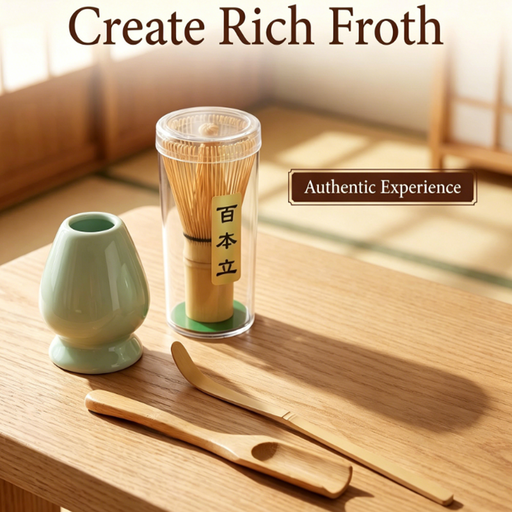
Why we chose it: For those who want to get started with the tea ceremony or simply prepare matcha the right way, this set includes all the essentials, from the bamboo whisk (chasen) to the bowl (chawan).
This isn't just a 'matcha-style' bowl, but a complete and well-designed matcha set. There are no useless gadgets here; every element has a purpose.
Everything you need for an authentic and successful matcha ritual, completely hassle-free.
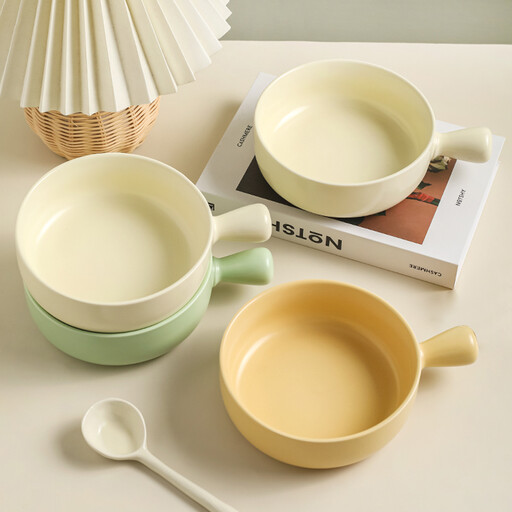
Why we chose it: Ideal for incorporating Japanese aesthetics into your daily meals. These versatile bowls are perfect for soups, noodles, cereals, or even individual gratins.
The handle is the game-changing detail! No more struggling with a scorching hot bowl from the microwave. The design combines aesthetics with a smart, practical function designed for daily use.
Highly versatile, their handle ensures an easy and secure grip, especially with hot dishes.
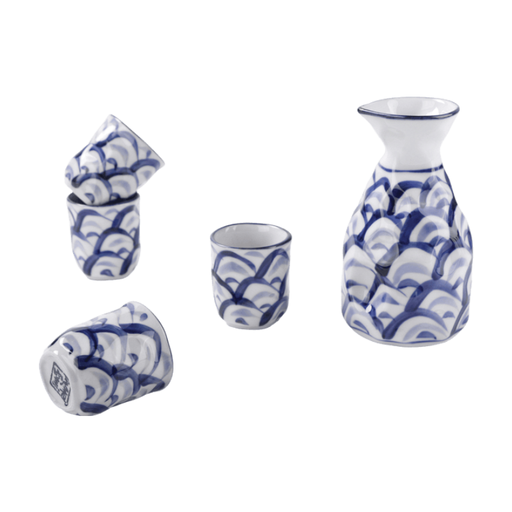
Why we chose it: For those who love to surprise their guests, this sake set is perfect for serving the traditional rice wine properly, complete with its carafe (tokkuri) and cups (ochoko).
This is a cohesive and functional set designed for tasting. It avoids the trap of purely decorative trinkets that are unsuitable for food contact and impractical to use.
Ideal for an authentic tasting experience that will make a lasting impression on your guests.
We have compiled a complete, up-to-date list of products that meet our demanding selection criteria and current safety standards.
Most modern pieces are dishwasher-safe. However, to preserve the beauty of textured glazes or hand-painted patterns, hand washing with warm water and a soft sponge is the best solution. Avoid thermal shock at all costs (e.g., moving a dish from the fridge to a hot oven), which could crack the ceramic.
Not always, and this is an important distinction. The 'Japanese-style' label refers more to an aesthetic (simplicity, asymmetry, a connection to nature) than to a geographical origin. Many high-quality pieces that follow these design codes are made elsewhere in Asia. The key is to focus on the quality of the materials and craftsmanship, regardless of the label.
Of course! A deep Japanese bowl is incredibly versatile. It's perfect for donburi (a topped rice bowl), udon soups, large salads, poke bowls, or even as a small serving bowl. Its shape is designed to be held in the hand, making it particularly pleasant to use.