
Livraison le jour même ou le lendemain

Qualité garantie

Débloquez vos offres de bienvenue: Livraison GRATUITE | Jusqu'à -80 % | 30 jours d'essai gratuits à JoyPlus
Téléchargez l'application
A chilly draft sneaking under your front door, soaring heating bills, and noise and dust invading your home… These annoyances often have a simple cause: that notorious gap under the door. The insulating door bottom is the easiest and most cost-effective solution. But be warned, not all models are created equal, and a poor choice can quickly lead to disappointment. Follow our guide to get a clearer picture and find the perfect product for your situation.
The door bottom aisle is full of solutions, but behind the marketing promises, you'll sometimes find flaws that turn your purchase into a useless gadget after just a few months.
For truly effective door insulation, three points must be scrutinised.
The way the door bottom attaches is crucial for its stability and durability.
This is THE decisive criterion. A wrong choice here, and all the product's benefits are lost.
The material that provides the seal has a direct impact on thermal and acoustic insulation.
Rather than a simple product list, we've matched specific solutions to specific needs. Find the one that's right for you!
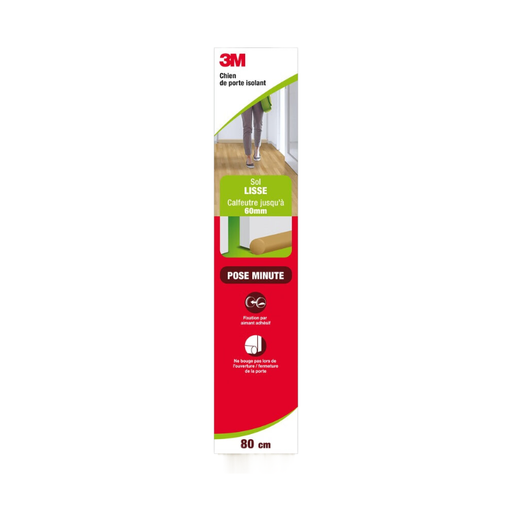
Why we chose it: Ideal for those looking for a no-drill solution. The adhesive fastening is reinforced by a magnetic system that ensures a perfect, friction-free seal, preserving both the floor and the door bottom.
The magnetic system takes over from the adhesive to hold the seal in place, preventing premature detachment from repeated use.
Simple and reversible installation. The magnetic seal is highly effective at blocking drafts on flat floors.
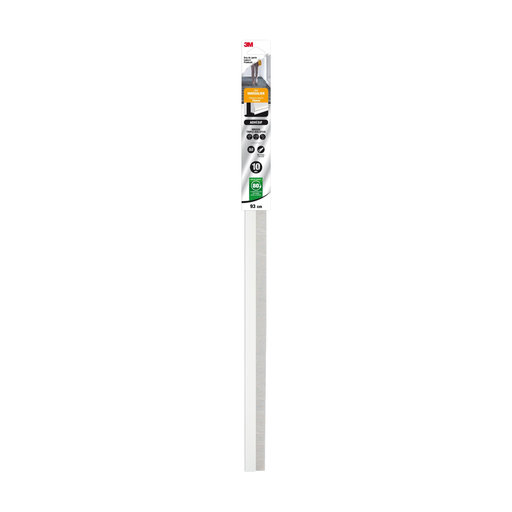
Why we chose it: Designed specifically for uneven floors. Its flexible lip adapts to contours to fill gaps up to 25 mm, where a standard model would fail. Installation remains simple thanks to its adhesive backing.
It bypasses the "universal fit" trap by being a specialised solution. Its flexible design ensures constant contact with the floor, even on tile with wide grout lines.
Formidably effective on difficult floors (stone, raw concrete, terracotta). The aluminium profile is robust and can be cut for a perfect fit.
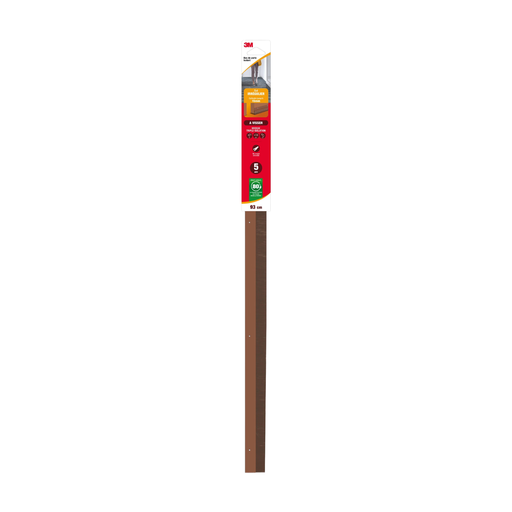
Why we chose it: For those who prioritise performance and longevity. The screw-in fastening is the most reliable, and the double row of brushes with a central membrane provides a highly effective barrier against air, noise, and even water.
It sidesteps the trap of premature wear. The mechanical fastening won't budge, and the materials are designed to last for years, even with heavy use.
Superior insulation performance thanks to the double brush and membrane. It's a durable investment for maximum comfort.
Now that you've got drafts under control, why not think about protecting your outdoor spaces? Just as you'd seal an air leak, securing a balcony or terrace is essential for peace of mind.
Beyond insulation, we've compiled a list of products to secure and define your outdoor areas, all compliant with safety standards.
The lifespan depends heavily on the quality of the adhesive and the conditions of use. A good brand-name model, applied to a clean, dry surface, can last several years. In a humid area or on a heavily used door, a screw-in fastening remains a more durable option.
For this type of floor, it is essential to choose a door bottom for uneven floors. Opt for a model with a long, flexible brush or an articulated rubber lip. During installation, check that the seal perfectly conforms to the floor's contours across the entire width of the door, leaving no gaps for air to pass through.
A draft stopper is a stopgap solution, often less effective than a fixed door bottom (adhesive or screw-in). It can be useful for temporary use or for infrequently used interior doors. For a front door or for optimal thermal and acoustic insulation, a well-fitted fixed door bottom will deliver much better results.