
Livraison le jour même ou le lendemain

Qualité garantie

Débloquez vos offres de bienvenue: Livraison GRATUITE | Jusqu'à -80 % | 30 jours d'essai gratuits à JoyPlus
Téléchargez l'application
An icy draft seeping under the door, skyrocketing heating bills, not to mention the dust and noise invading a room… These everyday annoyances often have a simple cause: a gap under a poorly insulated door. A door bottom seal is a simple and cost-effective solution, but the market is flooded with models making sometimes misleading claims.
As a Product Expert at Joybuy, my role is to help you sort through the options. Before you jump on the first model you see, it's best to know the common pitfalls that can turn a purchase into a disappointment.
Choosing the right door weatherstripping isn't just about its colour or price. It's primarily a matter of compatibility with your door and your floor.
To make the right choice, focus on three key criteria that determine the effectiveness and lifespan of your installation.
The attachment method is the first thing to consider. It depends on your door, your floor, and also your status (homeowner or renter).
Ignoring the nature of your floor is the number one mistake.
The material in contact with the floor has a direct impact on the quality of the insulation (thermal, but also acoustic).
Rather than an endless list, here are targeted solutions for specific needs. The goal: to help you find the product that's right for you.
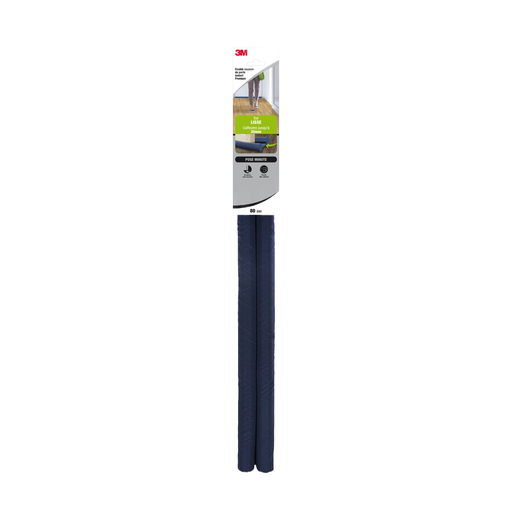
Why we chose it: Ideal for renters or those who want an immediate solution, without drilling or adhesives. It slides under the door and insulates both sides at once, a practical advantage for interior doors.
This model bypasses the headache of failing adhesives and permanent fixtures. It damages neither the door nor the floor and removes in a flash.
Installation in seconds, without a single tool. It fits most standard doors and moves with the door without ever shifting.
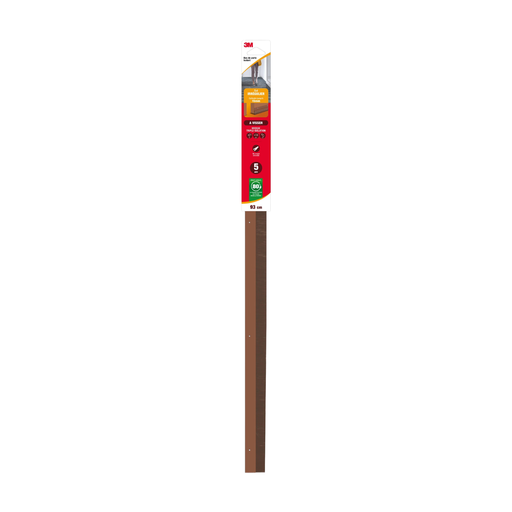
Why we chose it: Designed for homeowners seeking a long-lasting, robust solution. The screw-on attachment ensures a flawless hold over time, and its double brush remains effective even on floors with slight irregularities.
It eliminates the risk of peeling off thanks to its mechanical fastening. Its double row of flexible brushes adapts to floor imperfections where a rigid model would be ineffective.
Durability and performance. According to 3M, it can seal gaps up to 15 mm and reduce drafts by 80 %.
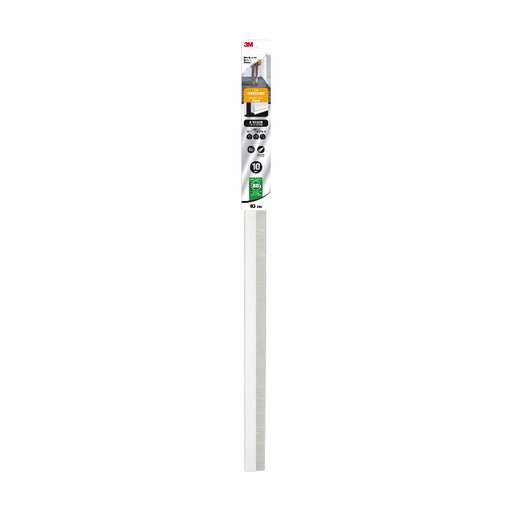
Why we chose it: The go-to solution for complex cases: older homes, terracotta or stone floors... Its aluminium structure and double row of nylon brushes are designed to perfectly hug the contours of an uneven floor.
It solves the problem of rigid seals on imperfect floors. The high flexibility of its brushes ensures constant contact with the floor, letting no draft pass through.
A specialised design for maximum effectiveness on difficult surfaces. Its (concealed) screw-on attachment guarantees a clean finish and a rock-solid hold.
Discover our complete selection of products that meet our demanding selection criteria.
For maximum adhesion, preparation is everything. Clean the bottom of the door with a cloth and a degreaser (like denatured alcohol), then dry thoroughly. Cut the seal to the correct width. Then, apply it gradually, starting from one side and pressing down firmly along the entire length. Most importantly, do not stretch it during application: this would create tension that would compromise its long-term adhesion.
Yes, and the effect is often surprising. By sealing the gap under the door, a door bottom seal significantly dampens the transmission of airborne noise. Models with a double brush or a dense rubber lip are the most effective acoustically. While it's not a professional soundproofing solution, the improvement is noticeable for a minimal investment.
For a patio door, the seal must be perfect. A suitable door bottom (often screw-on for more robustness) is an excellent foundation. For total insulation, also consider checking the seal around the entire frame perimeter. An adhesive window seal made of rubber, like the 3M Premium Weather Seal for Doors/Windows, can be applied to the stationary frame to eliminate all air infiltration and perfect the insulation.