
Livraison le jour même ou le lendemain

Qualité garantie

Débloquez vos offres de bienvenue: Livraison GRATUITE | Jusqu'à -80 % | 30 jours d'essai gratuits à JoyPlus
Téléchargez l'application
It's a story we hear all too often. That brand-new non-stick induction pan that starts sticking after just a few months of use. As a product expert at Joybuy, I see this frustration every day. In a market saturated with marketing promises, it's hard to know what to choose.
This guide is here to help you cut through the noise. Together, we'll break down the 3 most common pitfalls and give you the keys to choosing cookware that will truly live up to its promises, long after you've thrown away the packaging.
stone-coated pan usually describes a standard non-stick coating (PTFE-based) to which mineral particles have been added for looks and a negligible improvement in resistance. This does not make it a stone pan. What matters is the quality and thickness of the base coating, not its appearance.To avoid making the same mistake again, focus on objective technical criteria, not slogans. Here are the 3 points to check.
The coating is the heart of your pan. There are two main types:
For induction cooking, the pan's base is absolutely crucial. It must incorporate a ferromagnetic metal disc. For optimal performance, look for:
sauté pan for induction as well as a simple induction saucepan.A good pan must also be practical for everyday use.
non-stick wok for your Asian dishes, or a complete set of pots and pans? Investing in a coherent all-hob cookware set can be more economical and practical in the long run.Here are a few models that meet specific needs, taking into account the criteria we've just discussed.
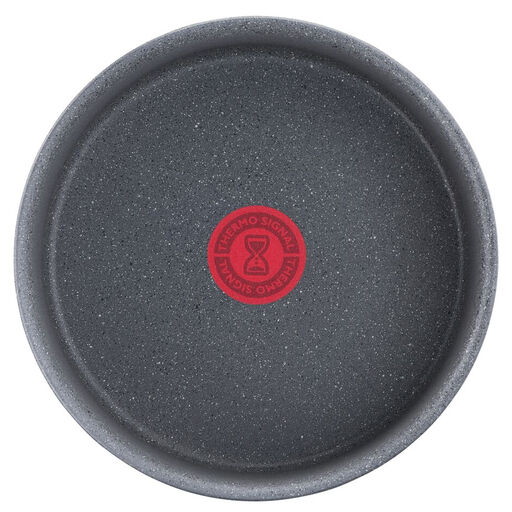
WHY IT'S A MATCH: Perfect for those short on space or who love versatility. The removable handle concept allows you to go from the hob to the oven, then to the table and the fridge with a single piece of cookware. The very definition of practicality for modern, compact kitchens.
This system tackles the problem of impracticality and clutter. The stackable design isn't a gimmick: it's a real, measurable space-saver in your cupboards, putting an end to the chaos of fixed handles.
Ultra-versatile removable handle system and stackable design. Thermo-Fusion base for fast, even heating on induction. Made in France.
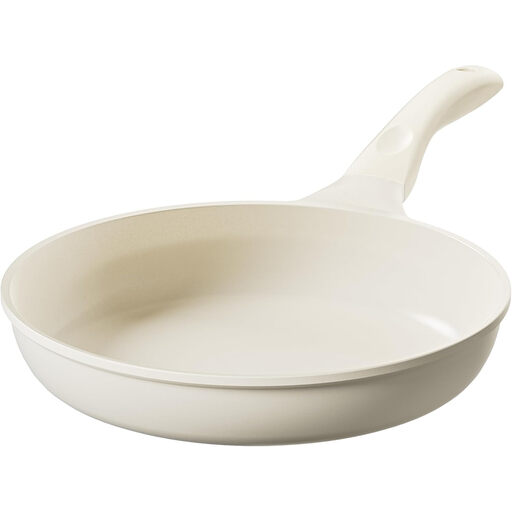
WHY IT'S A MATCH: The obvious choice for health-conscious people who cook every day. The ceramic coating is the go-to alternative for those who want to avoid PTFE. Its perfect non-stick surface allows for cooking with very little fat, from morning eggs to an evening fish fillet.
This pan ends the debate on coatings. It offers a non-toxic ceramic option, clearly formulated without PTFE, PFOA, or PFAS, removing any ambiguity for users seeking healthy cookware.
Ceramic coating guaranteed PTFE/PFOA/PFAS-free. Thick base for rapid and uniform heating on all hobs, including induction. Ultra-easy to clean.
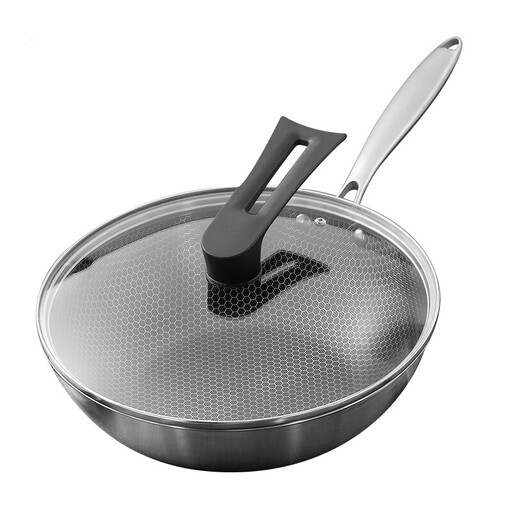
WHY IT'S A MATCH: This large 30 cm non-stick wok is the perfect partner for families and anyone who loves to prepare stir-fries, curries, or stews in large quantities. Its deep shape and generous capacity make it ultra-versatile.
This model directly tackles the durability pitfall. Its stainless steel honeycomb structure physically protects the non-stick layer underneath. This reduces abrasion, extending the life of the surface.
Hybrid non-stick technology with a honeycomb structure for enhanced durability. Large 4.7L capacity and versatile (stir-frying, frying, simmering). Compatible with all hobs, including induction.
We have selected a full range of products that meet our strict selection criteria and French safety standards.
What is the real lifespan of a non-stick pan? It all depends on the quality of the coating, how often you use it, and, most importantly, how you care for it. A good quality model, maintained with care (no metal utensils, no overheating when empty, hand-washing preferred), can remain perfectly non-stick for 3 to 5 years. Be wary of lifetime warranties, which often hide exclusion clauses that make them nearly impossible to claim.
How do I care for my induction pan to preserve the coating? A few simple steps are all it takes to significantly extend your pan's life:
Is a more expensive pan necessarily better quality? Not always. A high price can reflect a designer brand, European manufacturing, or specific patents (like a removable handle). However, the criteria that don't lie are the quality of the induction base and the robustness of the non-stick coating. A reasonably priced pan with a thick base and a certified PFOA-free coating will always be a better investment than a poorly designed designer model.