
Livraison le jour même ou le lendemain

Qualité garantie

Débloquez vos offres de bienvenue: Livraison GRATUITE | Jusqu'à -80 % | 30 jours d'essai gratuits à JoyPlus
Téléchargez l'application
As concerns grow around PFAS (the infamous "forever chemicals"), our kitchenware is under scrutiny. As a result, the market is flooded with pans guaranteed to be free of these substances. But how can you tell a genuinely good product from a mere marketing ploy? This guide is here to help you choose the PFAS-free non-stick pan that truly fits your needs, whether you're an everyday home cook or a weekend chef.
Our mission: to give you the keys to a smart purchase that ticks all the boxes: health, performance, and durability.
Before we dive into our top picks, here are the essential points to consider to make the right choice.
The starting point is, of course, a composition guaranteed to be free of PFAS, PFOA, and PTFE. Healthy alternatives are primarily based on three materials:
A good pan should be able to go anywhere with you. Check its compatibility with your hobs, especially if you have an induction cooktop (all hobs, including induction). The ability to go from the hob to the oven is a real bonus for browning a dish or finishing a slow cook.
A durable pan is a worthwhile investment. Multi-ply ("multiply") stainless steel models are the champions of longevity and won't warp. For ceramic, it all depends on the quality of the coating. In any case, to make it last, follow the golden rules: no metal utensils, no overheating when empty, and gentle cleaning.
We have selected three models that stand out for their materials, design, and versatility.
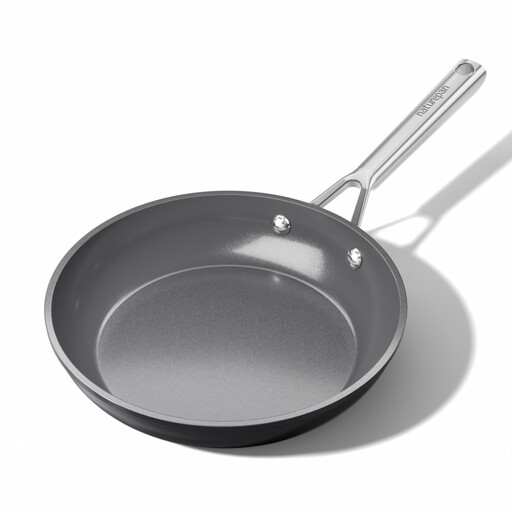
Its standout feature: It's all about its exclusive ceramic coating, reinforced with diamond and titanium particles. The promise: long-lasting glide, without any compounds from the PFAS family. Its thick, encapsulated base ensures rapid heating and perfectly even heat distribution, ideal for controlled cooking.
Pros:
Who is it for??: Perfect for singles or couples looking for a compact (24 cm) and efficient everyday pan. It's the king of omelettes, delicate fish, pan-fried vegetables, and small cuts of meat.
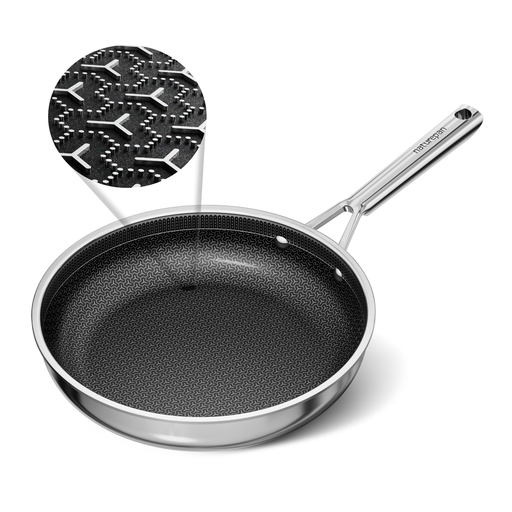
Its standout feature: This hybrid model is a marvel of engineering. Its surface combines a raised stainless steel mesh with a ceramic non-stick coating in the valleys. You get the best of both worlds: the perfect sear of stainless steel for meats and the ease of a non-stick coating for delicate foods. Its 5-layer construction ensures exceptional heat diffusion.
Pros:
Who is it for??: For demanding cooks who want a do-it-all pan: capable of perfectly searing a steak and then making an omelette without it sticking. Its large diameter (28 cm) makes it a great choice for families.
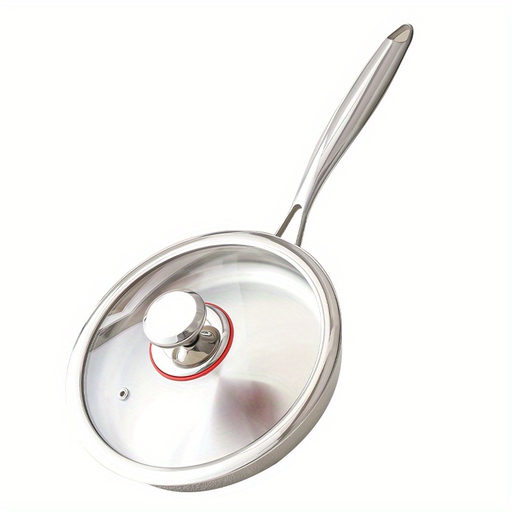
Its standout feature: This is the quintessential durable pan. Its triple-layer construction (stainless steel-aluminium-stainless steel) gives it conductivity and responsiveness worthy of professional kitchens. The 304 stainless steel is a healthy, ultra-robust material that is resistant to both scratches and metal utensils. Delivered with its glass lid, it's a purchase for life (or close to it).
Pros:
Who is it for??: For purists who prioritise durability and performance above all else. It's aimed at those who have mastered (or want to learn) how to cook on stainless steel. Once you learn the technique, the results are simply stunning.
Choosing a pan is a very personal decision: household size, favourite dishes, budget... If our top three picks don't tick all your boxes, many other options are available to you.
? Discover our full range of pans on Joybuy.fr
Yes. Modern ceramic coatings are derived from a sand-based process (sol-gel technology) and are guaranteed free of PFAS, PFOA, or PTFE. It is a stable and inert material that does not release any harmful substances, even at high temperatures. Pro tip: avoid heating it while empty and replace it if the coating is badly damaged to maintain optimal non-stick performance.
The secret is preheating and the water drop test. Heat your pan dry over medium heat. After a minute or two, add a drop of water. If it sizzles and evaporates, wait a bit longer. If it forms a small bead that dances across the surface (this is the Leidenfrost effect), the temperature is perfect. Now is the time to add your fat or oil, then your food. It's like magic: nothing sticks, not even a fried egg!
Imagine a huge family of chemical compounds: those are PFAS. PFOA and PTFE are two well-known members. PFOA was used in the manufacturing of Teflon; it is now banned because it is recognised as toxic. PTFE (Teflon) is the most common non-stick coating. While stable at normal temperatures, it can break down and release toxic fumes if overheated (above 260°C). A pan labelled "PFAS-free" guarantees that it contains no members of this large chemical family.