
Livraison le jour même ou le lendemain

Qualité garantie

Débloquez vos offres de bienvenue: Livraison GRATUITE | Jusqu'à -80 % | 30 jours d'essai gratuits à JoyPlus
Téléchargez l'application
Choosing new cookware can quickly become overwhelming. Between marketing promises and confusing technical sheets, it's hard to sort through the good advice and costly pitfalls. The result: we often end up with utensils that wear out in record time or, worse, whose safety is questionable. This guide is here to demystify the topic and help you make an informed and sustainable choice.
Before we even talk about materials, let's review the most common mistakes to ensure you don't regret your purchase.
For non-toxic cooking and high performance, here are the three technical points to examine closely.
These intimidating acronyms refer to per- and polyfluoroalkyl substances, better known as "forever chemicals." Long used in non-stick coatings, their persistence in the environment and concerns about their safety now require the utmost caution.
For peace of mind, opt for PFAS-free cookware. Reputable manufacturers state this clearly on the packaging with labels like "PFOA-free," "PFAS-free," or "PTFE-free". This is a non-negotiable prerequisite.
The choice of material has a direct impact on durability, cooking performance, and, of course, safety.
The "all hobs, including induction" label is a prerequisite, but not a guarantee of performance. For induction, the base of the cookware must be perfectly flat and feature a high-quality ferromagnetic disc. A thick, "encapsulated" base will make all the difference: it ensures even heat distribution, prevents hot spots, and guarantees controlled cooking, regardless of your hob type.
Here are a few options that meet specific needs, in line with our selection criteria.
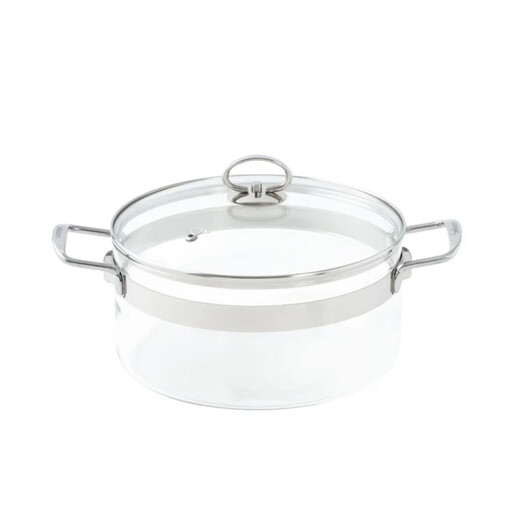
Why we chose it: Perfect for parents preparing baby food or for anyone who demands maximum purity. Completely inert, borosilicate glass retains no odours, and its transparency allows you to keep an eye on the cooking without lifting the lid. A real plus for retaining heat and nutrients.
Naturally healthy and with no coating whatsoever, this stockpot immediately eliminates the risk of a degrading non-stick surface and the release of questionable particles.
A material that is PFAS/PTFE-free by definition. Its transparency is a major asset for mastering the cooking of soups, pasta, or simmered vegetables.
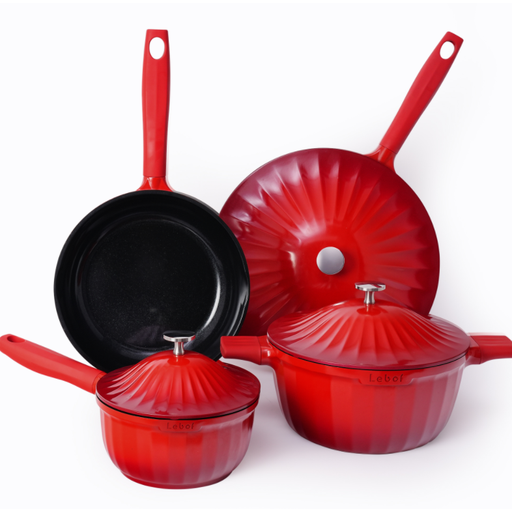
Why we chose it: The solution for those who want the convenience of non-stick without the controversial substances. This complete set meets all everyday needs, from frying pans to saucepans. Its all-hob compatibility makes it an ultra-versatile ally.
Its secret? A titanium-reinforced ceramic coating, clearly certified PFAS, PFOA, and PTFE-free. A direct answer to concerns about traditional coatings.
An all-in-one set, compatible with all hobs, including induction. Ideal for starting fresh with a complete and healthy equipment set.
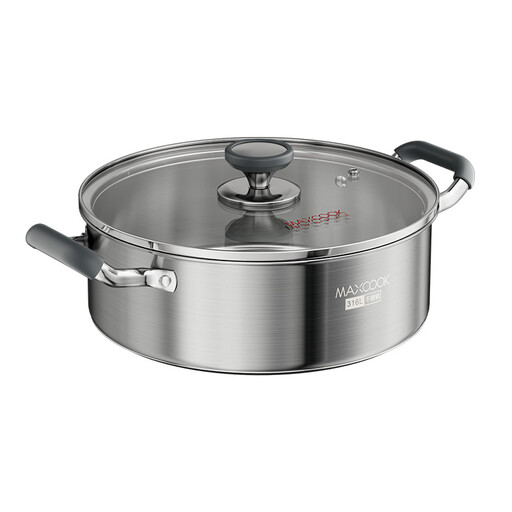
Why we chose it: The perfect partner for large family meals and slow-cooked dishes (stews, soups, pot roasts). This is a true long-term investment. The 316L stainless steel is a guarantee of quality, resistance, and stability.
With no coating, it eliminates any risk associated with a worn-out surface. Its 316L stainless steel construction guarantees unbeatable longevity and impeccable food safety.
Generous capacity, robustness, and a composite base that ensures excellent heat distribution on all hobs, with very good performance on induction.
We have compiled a complete selection of cookware that meets our selection criteria and the strictest safety standards.
The lifespan of a ceramic coating depends primarily on its care. On average, with careful use (no metal utensils, no overheating while empty, hand washing), you can expect it to last several years. Unlike older coatings, its degradation does not lead to the release of PFAS.
Absolutely. Food-grade stainless steel (like 18/10 or 304 grades) is one of the safest and most stable materials available for cooking. It is inert, does not react with food, and has no coating that can wear off. It is the preferred choice for non-toxic and durable cooking.
To maximise the lifespan of your healthy non-stick ceramic pan, follow these tips: