
Livraison le jour même ou le lendemain

Qualité garantie

Débloquez vos offres de bienvenue: Livraison GRATUITE | Jusqu'à -80 % | 30 jours d'essai gratuits à JoyPlus
Téléchargez l'application
An induction hob won’t work with just any stainless steel pan. A pot might look sturdy, boast “all hob types” on its packaging, and yet heat slowly, unevenly, or not at all on an induction cooktop. For families who regularly cook soups, pasta, sauces or slow-simmered dishes, the choice of base, capacity and accessories matters far more than appearance.
Here are the main pitfalls to avoid before buying a stainless steel cookware set or a stockpot.
Stainless steel isn’t necessarily magnetic. To work, an induction hob needs a base containing a ferromagnetic material. So on the product page, look for the mention encapsulated or multi-layer base with a magnetic layer.
A quick test is to hold a magnet to the underside of the utensil. However, this doesn’t replace checking the compatibility stated by the manufacturer, especially with hobs that have flexible or modular cooking zones.
A 304 stainless steel saucepan is perfectly fine for everyday food use. But the number “304” tells you nothing about the thickness of the base, the quality of the handles, or the overall balance of the utensil. Two 304 steel pans can offer very different heat distribution.
So look at the whole product: body, base, handles, lid and care instructions. 316L stainless steel can be worthwhile if you want extra corrosion resistance, but it doesn’t automatically make a utensil more suitable for every kitchen.
A large stockpot is handy for making a family soup, but it quickly becomes heavy once filled. Conversely, a small stainless steel pot may lack the height needed for pasta, broths or steaming.
For daily use, a capacity of 2 to 3 litres is often enough for sauces, milk and small portions. For three to six people, a 4 to 6 litre stockpot is more versatile. Beyond that, check the diameter of your induction zone and the stability of the utensil on the hob.
To choose a pan that works on all hobs, look for a clear indication for induction, gas, electric and ceramic hobs. A flat, sufficiently thick base helps prevent hot spots. It should also sit perfectly stable on the cooktop.
Models with a composite base or tri-ply construction can promote better heat distribution. That doesn’t guarantee food will never stick, though: with stainless steel, gradual preheating, a moderate temperature and a little fat are still essential.
Uncoated cookware appeals to those who want to cook directly in the stainless steel. It avoids having to monitor the wear of a non-stick layer, but it does require the right cooking technique and careful cleaning.
A polished or satin-finished interior makes cleaning easier. White marks are often due to mineral deposits or starch, while rainbow-coloured reflections usually appear after intense heating. Diluted white vinegar, followed by rinsing and thorough drying, is usually enough to reduce them. Avoid abrasive sponges and never plunge a hot utensil into cold water.
A stockpot with a glass lid lets you keep an eye on cooking without lifting the lid. However, glass needs careful handling and protection from thermal shock. Silicone handles can improve grip, as long as they aren’t exposed directly to flames.
To get more use out of it, a saucepan with a steamer basket or a stockpot with a perforated insert can replace several utensils. For deep-frying, check the recommended oil quantity, the overall stability and the length of the handles – they should stay well away from the heat.
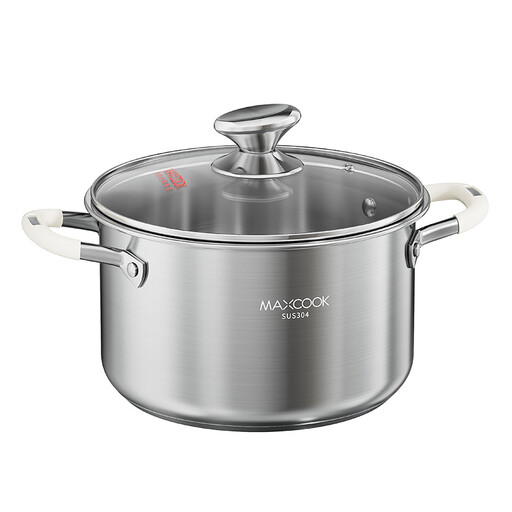
Why this suits this profile: Its size works well for soups, pasta and family meals, while remaining easier to handle than a large stockpot.
The encapsulated base is stated as compatible with induction, gas, electric and ceramic hobs. So compatibility isn’t left vague.
304 stainless steel, 4.3 L capacity, glass lid and silicone handles.
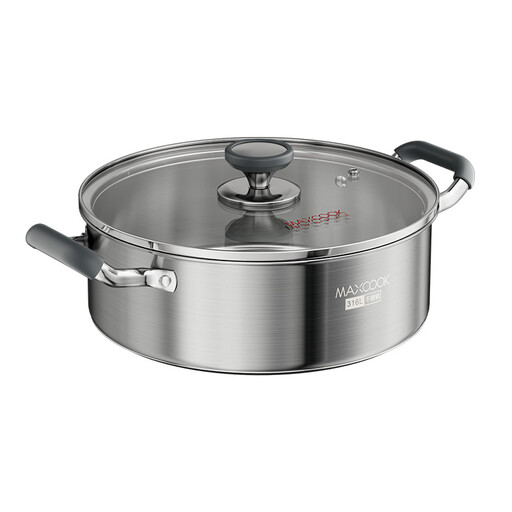
Why this suits this profile: This large format is designed for big gatherings and preparations that need volume, such as broths or slow-cooked dishes.
The capacity, diameter and induction hob compatibility are clearly stated. This makes it easier to check that the stockpot suits your kitchen.
316L steel, composite base, glass lid and silicone-protected handles.
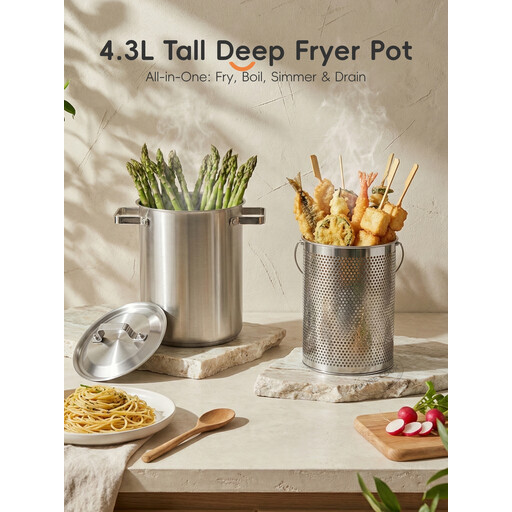
Why this suits this profile: Its perforated basket is ideal for deep-frying, but the pot can also be used for pasta, soups, blanching vegetables and some slow-cooked dishes.
The product page specifies the capacity, the multi-layer magnetic base and the precautions to take with hot oil – points often overlooked at the time of purchase.
304 stainless steel basket, tri-ply magnetic base and use on induction, gas and ceramic hobs.
We’ve put together a complete selection, updated in real time, of products that meet these exacting criteria as well as European safety regulations.
To keep a stainless steel saucepan or casserole dish in good condition, start by washing it in warm water with a mild detergent. Dry it immediately to minimise water marks. Heat it up gradually and avoid leaving an empty utensil on a high-power hob for too long.
Uncoated models are generally cleaned with a soft sponge. For stubborn residue, leave the utensil to soak rather than scraping it. If the manufacturer allows dishwasher cleaning, still check their recommendations for handles, lids and exterior finishes.
No. They must have a magnetic base, usually encapsulated or multi-layer. Check induction compatibility on the product page and make sure the base diameter matches your hob.
A 4 to 6 litre stockpot is generally suitable for soups, pasta and slow-cooked dishes for several people. A 1.5 to 3 litre saucepan will be more practical for sauces, milk, cereals or small quantities.
It may take a bit of getting used to, especially to prevent food from sticking. On the plus side, an uncoated utensil has no non-stick layer to preserve. Moderate heating, gradual preheating and cleaning without abrasive products make daily use much simpler.